Politics
“Hospitals Must Assess Emergency Patients Within 15 Minutes” — Senate Advances Bill Proposing Six-Month Jail, ₦300,000 Fine

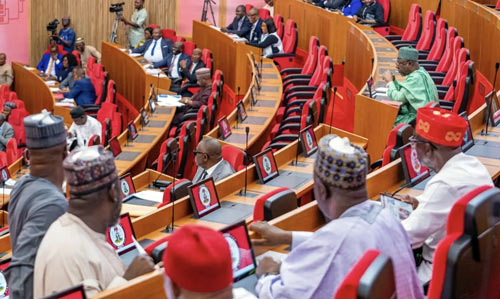
The Senate has passed for second reading a bill seeking to impose a maximum six-month jail term, a fine of up to ₦300,000, or both, on healthcare providers and facilities that violate proposed standards for the treatment of emergency patients in Nigeria.
The proposed legislation would require public and private hospitals to assess emergency patients within 15 minutes of arrival, commence initial stabilisation within 30 minutes and complete referrals to other healthcare facilities within three hours, where necessary.
Sponsored by Senator Abdulaziz Musa Yar’Adua, representing Katsina Central, the National Health Act (Amendment) Bill, 2026, seeks to strengthen the National Health Act, 2014, by introducing enforceable timelines for emergency medical treatment, mandatory training for healthcare workers and clearly defined patient referral procedures.
Leading the debate during Wednesday’s plenary on November 4, 2026, Yar’Adua said the amendment was intended to address gaps in Nigeria’s healthcare system and ensure that patients receive timely, life-saving treatment during emergencies, irrespective of their social status, financial circumstances, influence or location.
He explained that the legislation would establish a standardised national emergency care curriculum to be jointly developed and maintained by the Medical and Dental Council of Nigeria and the Nursing and Midwifery Council of Nigeria.
Under the proposal, healthcare workers involved in emergency medical services would be required to undergo training and obtain certification at intervals not exceeding 18 months.
“The Medical and Dental Council of Nigeria and the Nursing and Midwifery Council of Nigeria shall jointly develop and maintain a standardised national emergency care curriculum, and all healthcare workers involved in the provision of emergency medical care shall be required to undergo such training and certification at intervals not exceeding 18 months,” Yar’Adua said.
He further explained that hospitals licensed to provide emergency medical services would be required to begin triage and initial assessment within 15 minutes of a patient’s arrival.
Where a licensed medical doctor is unavailable, a trained and certified nurse would be permitted to conduct the initial assessment.
“Public and private healthcare facilities licensed to provide emergency medical care in Nigeria shall commence triage and initial assessment within 15 minutes of a patient’s arrival at the emergency department. Where a licensed medical doctor is unavailable, a trained and certified nurse may conduct the triage,” he stated.
The proposed amendment further requires hospitals to commence basic stabilisation procedures within 30 minutes of arrival, including oxygen therapy, intravenous fluids, pain relief and preliminary diagnostic examinations.
For patients with life-threatening conditions, healthcare providers would be required to begin immediate life-saving interventions, including cardiopulmonary resuscitation, airway management and bleeding control, once the condition is identified.
Where a patient requires hospital admission, the facility would be required to assign a bed within two hours, subject to availability.
However, where a hospital lacks available bed space, it must immediately commence stabilisation measures and initiate arrangements for referral to another healthcare facility within two hours of the patient’s arrival or as soon as the patient is clinically assessed and considered stable for transfer.
The bill also proposes that the referral process be completed within three hours, except where circumstances beyond the hospital’s control, including transportation challenges or insecurity, prevent compliance.
In addition, hospitals would be required to dispatch an ambulance or arrange alternative transportation within 30 minutes of deciding to refer a patient.
Yar’Adua said the proposed provisions were intended to prevent avoidable deaths caused by delays in emergency treatment and ensure that hospitals discharge their responsibilities promptly.
The bill prescribes criminal penalties for persons and healthcare facilities found guilty of violating its provisions.
“A person or health facility that contravenes any provision of this section commits an offence and is liable on conviction to a fine not exceeding ₦300,000 or imprisonment for a term not exceeding six (6) months, or both,” he said.
The proposed amendment also recognises circumstances in which healthcare workers may be unable to meet the prescribed standards because of genuine resource limitations.
Such circumstances would require proper documentation, compliance with referral procedures and reporting to the appropriate hospital management or regulatory authority.
According to Yar’Adua, the proposed legislation is consistent with emergency healthcare practices in countries including Ghana, South Africa, Kenya, the United Kingdom and the United States.
Supporting the bill, Senate Chief Whip Mohammed Tahir Monguno, representing Borno North, said the legislation would help address avoidable deaths arising from road accidents, maternal emergencies and other life-threatening conditions.
He expressed concern that some healthcare providers neglected emergency patients, resulting in deaths that could otherwise have been prevented through timely medical intervention.
Monguno maintained that criminal liability for deliberate violations of emergency treatment standards would encourage greater accountability among healthcare professionals and institutions.
Lawmakers also raised concerns about emergency patients being denied treatment because of their inability to make advance payments or the circumstances surrounding their injuries.
They maintained that saving lives should take priority over administrative procedures and financial considerations.
The proposed legislation builds on Section 20 of the existing National Health Act, 2014, which already prohibits healthcare providers, health workers and healthcare establishments from refusing emergency medical treatment.
However, Yar’Adua argued that the existing framework required clearer response timelines, standardised procedures and stronger enforcement mechanisms to make the right to emergency medical care more effective.
Following deliberations, the Senate passed the bill for second reading and referred it to the Committee on Health, Secondary and Tertiary, for further consideration.
The committee was given four weeks to examine the proposal and report back to the Senate.
The proposed six-month imprisonment and ₦300,000 fine under the amendment are not yet enforceable as new penalties, as the bill must complete the remaining legislative stages and receive the necessary approvals before becoming law.
If enacted, the legislation would introduce specific emergency response obligations for hospitals and healthcare professionals, with the aim of reducing preventable deaths, improving emergency treatment standards and strengthening accountability in Nigeria’s healthcare system.
.. “Hospitals Must Assess Emergency Patients Within 15 Minutes” — Senate Advances Bill Proposing Six-Month Jail, ₦300,000 Fine … NewsNGR.


“NJC Announces Deaths Of Nine Judicial Officers” — Council Issues Warning Letters To Three Judges, Cautions Eight Others

“The Appeal Fails” — Court Of Appeal Rejects Turaki-Led PDP Recognition Bid, Upholds ₦70m Costs, Awards Additional ₦15m

Tomi Falade’s Books Spark Global Applause At 2026 Helsinki Book Fair

Six climate measures could save 1.6 million lives yearly – WHO

Afrinvest Boss, Ike Chioke Thanks Elumelu Over Unsolicited $1m Loan

Abiodun orders immediate reconstruction of Saje-Elega-Adedotun Road

2027: APC flags off Enugu campaign in Nsukka, vows to deliver Mbah, Tinubu, others

NNPC ex-director launches book on failure of family businesses

INVESTIGATION: How Anthony Kila falsified all his academic qualifications – from Bachelor’s to Doctorate

Customer Service Week: Inside How Jumia Is Using Technology To Go The Extra Mile For Shoppers

Google opens AI-content detector to enable verification

Kayefi headlines Tales & Tunes as ID Cabasa leads music direction in Sheffield

How Houthi military aggression in Red Sea threatens Africa

Ogaga Ifowodo wins $100,000 Nigeria Prize for Literature

How Lagos Families Are Allegedly Buying Contaminated Meat In Dirty Conditions At Mushin, Oshodi, Mile 12, Surulere Markets

UK migrant workers wear chains, sing Asa’s ‘Jailer’ to protest proposed visa reforms
-

 Business6 days ago
“User Funds Are Completely Safe” — Binance Investigates Suspected $6.3 Billion Hack, Suspends Deposits And Withdrawals
-
Special Reports7 days ago
Jumia Nigeria Unveils ‘No Manage Am’ Black Friday 2026 Campaign With Up To 60% Off
-
Top Stories7 days ago
“We Will Meet On The Final List Of Candidates Today” — INEC To Decide Fate Of Pantami, Adebutu, Other Omitted Governorship Candidates
-
Special Reports7 days ago
Abuja court to rule on joinder application in Pantami-PDP suit
-
Business7 days ago
“This Does Not Qualify As Borrowing, It Qualifies As Investment” — Finance Minister Oyedele Defends FG’s $21.7bn External Loan Plan
-
Top Stories7 days ago
Actress Doris Ogala Remanded for cyberstalking Lagos Pastor
-
Special Reports7 days ago
Nigeria vs Mexico Preview: Flamingos target U-17 World Cup Quarter-Final spot after historic DPR Korea win
-
Politics7 days ago
2027: Court Asked to Disqualify APC from Rivers Governorship Election