Special Reports
Temple, BOS Africa spotlight Nigeria’s sports business potential at Lagos event

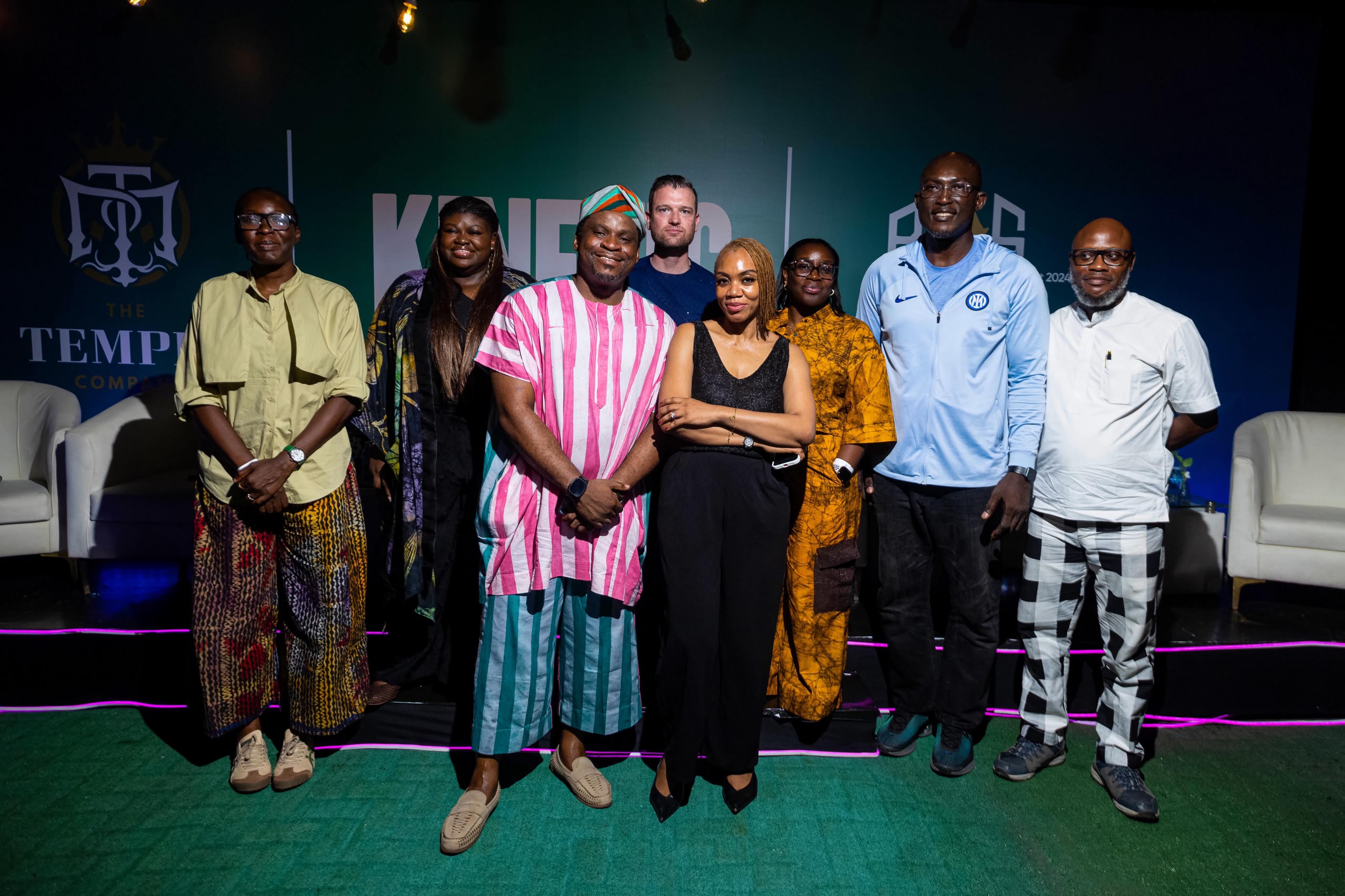
The gathering, held at The Temple Company, Victoria Island, was designed to encourage networking and create connections between people whose businesses and expertise could contribute to the sports industry’s growth.
Sports industry executives, entrepreneurs and professionals have called for better funding, infrastructure, stronger partnerships and improved organisation to unlock Nigeria’s sporting potential and build a sustainable sports economy.
The event brought together professionals from different sectors of the sports industry, including finance, law, media, engineering, sports management, marketing, broadcasting and technology, for discussions on investment opportunities, collaboration and the commercial development of sports in Nigeria.
The gathering, held at The Temple Company, Victoria Island, was designed to encourage networking and connect people whose businesses and expertise could contribute to the sports industry’s growth.
Speaking at the event, Beverley Agbakoba-Onyejianya, founder and academic director of BOS Africa, said Nigeria’s sporting potential remained largely untapped because of gaps in capacity, funding, infrastructure, and a lack of sufficient opportunities for collaboration.
She said the country has the talent and enthusiasm for sports but has yet to develop an industry that can generate adequate employment and sustainable commercial opportunities for professionals across the value chain.
“We are a sporting nation, and we are a vibrant nation. We’re a footballing nation, actually. But we still don’t provide enough jobs. It’s just not a sustainable industry as it ought to be when you compare it to, say, England, France,” she said.
Mrs Agbakoba-Onyejianya, however, said Nigeria should develop its sports industry in a manner that reflects its culture, identity and peculiar circumstances rather than merely attempting to replicate Western models.
She said KINETIC was conceived to bring professionals from different sectors together to encourage meaningful conversations, strengthen relationships and explore opportunities for collaboration.
“We want finance to talk to the agents. We want the agents to talk to the telecoms people. We want us all to communicate more so we can do more in this industry,” she said.
Mrs Agbakoba-Onyejianya said her motivation for establishing BOS Africa was the shortage of accessible and quality sports business education in Nigeria, particularly programmes that prepare people for commercially driven careers in the industry.
She said while some universities offer sports-related programmes, the country still lacks sufficient specialised training opportunities to meet the demands of its growing sporting ecosystem.
The initiative, she said, was intended to provide a flexible, accessible and affordable platform for people seeking to develop careers in sports business.
Mrs Agbakoba-Onyejianya, a sports lawyer with more than two decades of professional experience spanning Nigeria and the United Kingdom, founded Lagos Tigers Football Club, a grassroots football academy, and contributed to the development of Nigeria’s National Sports Policy.
She is also a FIFA mediator and serves on international sports dispute-resolution and governance panels.
She said the mixer showed the value of bringing professionals together outside their usual business environments, and expressed hope that the initiative would grow into a regular platform for industry engagement.
“Imagine having this platform on a massive scale, where media, finance, broadcasting, engineering, legal and other sectors come together, connected by sports. That way, we grow the economy, contribute to the GDP, do more projects through collaboration and literally create a domino effect,” she said.
During a panel discussion moderated by Telema Davies, managing partner of DMPartners, participants expressed differing views on whether Nigeria could be regarded as a serious sporting nation, despite its abundance of talent.
Aderoju Ope-Ajayi, chairperson of the Lagos State Aquatic Association and head of strategy and business transformation at MTN MoMo PSB, questioned Nigeria’s commitment to developing its athletes, pointing to the country’s inability to consistently identify, nurture and adequately represent promising talents.
She said she was often amazed by the level of talent available, particularly among young athletes who break national records but do not receive the support needed to progress to international competitions.
“Nigeria is not a serious sporting nation. We have so much potential, but we are just not doing enough”, she said.
Ms Ope-Ajayi also highlighted the challenges of accessing sporting facilities, noting that the shortage of suitable infrastructure had forced some organisers and development programmes to depend on privately owned schools and other facilities.
She said sponsorship was also difficult to secure, with some companies supporting sporting initiatives out of goodwill rather than through clearly defined long-term commercial objectives.
Folake Shasanya, managing partner of Aesura Group, a strategic capital advisory firm, agreed that Nigeria’s sporting potential was undermined by inadequate structures.
She said young athletes often demonstrate exceptional ability but lack the systems needed to sustain their development and translate their performances into success at major international competitions.
Ms Shasanya cited Nigeria’s recent achievements at the Youth Olympic Games as evidence of the country’s potential, arguing that greater attention to athlete development, organisation and investment could help produce more consistent performances across sporting disciplines.
Jouko Gorissen, founder of Next Level Global Recruiting, said Nigeria could be described as a sporting nation in terms of its population, talent and enthusiasm but has yet to establish the structures needed to make sports a sustainable business.
He said countries such as the United States had developed stronger sports systems through investments in facilities, coaching, education, safeguarding and commercial opportunities.
Mr Gorissen said Nigeria’s sports industry remained overly dependent on athletes as its principal commercial assets, a model he described as unsustainable in the long term.
He argued that the country needed to develop the professionals, institutions and businesses that support athletes and sporting competitions, rather than focusing almost exclusively on the players.


Reps Investigate Abuse of Fiscal Incentives, Lack of Income at Free Commerce Zones

Kano Govt Breaks Silence On EFCC Move Against Kwankwaso

CBN Replaces Imam, Appoints Mohammed Acting Keystone Bank MD

FG roots for local biotech development

How Uzodimma wants to sit on two seats, By Azu Ishiekwene

Shettima, Saraki Storm Adeleke’s Second-term Inauguration

Tunji-Ojo Seeks Dissolution Of NGO Over Suit Demanding NYSC Records

Six Plateau residents sue Nigerian Army over alleged detention without trial
Jumia Nigeria Unveils ‘No Manage Am’ Black Friday 2026 Campaign With Up To 60% Off
“User Funds Are Completely Safe” — Binance Investigates Suspected $6.3 Billion Hack, Suspends Deposits And Withdrawals
ADC Postpones Presidential Campaign Flagoff, Fixes New Date
Abuja court to rule on joinder application in Pantami-PDP suit
Davido features Chioma in ‘Already Falling’ video, recreates proposal scene
IAEA can’t verify location of Iran’s nuclear material – Rafael Grossi

“Airlines Increase Seat Availability But Do Not Necessarily Reduce Airfare” — Christmas Return Tickets Hit ₦822,000 As Carriers Expand Flights Across Nigeria
Troops Neutralise 44 Terrorists In Borno, Disrupt IED Attack

 Business3 days ago
“Airlines Increase Seat Availability But Do Not Necessarily Reduce Airfare” — Christmas Return Tickets Hit ₦822,000 As Carriers Expand Flights Across Nigeria
- Special Reports3 days ago
Zamfara Govt Suspends Campaign In Maru LGA Following Fatal Accident In Gummi
- Top Stories5 days ago
“1,571 Tractors Deployed To 23 States” — APC PCC Lists Agriculture Interventions As Tinubu Approves ₦1.5tn BOA Recapitalisation
- News3 days ago
NAFDAC Threatens Prosecution Over Illegal Pharmacy Raids In Edo
- Business7 days ago
“₦1,472/$ In Parallel Market, ₦1,394/$ At Official Window” — Naira Weakens Further Against Dollar
- Top Stories5 days ago
“We Are Examining The Video” — Daura Emirate Launches Probe Into Tourist’s Sexual Assault Allegations Against Emir Faruk Umar Faruk
- News5 days ago
One Dead As Fire Guts Lagos Filling Station
 Politics3 days ago
ADC Demands Tinubu’s Impeachment Over Gov Yusuf’s S’Court Revelation