Special Reports
The Throne Returns To The Table: How Eze Aro’s Keynote In Addis Ababa Gave Africa A New Constitutional Language For Its Oldest Institutions

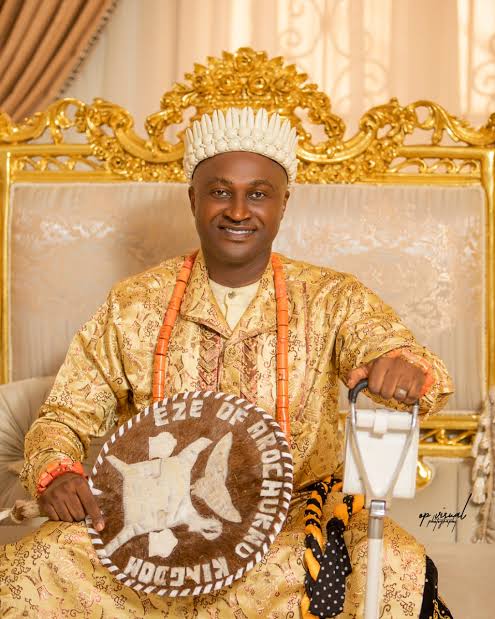
There are moments in the life of a continent when history does not merely repeat itself, it corrects itself. One such moment came on 12 November 2026, inside the headquarters of the African Union in Addis Ababa, when kings, queens, emirs, sultans, chiefs, stools and custodians of thrones from across the five regions of Africa rose, not to demand power, but to offer service.
They had come for the African Traditional Rulers Forum. They left with something far larger than a communique. They left with a Founding Framework — a Charter, a Declaration, a Constitution, a Partnership Framework with the African Union, a programme to confront six poverties, and a renewed vision of Pan-Africanism — all flowing from a keynote speech delivered by His Eminence, Dr. Eberechukwu Oji, Eze Aro of Aro Kingdom, Nigeria.
It was not a speech about nostalgia. It was not a plea to return Africa to the past. It was, in the words of many who heard it, a constitutional proposal for the future: a distinctly African democratic architecture in which indigenous institutions and modern constitutional governance work together to secure peace, justice, dignity, cultural confidence, inclusive prosperity and sustainable development for all.
By the time the Forum closed, the rulers had adopted it in principle as their working document. The Addis Ababa Declaration was born. A Continent That Has Achieved Much, But Not Yet Enough. Eze Aro began where every honest African conversation must begin: with acknowledgement. Africa, he reminded the hall, has achieved political independence. It has built regional and continental institutions. It has adopted ambitious development frameworks. It has asserted a stronger voice in global affairs, from the African Union to the G20, from Agenda 2063 to the African Continental Free Trade Area. And yet, he said, the promise of African unity and prosperity is not experienced equally by the people in whose name these institutions exist. Too many communities, he said, remain without dependable electricity, productive employment, accessible justice, quality education, healthcare, industrial opportunity and the dignity of cultural recognition. It was a line that silenced the hall because it named a paradox every delegate knew intimately.
Africa speaks in continental communiques, but its people live in villages, settlements, towns, pastoral communities, islands, townships and cities. Continental policy is drafted in Addis Ababa, Abuja, Nairobi, Cairo and Pretoria. But hunger is felt in a compound. Darkness is felt in a home without light. Injustice is felt in a family land dispute that drags on for years. “The distance between continental policy and local experience,” Eze Aro argued, “is the distance we must now close. “That became the founding proposition of the entire Framework: Africa’s continental ambitions must be domesticated at community level.
The African Union’s achievements in integration, peace and security, public health, infrastructure, trade and global representation must be translated into practical improvements in the lives of ordinary Africans. And no institution is better placed to do that translation than the one that has lived with the people the longest. Institutions Older Than the State If there was a single historical truth that anchored the keynote, it was this: the indigenous institutions of Africa pre-date colonial administration and the modern state. Long before borders were drawn in Berlin, before flags were designed and national anthems composed, there were kingdoms, emirates, sultanates, chiefdoms, stools, thrones, councils of elders and other customary institutions. They carried histories across generations when there were no written archives. They preserved languages when there were no schools. They mediated disputes when there were no courts. They enforced community obligations, protected orphans and strangers, regulated markets, preserved sacred forests and kept the memory of who a people are.
Their forms and legitimacy differ, Eze Aro was careful to stress. There is no single African throne. There is no single model of kingship. A stool in Ghana is not an emirate in Northern Nigeria. A sultanate in North Africa is not a chiefdom in Southern Africa. Their histories must be respected in their diversity. But properly constituted and accountable, he argued, they can become vital partners in peacebuilding, inclusive development, cultural preservation and civic participation. This was not romanticism. It was realism. In many parts of Africa today, the first authority a citizen meets are not a minister or a governor. It is a traditional ruler. The first court is a palace court. The first mediator in a farmer-herder clash, a chieftaincy dispute or a family quarrel is often a chief or an elder. To ignore that reality, the keynote suggested, is to govern with one eye closed. To harness it constitutionally is to govern with both eyes open. Not A Parallel Government.
From the very first minutes, Eze Aro anticipated the fear that has haunted every conversation about traditional authority in modern Africa: the fear of a parallel government, of unaccountable power, of a return to absolutism. He answered it directly and repeatedly. This Founding Framework, he said, does not propose the displacement of elected institutions or the creation of an unaccountable parallel government. It proposes a distinctly African democratic architecture: rooted in indigenous institutions and community participation, enriched by constitutionalism, universal human rights, representative democracy, independent courts, transparency and the rule of law. That sentence would be repeated in corridors, in interviews and in the final documents. It became the constitutional soul of the project.
The Council of Natural Rulers of Africa, as proposed, would be consultative and cooperative, not coercive. It would not exercise police, military, prosecutorial, judicial or other coercive state powers unless expressly authorised by national law and consistent with the constitution. It would not override courts, legislatures, elected executives, electoral commissions or statutory regulators. Customary mediation would not deny access to formal justice. No institution could use the Charter to justify discrimination, forced marriage, violence, exclusion from education, harmful practices, arbitrary detention, intimidation, confiscation of property or retaliation against complainants. Allegations of serious crime must be referred to competent authorities. In short, the throne was being offered a place at the table, not a throne above the table.
The Six Poverties: A New Diagnosis for an Old Problem Perhaps the most intellectually original part of the keynote was its diagnosis of poverty. Africa, Eze Aro argued, does not suffer from one poverty. It suffers from six, interlocking poverties. And until we name them separately, we will keep prescribing the wrong medicine.
First, economic poverty: inadequate livelihoods, productive assets, fair markets and decent work. Millions work hard but remain poor because the market is rigged against them, credit is out of reach, and value is extracted elsewhere.
Second, energy poverty: lack of affordable, reliable and clean energy for households, services and enterprise. A child cannot study at night. A clinic cannot store vaccines. A welder cannot weld. A continent cannot industrialise in darkness.
Third, opportunity poverty: unequal access to education, skills, finance, technology and pathways to achievement. Talent is evenly distributed across Africa. Opportunity is not.
Fourth, social poverty: exclusion from safety, healthcare, justice, belonging and essential public services. To be poor is not only to lack money. It is to be invisible to the state when you need it most.
Fifth, identity poverty: erosion of language, historical memory, cultural confidence and dignity. A people who are taught to be ashamed of their tongue, their dress, their history and their gods will struggle to believe they can build a future.
Sixth, industrialisation poverty: dependence on raw-material exports, limited local value addition and insufficient productive employment. Africa exports cocoa and imports chocolate. It exports crude and imports fuel. It exports talent and imports finished goods.
The Six Poverties Initiative, adopted as part of the Framework, proposes to confront all six as an integrated continental mission, through measurable programmes and community compacts. Not slogans, but baselines, budgets, safeguards and independent evaluation. It was this section, delegates said, that moved the conversation from ceremony to programme. A throne can bless a project. But a throne that can help deliver electricity, skills, mediation and enterprise to its community becomes indispensable to development.
The Addis Ababa Declaration: Ten Commitments.
At the heart of the Framework sits the Addis Ababa Declaration, adopted in principle at the AU Headquarters on 12 November 2026.In language both solemn and practical, the rulers recalled the historic struggle for African freedom, unity and self-determination, recognised the AU’s achievements, and declared their commitment to ten things.
To build a united, peaceful, prosperous and self-confident Africa in which every person can live with dignity and opportunity.
To promote a constitutional role for legitimate Natural Traditional Rulers in community consultation, mediation, cultural preservation, local development planning and social cohesion, as permitted by national law.



UN secretary-general marks last climate summit with call to make polluters pay

The Throne Returns To The Table: How Eze Aro’s Keynote In Addis Ababa Gave Africa A New Constitutional Language For Its Oldest Institutions

Tanzania vs Nigeria: Injury knocks Lookman out of next crucial test

EXCLUSIVE: Femi Otedola Has Never Owned A Private Jet And Mr Eazi Said So: Wealth Lists Gave Him Four Different Aircraft And Not One Tail Number

Ogun 2027: Senator Adeola Explains Focus On Development Of Ogun Waterside

Nigeria, South Africa trade words over exclusion from diplomatic ceremony livestream

Akpabio Took 50% From NDDC Contractors As Niger Delta Minister – Amaechi

Ukwa La Ngwa: Time To Call St. Moses To Order
2027: AbdulRazaq predicts APC victory in Kwara, cites Wike’s support for Tinubu
One Voice Started A Movement: ONC Thanks Burna Boy, VDM, Winnie Miller For Rebuilding Odiokwu School
Enugu Govt Approves ₦32bn For Gratuity Arrears Payment
Afrinvest repays undocumented $1 million from Elumelu with interest
Int’l Day For The Eradication Of Poverty: BAT-KOHrrect Commends President Tinubu, Announces Food Outreach To 1000 Families
Davido Faces Boycott Threats Over Adeleke’s Support for Tinubu
Otti Woos Presco With 4,200 Hectares For Oil Palm Project
2027 elections: INEC inaugurates Electoral Logistics Committee

 Special Reports7 days ago
“Customary Law Cannot Override Pension Reform Act” — Court Orders Release Of Late DSP’s Benefits, Awards ₦5m Damages
- Special Reports7 days ago
EXCLUSIVE: Aliko Dangote’s Two Jets Stand on the United States Register Under One Utah Trustee, and No Public Record Names the Beneficiary
- Business7 days ago
“Stablecoin Holders Must Not Receive Interest Or Yield” — CBN Introduces New Regulations, Mandates Form M For Import Payments
- Politics7 days ago
“I Have Seen The Light, Tinubu Is Laying A Solid Foundation” — Okowa Explains Why He Dumped Atiku, Backs President’s Re-Election
- News7 days ago
“Adeboye Ordered Refund Of Billions In Crime Proceeds Within 24 Hours” — EFCC Chairman Olukoyede Reveals, Warns Churches Against Suspicious Donations
- Top Stories7 days ago
“I Am Cleaning The Mess They Created, Atiku Was One Of Them” — Tinubu Blames Former Leaders For Hunger, Questions Atiku’s University
- Top Stories7 days ago
“You Acted As A True Statesman During Rivers Crisis” — Fubara Hails Tinubu’s Intervention, Pledges 3m Votes Under APC-PDP Rainbow Coalition
- Business7 days ago
“Freeze Terror-Linked Assets Immediately Or Face Sanctions” — SEC Orders Capital Market Operators To Act, Warns Of Licence Revocation