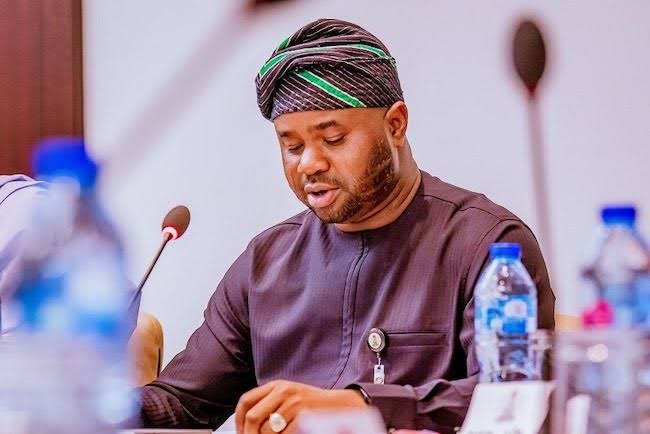
In his opening remarks at the 160th Joint Revenue Board meeting in Kaduna on Wednesday, Dr Adedeji said that encouraging progress has been recorded in institutional reform of the tax ecosystem
The Chairman of Joint Revenue Board (JRB) and the Nigeria Revenue Service (NRS), Dr Zacch Adedeji has stated that the ultimate measure of success of the nation’s tax reform must be improved revenue mobilisation, greater compliance, a better taxpayer experience and stronger contribution to national development.
Dr Adedeji described the theme of the 160th meeting, “One Year of Reform: Assessing Progress and Addressing Challenges”, as a call on the Board to take stock of the progress made in the implementation of the reform, remediate identified gaps and confront the challenges that May emerge.
Giving an overview of the progress made one year into the implementation of the tax reform during the meeting, the Executive Secretary of the Joint Revenue Board, Mr Olusegun Adesokan, hinted that 18 State Houses of Assembly have domesticated the model harmonised taxes and levies law as the nation’s apex tax authorities move to curb the menace of tax overlapping and duplication across Nigeria.
The Executive Secretary said the new legislation has reduced the over 50 collection items hitherto administered by States and Local Government Areas to nine sub-heads.
The model law also abolishes cash collection and mounting of roadblocks for collection of revenue. The JRB Executive Sectetary said the measure has recorded a significant success in the harmonisation of taxes and levies by the subnational.
Addressing the misconception that the tax reform has increased taxes, Mr Adesokan said the reform has rather reduced tax burden on low-income earners and eliminated multiple nuisance taxes while providing reliefs for low income-earners and micro-scale businesses.
The Executive Secretary appreciated the Kaduna State Governor, Uba Sani for hosting the 160th meeting and for his consistent support of the tax reform initiative. He particularly appreciated the governor for nominating a member of the Board and outgoing Executive Chairman of Kaduna State Internal Revenue Service, Mr Jerry Adams as his running mate for the 2027 gubernatorial election.
The Board, which is the apex body for revenue administration in Nigeria, took an assessment of the progress and challenges of the tax reform, one year into the commencement of its implementation.
The Board held that it was imperative for revenue authorities to come together to reflect on their experiences under the new revenue regime and chart the way forward where concerns arise.
The meeting which took place on Wednesday in Kaduna and was declared open by the host State Governor, Senator Uba Sani.
Governor Sani said the tax reform has expanded the opportunities for domestic resource mobilisation for the development of the country, stating that the deeper benefits of the reform would be to build institutions that will sustain the gains of the reform and command the confidence of taxpayers.
“The objective of the reform should not be simply to collect revenue, it should be to build a tax system in which compliance becomes easier, enforcement becomes more intelligent and voluntary compliance becomes a norm”, he cautioned.
Earlier in his welcome address, the outgoing Executive Chairman of Kaduna State Internal Revenue Service, Mr Jerry Adams, acknowledged the collaboration between revenue authorities and other stakeholder agencies within the tax ecosystem, saying that such relationship has proven useful in the implementation of the tax reforms.
Mr Adams said tax compliance in Kaduna State has risen from about 35 percent to 65 percent in the last three years under Governor Sani, a win he attributed to increased taxpayers’ confidence in the performance of the Governor whom he said has delivered many life-touching projects cutting across sectors including health, agriculture, education and infrastructure.
The Joint Revenue Board is composed of the 38 revenue authorities in the country, including the Nigeria Revenue Service, the 36 States and the FCT Internal Revenue Services. It also has the Federal Ministry of Finance, the Nigeria Immigration Service, the Nigeria Customs Service, Revenue Mobilisation, Allocation and Fiscal Commission, Federal Road Safety Commission, National Identity Management Commission and the Chartered Institute of Taxation of Nigeria.
The 160th meeting was the second held by the Board in 2026.