Special Reports
ANALYSIS: Nigeria’s first methane disclosure raises questions over repeated figures, missing data

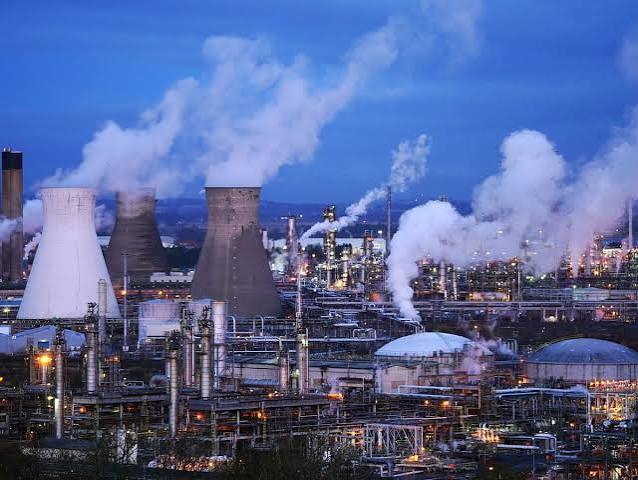
An analysis of Nigeria’s first public company-level greenhouse gas disclosure reveals repeated emissions figures, incomplete methane reporting, and inconsistencies in the list of companies that submitted data, raising questions about the reliability of the country’s emissions baseline.
Nigeria has taken an important step towards improving transparency in its oil and gas sector by publishing company-level greenhouse gas emissions data for the first time.
However, an independent review of the data has identified several issues that may undermine confidence in the disclosures if left unresolved.
Using the Emissions Monitoring and Accountability Tool (EMAT), an interactive platform that organises and compares emissions data published by NEITI, this analysis found repeated emissions figures across different companies, missing methane information, and inconsistencies in the number of companies reported as having submitted emissions data.
The findings do not suggest wrongdoing by any company. Rather, they highlight areas where Nigeria’s emissions reporting framework could be strengthened to improve transparency, data quality and public confidence.
One of the most striking observations is that Chevron Nigeria Limited and the Shell Petroleum Development Company (SPDC) reported exactly the same methane emissions figures for 2022.
Both companies reported 173,578,759.2 kilograms of carbon dioxide equivalent (CO₂e) and 6,943,150.368 kilograms of methane.
The values are identical across virtually all reported fields except for halons.
The figures appear in Appendix 12 of NEITI’s 2022 and 2023 Oil and Gas Industry Reports, which contain Nigeria’s first publicly available company-level greenhouse gas disclosures.
This became immediately visible because EMAT allows users to compare company data side by side, identical figures that may be difficult to notice in static tables.
The Chevron-SPDC entries are not isolated cases.
Another example is Aradel Holdings Plc, which reported exactly the same methane values in both 2022 and 2023: 133,522,033 kilograms CO₂e and 5,340,877 kilograms of methane.
Similarly, Network E&P reported 112 kilograms CO2e and 3.64 kilograms methane in both reporting years.
Repeated figures do not automatically mean the data are inaccurate. Companies with similar operations, shared production facilities, or common reporting boundaries could legitimately report similar emissions. However, exactly identical values reported to several decimal places warrant further verification against the original submissions.
Another case concerns Pillar Oil, where the same numerical value appears repeatedly across different greenhouse gases.
For example, in 2022, the value 1,610,170.7872 appears across several gases, including carbon monoxide, nitrous oxide, nitric oxide and sulphur dioxide. The same pattern appears in 2023 with 2,389,859.8050.
The published report does not explain why these different gases share identical values.
The analysis also found that methane reporting is far from complete.
Of the 30 company-year records reviewed in Appendix 12, only 12 contain information across all three methane reporting fields.
The remaining 18 records contain missing information, and some of the omissions are difficult to interpret.
For instance, NAE reported 963,970 kilograms of methane in 2022 but recorded zero for the corresponding carbon dioxide equivalent.
In 2023, the company again reported methane emissions but left the carbon dioxide equivalent field blank.
Similarly, Chevron and Heirs Energies reported methane only as carbon dioxide equivalent in 2023 without providing the underlying methane mass.
Heirs Energies reported 217.4 million kilograms CO₂e, one of the highest methane-related figures in the dataset, yet the absence of the methane mass makes it impossible to independently verify the conversion.
In another case, Platform Petroleum appears on the reporting sheet, yet all of its methane fields are blank for both years.
The report provides no explanation of whether blank cells indicate that no emissions occurred, that no data were submitted, or that emissions were not calculated.
This distinction matters because a blank field is not the same as reporting zero emissions.
The analysis also raises questions about how many companies actually submitted emissions data.
NEITI states that 15 out of 62 audited companies submitted greenhouse gas information, while 47 companies did not.
However, the appendix presents 15 companies on the reporting sheets, and 58 entries on the non-reporting sheet.


Six killed in another Plateau attack as governor vows to track down killers
EFCC Arrests 19 Suspected Fraudsters In Lekki Estate Raid

ZENITH BANK EXPANDS TECH FAIR REACH WITH FIRST-EVER VIRTUAL EDITION, FOCUSES ON AI

Yaya Bello’s N110.4bn Trial: EFCC Traces Kogi LG Funds To Adaudu’s Company

Police arrest man in viral video preaching religious intolerance, violence

DSS Tenders AK-47 Rifles In Trial Of NYSC Kidnap Suspects

Unlocking the Future: Zenith Bank’s Tech Fair 6.0 puts AI in focus

Address Allegations That Ministers Paid For Their Positions – ADC Tells Tinubu

INVESTIGATION: How Anthony Kila falsified all his academic qualifications – from Bachelor’s to Doctorate

Customer Service Week: Inside How Jumia Is Using Technology To Go The Extra Mile For Shoppers

Google opens AI-content detector to enable verification

Kayefi headlines Tales & Tunes as ID Cabasa leads music direction in Sheffield

How Houthi military aggression in Red Sea threatens Africa

How Lagos Families Are Allegedly Buying Contaminated Meat In Dirty Conditions At Mushin, Oshodi, Mile 12, Surulere Markets

Ogaga Ifowodo wins $100,000 Nigeria Prize for Literature

UK migrant workers wear chains, sing Asa’s ‘Jailer’ to protest proposed visa reforms

 News7 days ago
Lagos Alone Cannot Afford Fourth Mainland Bridge — Hamzat
- Top Stories6 days ago
“The Task Force Is On Top Of It, NCDC Is On Top Of It” — FG Assures Nigerians Of Capacity To Contain Ebola
- Special Reports7 days ago
Kenya confirms ninth Ebola case, says all patients improving
- Special Reports6 days ago
Dangote To Nigerian Creatives: Africa Must Build Its Own Prosperity
- Special Reports7 days ago
18-Year Old Arraigned In Court For Allegedly Stealing N30m Jewelries In Popular Lagos Estate
- Special Reports7 days ago
Champions League: Lookman, Ayaosi shine as PSG end Barcelona’s winning run
- News7 days ago
Abia Tertiary Sports Fiesta Begins November As Otti Receives Unity Torch

 Politics6 days ago
Tinubu Will Impose Fuel Tax On Nigerians If Re-elected In 2027 – ADC