Special Reports
Economy Expert Warns Proposed NAFDAC Bill May Create Regulatory Confusion

MICHAEL AKINOLA
An economy and regulatory affairs analyst, Mr. Joel Alalade, has raised concerns over the proposed amendment to the National Agency for Food and Drug Administration and Control (NAFDAC) Act, warning that some provisions of the bill may create regulatory overlaps, increase compliance burden for businesses and negatively impact Nigeria’s ease of doing business environment.
Reacting to the recent public hearing on Senate Bill 952 (SB.952) at the National Assembly, Alalade described the proposed amendment as a potential recipe for disorderliness, regulatory confusion and policy complications that could make doing business in Nigeria more challenging if not properly streamlined.
According to him, while strengthening regulatory institutions remains critical to protecting public health and consumer safety, any legislative reform must promote clarity, efficiency and coordination among government agencies rather than create overlapping mandates.
“The objective of regulation should be to provide certainty and confidence for businesses, investors and consumers. However, where multiple agencies are empowered to perform similar functions, the result can be regulatory confusion, increased cost of compliance and uncertainty for operators,” Alalade stated.
Concerns Over Overlapping Mandates
Reviewing the contents of the proposed NAFDAC amendment bill, Alalade noted that some sections appear to introduce responsibilities that may overlap with existing regulatory frameworks, particularly in areas relating to tobacco product control, enforcement and monitoring.
He argued that Nigeria already has established tobacco control legislation and institutions responsible for implementing tobacco-related regulations, adding that introducing additional layers of authority without clear boundaries could create duplication and weaken regulatory effectiveness.
“The number of agencies involved does not determine effective regulation, but rather how clearly responsibilities are defined and how efficiently those responsibilities are implemented. Duplication of regulatory roles can slow decision-making, increase administrative complexity and create uncertainty for businesses operating within the legal framework,” he said.
Alalade explained that effective regulation thrives on institutional coordination and clearly defined roles, noting that when regulatory responsibilities are not properly delineated, it becomes difficult for businesses to understand compliance requirements and for agencies to enforce rules efficiently.
Implications for Investment and Economic Growth
The analyst further warned that regulatory uncertainty could have wider economic consequences, particularly at a time when Nigeria is seeking to attract foreign and local investment, improve local manufacturing capacity and strengthen its position as a competitive business destination in Africa.
“Investors require predictable regulatory environments. When businesses are uncertain about which agency has final authority or when compliance obligations overlap, it can affect investment decisions, production planning and long-term business confidence,” Alalade explained.
He noted that Nigeria has made significant progress in recent years in improving its ease of doing business ranking through reforms aimed at simplifying business registration, reducing regulatory bottlenecks and promoting transparency. He cautioned that any new legislation that introduces confusion or duplication could reverse these gains.
According to Alalade, Nigeria’s regulatory reforms should follow international best practices, where agencies operate within clearly defined mandates and collaborate to achieve shared public policy objectives.
“Public health protection and economic growth are not mutually exclusive. The challenge is to create regulations that protect citizens while maintaining a transparent, coordinated and investment-friendly environment,” he added.
Call for Wider Stakeholder Consultation
Alalade called for wider stakeholder consultation before the passage of the proposed amendment, urging lawmakers and policymakers to carefully assess the bill’s economic, regulatory and institutional implications.
“The National Assembly has an important responsibility to ensure that new legislation strengthens Nigeria’s regulatory architecture rather than complicates it. A law designed to improve oversight must not unintentionally create confusion, duplication or barriers to legitimate business activities,” he concluded.
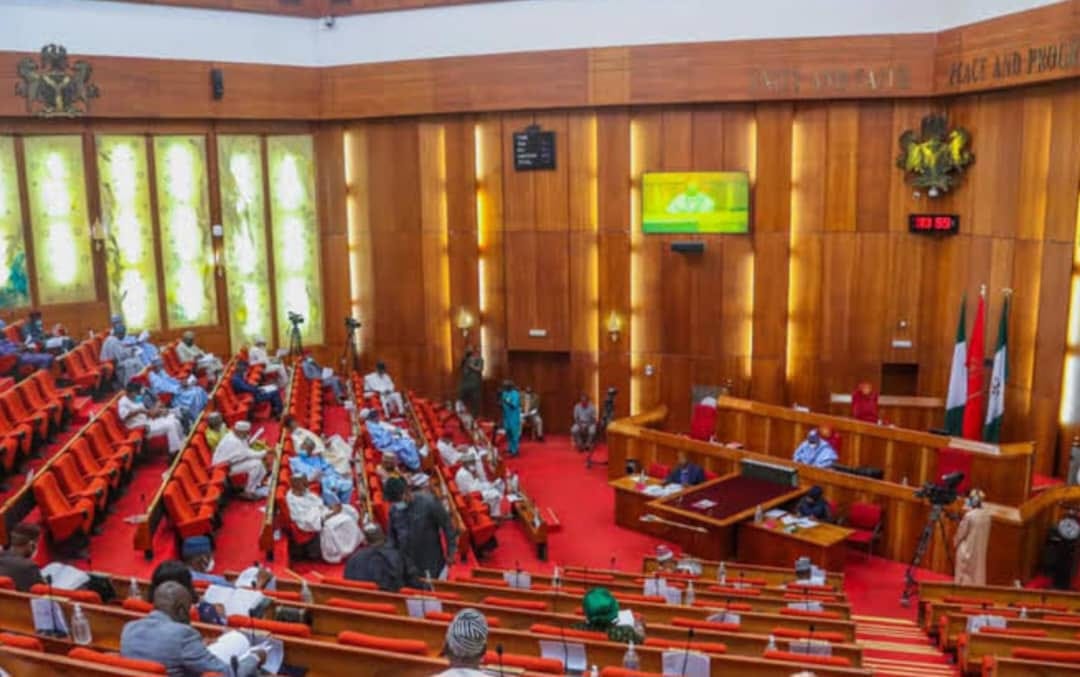
The proposed Senate Bill on Food, Medical Products and Other Regulated Products Act 2026 (SB 952) has passed its second reading at the Senate and has been referred to the Senate Committee on Health, headed by Senator Ipalibo Banigo, for further scrutiny and legislative review.
Stakeholders are expected to make further submissions as deliberations continue on the bill, which seeks to amend and strengthen the legal framework guiding the operations of NAFDAC and the regulation of food, drugs and other related products in Nigeria.








Special Reports1 minute ago
NASS Roundup: Rising school fees, insecurity, poor telecom network, other stories from House of Reps

Special Reports11 minutes ago
Gunmen kill soldier, steal weapons at Plateau checkpoint

Special Reports21 minutes ago
It’s a life blessing’ – BUA boss describes entering Holy Kaaba with President Tinubu

Special Reports26 minutes ago
Man, 23, Arraigned Over Alleged Threat To Publish Lady’s Private Video In Lagos

Special Reports31 minutes ago
Police arrest three over political violence in Katsina

Special Reports51 minutes ago
Dakar 2026 YOG: Nigeria’s flagbearer Nwankwo eyes 100m glory

Special Reports55 minutes ago
COP 17 Ends In Armenia, Adopts Pathways To Accelerate Action Towards 2030 Targets

Politics56 minutes ago
NDC Is Dead On Arrival In Enugu – APC Reacts To Obi’s Visit

Special Reports3 weeks ago
INVESTIGATION: How Anthony Kila falsified all his academic qualifications – from Bachelor’s to Doctorate

Special Reports3 weeks ago
Customer Service Week: Inside How Jumia Is Using Technology To Go The Extra Mile For Shoppers

News3 weeks ago
Google opens AI-content detector to enable verification

Special Reports3 weeks ago
Kayefi headlines Tales & Tunes as ID Cabasa leads music direction in Sheffield

Special Reports3 weeks ago
How Houthi military aggression in Red Sea threatens Africa

Special Reports3 weeks ago
UK migrant workers wear chains, sing Asa’s ‘Jailer’ to protest proposed visa reforms

Special Reports3 weeks ago
How Lagos Families Are Allegedly Buying Contaminated Meat In Dirty Conditions At Mushin, Oshodi, Mile 12, Surulere Markets

Special Reports3 weeks ago
Ogaga Ifowodo wins $100,000 Nigeria Prize for Literature

 Special Reports7 days ago
Nigerians Abroad: Iheanacho extends scoring streak as Ajayi, Awaziem shine
- Special Reports7 days ago
Buy 1 Get 1 Free Chicken Bucket: KFC Nigeria brings back its biggest value deal Wednesday, 28th Oct
- Politics7 days ago
ADC Faction Unveils 2027 Campaign Council, Names Presidential Candidate
- News7 days ago
NDPHC begins project to end 15-year blackout in Kaduna community
- News7 days ago
EFCC Bursts Four Illegal Lithium Plants, Arrests 14 Chinese
- Politics7 days ago
APC Youth Leader Under Fire Over Brand-New SUVs For Tinubu’s Campaign
- Special Reports7 days ago
Gov Otti Describes Prof. Kamene Okonjo’s Death As Personal Loss
- Top Stories6 days ago
“Some Threatened To Leave Quarantine” — NCDC Explains Financial Support, Rejects 2027 Election Claims, Says Nigeria Not Yet Out Of Woods