Special Reports
ECONOMY360: As Mojeed Alabi’s DevReporting delves into Local Govt finances

“If there was any doubt about the strength of Mr Falana’s hypothesis, the Osun LG documentary produced by the DevReporting team put paid to it.”
“May your road be rough,” quipped Tai Solarin in his 1964 piece of the same title. Those words echoed through my mind for Mojeed Alabi and his DevReporting crew as I sat in the midst of the audience last Thursday in UNILAG, but, as Mr Solarin warned, those immortal lines are susceptible to misinterpretation. So, I’d return to them later.
While the project exposed me to the centrality of post-harvest losses to Nigeria’s food sustainability discourse at the time, it also opened my eyes to a far bigger problem: the collapse of governance at the local government level. From Iwo through Ile-Ogbo and Ife-Odan via Ejigbo, I travelled across Osun (as well as Oyo, Kwara, Ogun, etc.) and was depressed by the level of rot I witnessed, firsthand, at the grassroots. It was clear to me that the crisis of food sustainability (evident in post-harvest losses fueled by poor road networks, poor storage facilities, etc.) was, in part, a crisis of absent grassroots governance. Interestingly, Osun wasn’t an outlier; it was a microcosm of Nigeria, offering rare insights into what had become of local governance in our country.
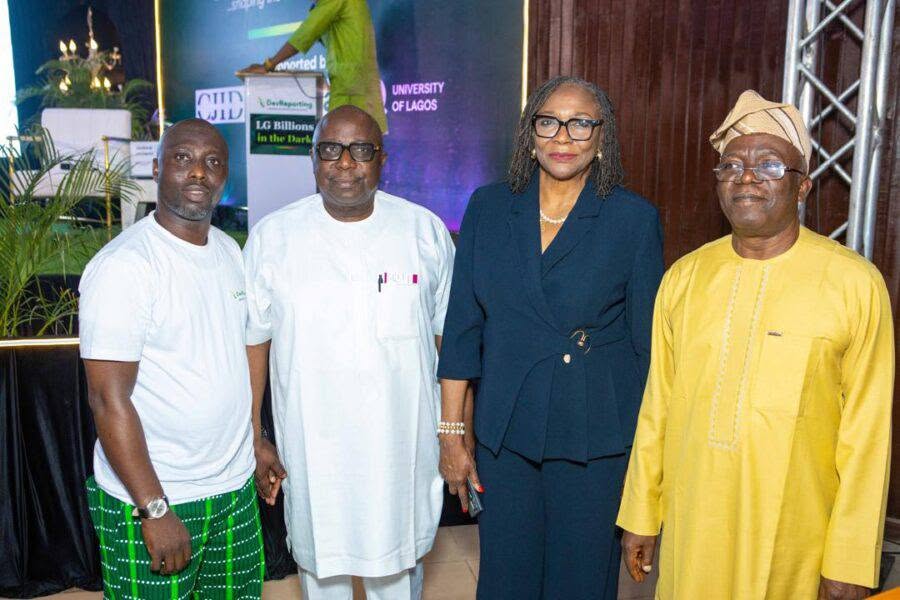
Last Thursday, I was at the University of Lagos’ Faculty of Arts Theatre, where the issue of grassroots governance and its centrality to national development was, again, brought to the national radar, with Osun as a case study. The occasion was the public screening of “LG Billions in the Dark”, an investigative documentary produced by development-focused niche platform, DevReporting, founded by a dear Egbon and one of Nigeria’s most decorated development and accountability journalists, Mojeed Alabi. The documentary examines the prolonged local government leadership crisis in Osun State and its implications for public finance, accountability, and grassroots development.
The event, chaired by PREMIUM TIMES publisher and one of the continent’s most iconic journalism figures, Dapo Olorunyomi, featured human rights lawyer Femi Falana as the keynote speaker. The event was also graced by the Vice-Chancellor of the host university, Folasade Ogunsola, a professor of medical microbiology, among other big names in media, academia, and civil society.
In my years observing how things work in Nigeria’s toxic political blogosphere, I’d argue that a call for people to direct their anger towards subnational governments isn’t always wrapped in the noblest intentions. In some cases, it’s a clever halfway way to divert attention from—and take pressure off—the government at the centre. But for anyone genuinely interested in the structure of governance in contemporary Nigeria, beyond the resources ostensibly meant for Local Government administration in recent years, shining a spotlight on the grassroots has become super-important.
And Mr Falana made the point most eloquently in his keynote address, titled ‘Accountability, Resources and Citizen Voices: Building Local Governments that Work for the People’, in which he argued that Nigeria’s development challenges could not be addressed by concentrating accountability demands on the federal government while neglecting state and local authorities.
Local governments, he maintained, as the tier of government closest to citizens, should be empowered to address everyday development needs, including primary healthcare, basic education, infrastructure and economic opportunities.
If there was any doubt about the strength of Mr Falana’s hypothesis, the Osun LG documentary produced by the DevReporting team put paid to it: it’s an impressive work of accountability journalism as a vehicle for exposing the deplorable state of local infrastructure, a direct consequence of the collapse of governance at the grassroots in Osun.
Midway into the documentary, one of the Osun residents interviewed in his community deployed a comical line to describe the horrible state of road infrastructure in the community: the roads were so bad that even if a cow—as recalcitrant and stubborn as the animal can be—plies them, it would have its legs broken! The hall erupted into laughter, but beyond the comic relief lies a heartbreaking reality that everyone has come to realise: we can’t attain true development on a national scale if the grassroots remain broken.
To be sure, puritan constitutional arguments against the oft-repeated calls for local government autonomy, however defined, exist, which I have no intention of dissecting in this piece. What’s clear to me from my travels across communities in Nigeria, however, is that beyond the academic and theoretical arguments, the near-total asphyxiation of the local government system runs violently contrary to the spirit of democracy as a system of government that can deliver the greater good to the largest number of people. The current system requires a complete overhaul.
The event also featured an insightful panel discussion on local government administration, with panellists like the Chairman of Onigbongbo Local Council Development Area, Moyosore Adebanjo; former Chairman of Ijebu East Local Government, Wale Adedayo; legal counsel, Jiti Ogunye Chambers, Comfort Idika-Ogunye; Head of Tracka at BudgIT, Joshua Osiyemi; and a lecturer in the Department of Political Science at the University of Lagos, Vera Amaechi; and Azeezat Olaoluwa, West Africa Correspondent of Deutsche Welle. Mr Adedayo offered an interesting perspective on the importance of the grassroots tier of government in driving development, drawing on his experience in Ogun State.
At the event, Uncle Dapsy (as we fondly call Dapo Olorunyomi) made a brilliant allusion to the nexus between a nation’s media system and the state of development in its key sectors such as business, sports, politics, etc. There’s no better way to capture those dynamics. Stripped of all pretensions, that analogy brilliantly underscores the importance (or is it precarity?) of the responsibility that Mojeed Alabi and his Dev. Reporting team have chosen to shoulder.
Journalism, for the most part, is a thankless job—and no less thankless, and indeed, precarious, is that brand of journalism that chooses to question authorities and shine the light on key accountability concerns. Alabi and crew will need all the support they can get as they embark on that journey through dark, dark alleyways, unravelling bureaucratic mysteries and questioning financial opacity to promote transparency, accountability, and, ultimately, grassroots development.
So, I’d return to Solarin and say to Mojeed Alabi and his crew: “May your road be rough”. And as Mr Tai, the fearless social critic, warned, the road (towards journalistic demand for accountable governance, in Mojeed’s case) is designed to be rough, because all great accomplishments come with severe mental and physical trials and sacrifices. I wish Egbon Mojeed and the crew all the very best.
Congratulations!


NASS Roundup: Rising school fees, insecurity, poor telecom network, other stories from House of Reps

Gunmen kill soldier, steal weapons at Plateau checkpoint

It’s a life blessing’ – BUA boss describes entering Holy Kaaba with President Tinubu

Man, 23, Arraigned Over Alleged Threat To Publish Lady’s Private Video In Lagos

Police arrest three over political violence in Katsina

Dakar 2026 YOG: Nigeria’s flagbearer Nwankwo eyes 100m glory

COP 17 Ends In Armenia, Adopts Pathways To Accelerate Action Towards 2030 Targets

NDC Is Dead On Arrival In Enugu – APC Reacts To Obi’s Visit

INVESTIGATION: How Anthony Kila falsified all his academic qualifications – from Bachelor’s to Doctorate

Customer Service Week: Inside How Jumia Is Using Technology To Go The Extra Mile For Shoppers

Kayefi headlines Tales & Tunes as ID Cabasa leads music direction in Sheffield

Google opens AI-content detector to enable verification

How Houthi military aggression in Red Sea threatens Africa

UK migrant workers wear chains, sing Asa’s ‘Jailer’ to protest proposed visa reforms

How Lagos Families Are Allegedly Buying Contaminated Meat In Dirty Conditions At Mushin, Oshodi, Mile 12, Surulere Markets

Ogaga Ifowodo wins $100,000 Nigeria Prize for Literature

 Special Reports7 days ago
Nigerians Abroad: Iheanacho extends scoring streak as Ajayi, Awaziem shine
- Politics7 days ago
ADC Faction Unveils 2027 Campaign Council, Names Presidential Candidate
- Special Reports7 days ago
Buy 1 Get 1 Free Chicken Bucket: KFC Nigeria brings back its biggest value deal Wednesday, 28th Oct
- News7 days ago
EFCC Bursts Four Illegal Lithium Plants, Arrests 14 Chinese
- Politics7 days ago
APC Youth Leader Under Fire Over Brand-New SUVs For Tinubu’s Campaign
- News7 days ago
NDPHC begins project to end 15-year blackout in Kaduna community
- Special Reports7 days ago
Gov Otti Describes Prof. Kamene Okonjo’s Death As Personal Loss
- Top Stories6 days ago
“Some Threatened To Leave Quarantine” — NCDC Explains Financial Support, Rejects 2027 Election Claims, Says Nigeria Not Yet Out Of Woods