News
Kyari At Senate: A Leadership Legacy Anchored On Transparency


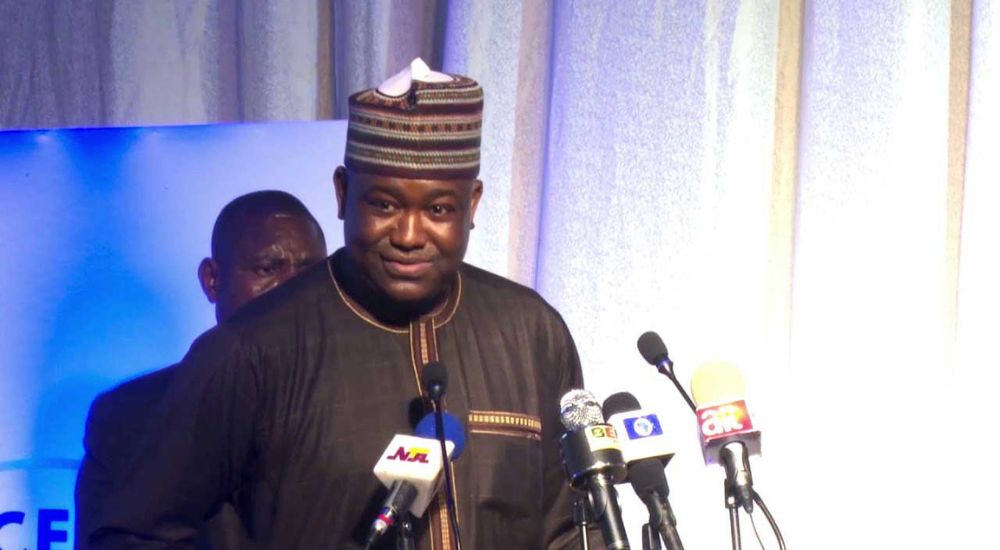
The appearance of former Group Chief Executive Officer of the Nigerian National Petroleum Company Limited (NNPC), Mallam Mele Kyari, before the Senate Committee on Public Accounts offers an opportunity to reflect on one of the defining features of his leadership at the national oil company: the institutionalisation of transparency and financial accountability.
At a time when public institutions are increasingly being called upon to demonstrate accountability in the management of public resources, Kyari’s appearance before the Senate was significant not only because of the financial issues under examination but also because it brought into focus the reforms he said were introduced to open up the operations and financial records of NNPC to public scrutiny.
In his address to the committee, Kyari made a point of acknowledging the importance of legislative oversight, describing his appearance before the senators as an honour and privilege. He also expressed regret over his inability to attend previous hearings, explaining that his absence was occasioned by medical and family circumstances.
However, beyond the circumstances surrounding his previous absence, the former NNPC boss used the opportunity to restate the philosophy that guided his leadership of the national oil company between 2019 and 2025: that public institutions must account for the resources entrusted to them and remain responsible to their stakeholders.
For Kyari, this principle was particularly important at NNPC because Nigerians are the ultimate stakeholders in the national oil and gas industry.
His testimony therefore provided an opportunity to revisit the transparency framework he said he introduced upon assuming leadership of the corporation in 2019, a decision he described as a turning point in the company’s institutional history.
One of the most significant aspects of that initiative was the decision to publish NNPC’s financial records, beginning with its 2018 accounts. According to Kyari, the decision represented a departure from the company’s previous practice, as its financial records had not been publicly disclosed throughout its first 43 years of existence.
It was a bold institutional decision, particularly for an organisation that had operated for decades under intense public interest, political scrutiny and questions about the management of the country’s petroleum resources.
Kyari acknowledged before the Senate that making financial records public was not without risks. Disclosure, he explained, inevitably attracted scrutiny, public commentary and criticism. However, he maintained that the benefits outweighed the challenges because public scrutiny created opportunities for institutional improvements.
The former GCEO said the sustained public discourse generated by the publication of the company’s accounts exposed areas requiring attention and produced recommendations that helped improve its operations.
This is an important dimension of transparency that is sometimes overlooked in discussions about public-sector reforms. Transparency is not merely about making information available; it is also about creating an environment in which institutions can be questioned, examined and challenged to improve their performance.
In this regard, Kyari’s account before the Senate placed financial disclosure at the centre of the institutional changes he associated with his tenure.
Transparency & The NNPC transformation
The significance of this decision becomes clearer when considered against the financial position Kyari said he inherited. He told the committee that NNPC recorded a loss of N803bn in 2018, the year preceding his assumption of leadership. According to him, his management team embarked on measures to reverse the situation, eventually moving the company from losses to sustained profitability.
He described the financial progress recorded during his tenure as evidence that accountability had become a central pillar of the company’s activities.
While financial performance is influenced by several factors, including market conditions, operational efficiency, investment decisions and government policies, the publication of audited financial statements provides an important basis for measuring the performance of a public institution.
For an organisation as strategically important as NNPC, whose activities have far-reaching implications for government revenue, foreign exchange earnings, energy security and the wider economy, the availability of financial information is particularly important.
It enables stakeholders to examine the company’s performance, assess management decisions and demand explanations where necessary.
This was the institutional culture Kyari said his administration sought to establish.
Perhaps one of the most important points in Kyari’s presentation was his insistence that transparency should not be treated as a threat to public leadership.
Rather, he argued that public scrutiny was beneficial to NNPC because it encouraged management to take responsibility for its decisions and improve the company’s operations.
His position was that disclosure exposed the organisation to criticism but also provided an opportunity to correct weaknesses, introduce cost-saving measures and improve corporate responsibility.
This approach is particularly relevant in the context of the Petroleum Industry Act (PIA) 2021, which fundamentally changed the legal and institutional framework governing Nigeria’s petroleum industry.
The legislation provided for the transformation of the former Nigerian National Petroleum Corporation into NNPC Limited, a commercial entity incorporated under the Companies and Allied Matters Act.
Kyari reminded the senators that the National Assembly itself established the framework for the creation of NNPC Limited through the PIA. His team, he said, acted in accordance with the decisions of the legislature and the provisions of the law.
The transformation was a major institutional undertaking that required changes in corporate governance, financial reporting, operational structures and the relationship between the national oil company and its stakeholders.
Kyari’s argument before the committee was that the reforms undertaken during his tenure were guided by the need to make NNPC more accountable and commercially responsible.
Understanding The N210trn Controversy
To appreciate the significance of Kyari’s appearance before the Senate, it is necessary to understand the background to the N210trn controversy, which has dominated discussions about the financial records of NNPC Limited.
The controversy emerged from the examination of the company’s audited financial statements covering the period between 2017 and 2023 by the Senate Committee on Public Accounts.
The committee’s inquiry followed concerns raised during its consideration of reports from the Office of the Auditor-General for the Federation, particularly those relating to the 2019 and 2020 financial years.
Following its examination of NNPC’s audited accounts and financial records of the former National Petroleum Investment Management Services (NAPIMS), the committee raised 19 audit queries requiring the company to provide explanations for inconsistencies and questionable entries identified in the records.
At the centre of the controversy were two major figures: approximately N103trn recorded as accrued expenses in the company’s 2022 audited financial statements and N107trn recorded as sundry receivables as of December 2023.
The combined figures generated the widely publicised N210trn controversy.
The N103trn accrued expenses entry attracted particular attention because the committee questioned the lack of specific breakdowns for items including retention fees, legal fees and audit fees.
According to explanations attributed to NNPC, the amount represented cumulative expenditure by joint venture partners under the joint venture cash-call arrangement.
However, the lawmakers questioned the explanation, particularly because the cash-call regime had been abolished in 2016, with the change taking effect from January 2017.



NDC accuses Benue govt of plotting to disrupt Obi’s visit

Obi to visit Yelwata, hold town hall meeting in Benue Wednesday – NDC

Kyari At Senate: A Leadership Legacy Anchored On Transparency

ONC President General Extends Warm Birthday Felicitations To Hon. Joe Progress

Nigeria’s solid minerals revenue hits N101bn in nine months — Minister

United Nigeria Airlines apologises after expert questions six-hour flight delay

How Court Remanded FIJ Journalist Daniel Ojukwu In Kuje Prison

Aguata Sons In Onitsha Back Ofobuike For Reps

ADC, NDC, PDP decry attacks on opposition parties in Enugu

EFCC arraigns ALSCON, Russian director on N582.4 million money laundering charges
Tinubu Encouraging Political Indiscipline With Opposition Inclusion In Campaign Council — Olawepo-Hashim

Court rejects Euracare’s bid to halt inquest into Adichie’s son’s death

Nigeria records 268 Lassa fever deaths as fatality rate rises to 23.6% – NCDC

CJN, AGF, NBA president charges SANs on upholding ethics, earning public trust

No Light, Expensive Fuel: How Alimosho Residents Are Spending N5,000 – N15,000 Daily To Survive – Traders Lament

Nigerian govt to invest more in technology, intelligence to tackle insecurity

 Special Reports7 days ago
United Nigeria Airlines Boss Receives Trailblazer In Aviation Award At Daily Times Centenary Celebration
- Top Stories5 days ago
“Courts Must Guard Their Independence, Impartiality And Integrity” — NDC Warns After Atiku’s Candidacy Is Nullified
- Politics7 days ago
“Hospitals Must Assess Emergency Patients Within 15 Minutes” — Senate Advances Bill Proposing Six-Month Jail, ₦300,000 Fine
-
 News7 days ago
“Destroying Campaign Posters Is A Criminal Offence” — IGP Disu Orders Nationwide Crackdown, Cites Criminal Code, Penal Code Ahead Of 2027 Elections
- Special Reports6 days ago
“The Appeal Fails” — Court Of Appeal Rejects Turaki-Led PDP Recognition Bid, Upholds ₦70m Costs, Awards Additional ₦15m
- Politics7 days ago
“This Legislation Is Not Intended To Undermine Property Rights” — Reps Pass Bill To Limit FCT Advance Rent To 12 Months
- Politics7 days ago
“State Police Bill Has Received The Backing Of 29 State Assemblies” — Kalu Announces Transmission As Senate Confirms 30 Approvals
- Top Stories5 days ago
“Leadership Must Emerge Through Lawful Process, Not Imposition” — Bala Gombe Commends Justice Lifu Over ADC Judgment