Special Reports
Lagos governorship candidates clash over waste management, defend political records


Beyond waste management, the candidates faced questions about their political histories and whether their experience prepared them to govern Lagos.
Lagos governorship candidates on Sunday disagreed over how to address the state’s waste management crisis, with proposals ranging from returning a greater role to local governments to investing in recycling and waste recovery facilities.
Gbadebo Rhodes-Vivour of the African Democratic Congress (ADC) described Lagos as a state that stinks, blaming years of poor management for the deterioration in refuse collection.
He rejected the argument that population growth was mainly responsible, saying the state had managed its waste more effectively in the past despite the increasing number of residents.
Mr Rhodes-Vivour said Lagos had about 1,000 waste collection trucks under former Governor Babatunde Fashola, but that the number had fallen to about 200, according to information available to him.
He blamed the decline partly on the centralisation of waste management, which he said had weakened the role of local governments.
“We don’t actually have a waste management system. We have a waste pick and dump system,” he said.
He proposed involving local governments in refuse collection and requiring households to separate their waste so that recyclable materials could be collected and processed.
He said the arrangement would create economic opportunities and allow residents and the different levels of government to benefit from waste recycling.
Lagos introduced its Private Sector Participation (PSP) scheme for domestic waste collection in 1997, beginning with a pilot in Kosofe and Bariga local government areas. The scheme was later extended across the state, with the Lagos Waste Management Authority (LAWMA) taking over its management in 2007. LAWMA has identified unreliable service delivery and difficulties enforcing standards as among the scheme’s weaknesses.
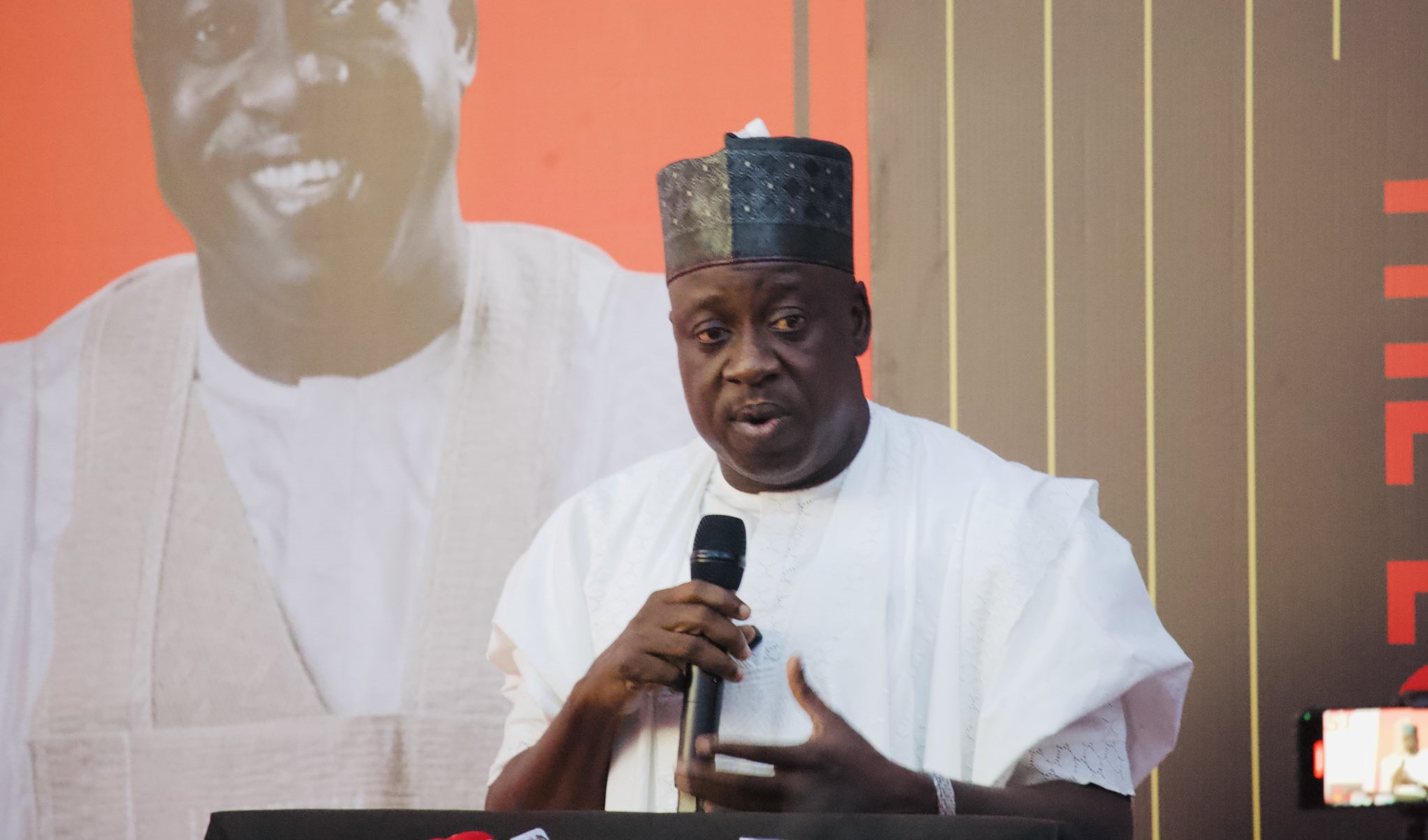
Deputy Governor Obafemi Hamzat, the All Progressives Congress (APC) candidate, defended the government’s approach, saying Lagos was moving away from the practice of collecting refuse and dumping it in landfills.
He said the volume of waste generated in the state, coupled with limited land for disposal, made it necessary to invest in facilities that could recover useful materials.
Mr Hamzat said the government was developing Olusosun and Solous 3 in Alimosho as transfer stations, while a material recovery facility had been established at Erekiti. Similar facilities, he added, were planned for Kinsinki and Chikurudu.
The explanation came against the backdrop of the state’s continuing waste collection problems. In September, Governor Babajide Sanwo-Olu declared a state of emergency on waste collection after acknowledging delays in refuse evacuation.
During an inspection of the Olusosun dumpsite, the governor announced plans to increase disposal capacity, deploy additional equipment and improve the operations of PSP operators. Transfer-loading stations were also proposed for Olusosun and Solous 3.
Responding to the description of Lagos as a smelly city, Mr Hamzat said it would be unfair to apply that description to the entire state, although he acknowledged that some areas had unpleasant odours.
He admitted that waste management remained a challenge, pointing to inadequate collection trucks, reception facilities and transfer stations.
Funso Doherty, the Nigeria Democratic Congress (NDC) candidate, said waste was accumulating faster than it was being collected.
He argued that the problem extended beyond household refuse to liquid and human waste, and raised concerns about pollution from the Olusosun dumpsite and its effects on nearby communities.
Beyond waste management, the candidates faced questions about their political histories and whether their experience prepared them to govern Lagos.
Mr Rhodes-Vivour, who came second in the 2023 governorship election on the Labour Party platform before moving to the ADC, was asked whether his performance in that election and subsequent defection could affect his chances in 2027.
He said he was focused on reaching voters and learning from the mistakes of his previous campaign. He also questioned the conduct of the 2023 election, arguing that a credible process would be important in determining the outcome of the next poll.
The Independent National Electoral Commission declared Mr Sanwo-Olu the winner in 2023 with 762,134 votes. Mr Rhodes-Vivour polled 312,329 votes, while the Peoples Democratic Party candidate, Abdul-Azeez Adediran, popularly known as Jandor, secured 62,449 votes.
On his preparedness for office, Mr Rhodes-Vivour pointed to his work in urban development and housing, including proposals for low-income housing developed with the Chinese and American governments and Temple Housing.
He also challenged the emphasis on previous executive experience, citing former Lagos Governor Lateef Jakande as an example of a leader whose vision and commitment shaped his administration.
Mr Hamzat faced questions about whether he would govern independently or remain under the influence of the political establishment that has controlled Lagos since 1999.
He defended his capacity to make independent decisions, citing his academic and professional background, including earning a PhD at 27 and serving as an executive director in an American organisation. He also referred to his family’s political background and his experience in public administration, transport and budgeting.
His record in government also came under scrutiny, with questions about why residents should trust him to tackle flooding, traffic congestion, housing shortages, waste collection and the rising cost of living after nearly eight years as deputy governor and in previous positions in the state government.
Mr Hamzat said he was proud of the state’s achievements but acknowledged that more needed to be done.
He cited the Lekki-Ikoyi Bridge, which he said was delivered while he served as commissioner for transport and works, as well as the Bus Rapid Transit system and the establishment of transport agencies.


CCCC Religion And Traditions Contact Committee (Ward D Anifowose) Holds Islamic Prayers For Total Victory For APC Candidates

Lagos governorship candidates clash over waste management, defend political records

I’m impressed with Gov Lawal’s performance in Zamfara, says Emir of Kano

Lagos governorship candidates offer competing plans on transport, healthcare

Lagos governorship candidates disagree over rent control, housing, flooding

Lagos IGR Soars But Residents Don’t Feel Impact — Rhodes-Vivour

Ogun 2027: Senator Adeola Yayi Pledges To Facilitate More Developmental Projects

Kano Police Arrest Suspect Over 9-Year-Old’s Abduction

INVESTIGATION: How Anthony Kila falsified all his academic qualifications – from Bachelor’s to Doctorate

UK migrant workers wear chains, sing Asa’s ‘Jailer’ to protest proposed visa reforms

How Lagos Families Are Allegedly Buying Contaminated Meat In Dirty Conditions At Mushin, Oshodi, Mile 12, Surulere Markets

Ogaga Ifowodo wins $100,000 Nigeria Prize for Literature

Emirates Holidays unveils Thailand Pass, unlocking exclusive perks and savings for holidaymakers
Man Loses Two Properties, N8m In N132m Money Laundering Case

Pantami reacts after INEC omits his name from Gombe governorship candidates list

NLO warns clubs, players against participation in unapproved Private Leagues

 Special Reports5 days ago
ADC warns Sokoto govt, vows to hold governor responsible for intimidation, violence against opposition

 Special Reports6 days ago
Health Review: Ebola case, child malnutrition, medicine security, other developments that shaped October
- Special Reports6 days ago
2027: PDP expels aspirants challenging Pantami’s candidacy as Gombe governorship candidate
- Investigations6 days ago
WEMA BANK SETS NOVEMBER 6 FOR HACKAHOLICS 7.0 GRAND FINALE, UNVEILS “FESTIVAL OF THE FUTURE” AS THEME
- Special Reports4 days ago
United Nigeria Airlines Boss Receives Trailblazer In Aviation Award At Daily Times Centenary Celebration
- Special Reports6 days ago
Failure to prosecute electoral offenders, threat to free, fair elections, says NHRC
- Politics5 days ago
“28 State Assemblies Have Approved The Bill” — NASS Moves To Transmit State Police Amendment To Tinubu For Assent
- Top Stories3 days ago
“Courts Must Guard Their Independence, Impartiality And Integrity” — NDC Warns After Atiku’s Candidacy Is Nullified