Special Reports
Lagos governorship candidates offer competing plans on transport, healthcare


The candidates disagreed over whether private investors could finance the expansion of Lagos’s rail network without substantial government funding
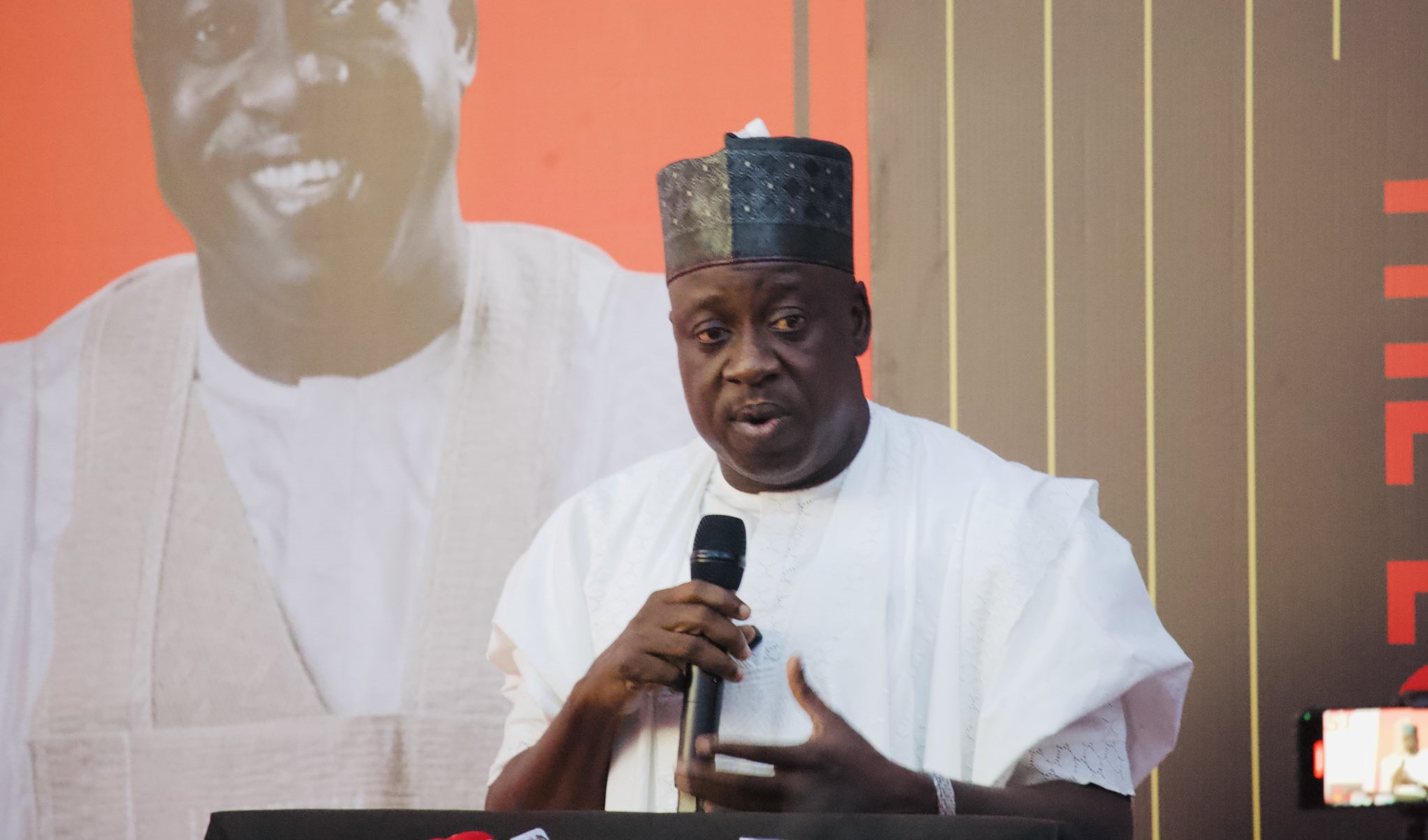
Candidates in the Lagos State governorship debate have outlined different approaches to tackling traffic congestion and improving healthcare, with proposals ranging from expanding public transportation to increasing hospital funding and providing free treatment for mothers and children.
African Democratic Congress (ADC) candidate Gbadebo Rhodes-Vivour on Sunday at the debate said poor urban planning and an inadequate transport network were partly responsible for the long hours residents spend commuting.
He stated that traffic had become so much a part of daily life that residents had come to accept spending several hours travelling to and from work, often at the expense of time with their families.
“Traffic is not a lifestyle and we should not have to work to get to work,” Mr Rhodes-Vivour said.
He proposed spreading development across the state and expanding the rail network with private-sector funding.
According to him, infrastructure finance companies could provide the money for the expansion, allowing the projects to be completed within two and a half years and repaid over 30 years without placing the entire financial burden on the state government.
He also proposed shorter bridges linking the eastern foreshore with the Ibeju-Lekki axis to provide alternative routes for motorists.
On water transportation, Mr Rhodes-Vivour called for more ferry services, accessible terminals and cable cars to complement the rail network. He said commuters should be able to park their vehicles at ferry terminals and continue their journeys by water.
He also proposed dedicated bicycle lanes, improved roads within communities and the development of local centres across local governments to reduce the need for residents to travel long distances to access basic services.
Deputy Governor Obafemi Hamzat, the All Progressives Congress (APC) candidate, said his administration would build on the existing bus rapid transit (BRT) system and improve connections between road, rail and water transportation.
He noted that the BRT system had recorded 77 million passenger journeys since its introduction. He proposed increasing the number of buses from about 1,000 to 4,000, mainly using compressed natural gas (CNG), to move about one million passengers daily.
Mr Hamzat also proposed dedicated BRT lanes linking Marina with Epe and Badagry, among other routes.
He said commuters should be able to use ferries, trains and BRT buses with a single payment system, allowing them to move between different transport services without making separate payments.
He proposed deploying electric ferries to reduce operating costs and increase passenger capacity, with routes linking Oworonshoki, Ikorodu, Epe and Badagry.
Mr Hamzat added that the government had identified traffic junctions for intervention to ease congestion.
The proposals are linked to the Lagos State Government’s broader transport plans. The Lagos Metropolitan Area Transport Authority (LAMATA) says its Strategic Transport Master Plan provides for an integrated system involving rail, BRT, waterways and other transport services.
The candidates disagreed over whether private investors could finance the expansion of Lagos’s rail network without substantial government funding.
Mr Rhodes-Vivour said private financing was possible, adding that he had held discussions with infrastructure financiers who had presented proposals to the Lagos State Government.
He argued that the project was commercially viable and should not take decades to complete.
Mr Hamzat disagreed, saying no sub-national government in Africa had successfully built a rail network entirely through private-sector financing.
He recalled that the Lagos government spent three years under former Governor Babatunde Fashola seeking private investors to finance the Blue and Red rail lines but was unsuccessful.
He stated that government must first invest in rail infrastructure before considering concessions to private operators.
Mr Hamzat also warned that relying on passenger fares alone to finance rail projects could make transportation too expensive for ordinary residents.
Funso Doherty of the Nigeria Democratic Congress (NDC) blamed part of Lagos’s traffic problem on poor management of existing infrastructure and the failure to modernise public transportation.
He criticised the condition of commercial buses operating in the state, describing many as dilapidated and poorly managed. He said the government needed to replace the fragmented system with modern buses that offered safer and more comfortable journeys.
Mr Doherty also alleged that vested interests had benefited from the existing transport arrangement and that political considerations had prevented successive administrations from confronting the informal network associated with transport union levies and touts.
He noted that he would have the political will to reform the system because his administration would depend on voters rather than the informal transport network for political support.
Research by the International Growth Centre has examined the effects of Lagos’s Bus Reform Initiative on private minibus operators. A 2025 study found that the introduction of public buses affected minibus services and drivers’ earnings, highlighting the need to consider informal operators when planning transport reforms.
Deji Doherty of the People Democratic Party (PDP) also identified heavy-duty truck movements, transport union activities, poor roads and delays in completing the Fourth Mainland Bridge as factors contributing to congestion.

Lagos police ask political parties to notify command ahead of 2027 rallies

Abiodun commends DSS, Police for rescuing kidnap victims, vows Ogun won’t be criminals’ safe haven

CCCC Religion And Traditions Contact Committee (Ward D Anifowose) Holds Islamic Prayers For Total Victory For APC Candidates

Lagos governorship candidates clash over waste management, defend political records

I’m impressed with Gov Lawal’s performance in Zamfara, says Emir of Kano

Lagos governorship candidates offer competing plans on transport, healthcare

Lagos governorship candidates disagree over rent control, housing, flooding

Lagos IGR Soars But Residents Don’t Feel Impact — Rhodes-Vivour

INVESTIGATION: How Anthony Kila falsified all his academic qualifications – from Bachelor’s to Doctorate

How Lagos Families Are Allegedly Buying Contaminated Meat In Dirty Conditions At Mushin, Oshodi, Mile 12, Surulere Markets

UK migrant workers wear chains, sing Asa’s ‘Jailer’ to protest proposed visa reforms

Ogaga Ifowodo wins $100,000 Nigeria Prize for Literature

Emirates Holidays unveils Thailand Pass, unlocking exclusive perks and savings for holidaymakers
Man Loses Two Properties, N8m In N132m Money Laundering Case

Pantami reacts after INEC omits his name from Gombe governorship candidates list

NLO warns clubs, players against participation in unapproved Private Leagues

 Special Reports5 days ago
ADC warns Sokoto govt, vows to hold governor responsible for intimidation, violence against opposition

 Special Reports6 days ago
Health Review: Ebola case, child malnutrition, medicine security, other developments that shaped October
- Special Reports6 days ago
2027: PDP expels aspirants challenging Pantami’s candidacy as Gombe governorship candidate
- Investigations6 days ago
WEMA BANK SETS NOVEMBER 6 FOR HACKAHOLICS 7.0 GRAND FINALE, UNVEILS “FESTIVAL OF THE FUTURE” AS THEME
- Special Reports4 days ago
United Nigeria Airlines Boss Receives Trailblazer In Aviation Award At Daily Times Centenary Celebration
- Special Reports6 days ago
Failure to prosecute electoral offenders, threat to free, fair elections, says NHRC
- Politics5 days ago
“28 State Assemblies Have Approved The Bill” — NASS Moves To Transmit State Police Amendment To Tinubu For Assent
- Top Stories3 days ago
“Courts Must Guard Their Independence, Impartiality And Integrity” — NDC Warns After Atiku’s Candidacy Is Nullified