Special Reports
New book about Buhari’s military career, presidency set for public presentation


The biography traces Mr Buhari’s life across different political eras, from his childhood in Daura, Katsina State, and military career to his emergence as a leading opposition figure and eventual election as president in 2015.
The authorised biography of late President Muhammadu Buhari will be presented to the public on 19 November in Abuja, offering a three-volume account of his life, military career, political journey and eight-year presidency.
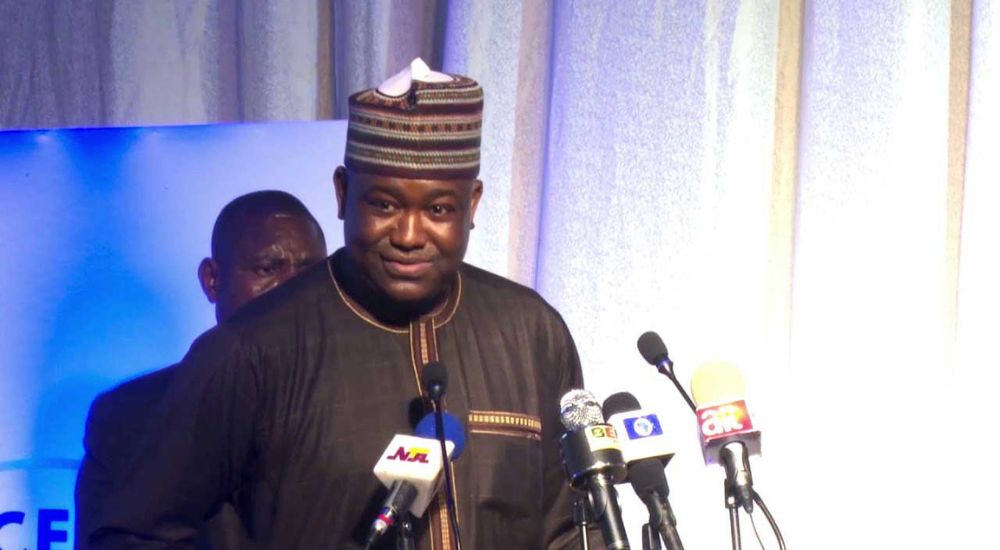
Speaking at a press conference on Wednesday ahead of the presentation, Mr Yakubu said the work was the product of more than two years of research, interviews, writing, editing and verification.
He said the biography traces Mr Buhari’s life across different political eras, from his childhood in Daura, Katsina State, and military career to his emergence as a leading opposition figure and eventual election as president in 2015.
According to the author, the challenge was to understand how the different phases of Mr Buhari’s life connected and how his experiences shaped his approach to leadership and governance.
Mr Buhari served as a military Head of State from 1983 to 1985 before returning to the political scene as a presidential candidate in several elections. He eventually won the presidency in 2015 and served two terms until 2023.
Mr Yakubu said the biography examines the questions surrounding Mr Buhari’s transformation from a military officer to a democratic politician, his return to power through the ballot box and the realities of governing a country as complex as Nigeria.
The biography is divided into three volumes, each examining a distinct phase of Mr Buhari’s life and public career.
The first volume, The Phenomenon, traces his ancestry and childhood, military formation, participation in the Nigerian Civil War, governorship, detention and years outside power. It also examines his prolonged political struggle, which culminated in his election as president in 2015.
The second volume, The Presidency, examines his administration between 2015 and 2023. It explores the institutions, personalities, decisions, pressures and crises that shaped the government, drawing on official records, documentary evidence and accounts from people who participated in the administration.
The third volume, The Reckoning, examines the major issues through which Mr Buhari’s legacy will be assessed, including security, the economy, infrastructure, anti-corruption, governance, foreign affairs, social policy, institutional reform, national cohesion and leadership.
Mr Yakubu said the titles reflect the different stages of Mr Buhari’s public life.
“The Phenomenon speaks to Buhari’s extraordinary persistence. The Presidency moves from the pursuit of power to the consequences of possessing it. The Reckoning recognises that every public life eventually reaches the point where intention, action, consequence and historical judgement must confront one another,” he said.
Mr Yakubu said the work was authorised by Mr Buhari, a decision that gave him access to people, personal recollections and documents that would otherwise have been difficult to obtain.
However, he said the authorisation did not compromise his independence as a biographer.
He acknowledged that Mr Buhari, who died last year, remained a divisive figure in Nigerian politics, with supporters who regarded him as disciplined, restrained and incorruptible, and critics who associated his leadership with rigidity, economic misjudgement and political insensitivity.
Mr Yakubu said his responsibility was to examine different interpretations of Mr Buhari’s life and let evidence, chronology and the consequences of his decisions inform the account.
He said this required listening to people who admired the former president while also examining criticisms of his leadership, without assuming that explaining a decision amounted to justifying it.
The author said the biography examines the expectations that accompanied Mr Buhari’s emergence as president in 2015, particularly on security, anti-corruption and economic renewal, against the outcomes of his administration.
He acknowledged that the eight-year presidency recorded major infrastructure programmes and institutional initiatives, as well as some security gains. However, it also witnessed the spread of new forms of insecurity and persistent questions about the effectiveness of anti-corruption efforts.
The administration also faced difficult debates over monetary policy, public debt, fuel subsidies, poverty, unemployment and economic hardship.
Mr Yakubu said he interviewed several people who worked closely with Mr Buhari, some of whom gave sharply different accounts of the same events.
He said the differences reflected the perspectives of those involved in government, including ministers, presidential advisers, military officers and civil servants.
The author also explained that Mr Buhari’s death changed the circumstances of the research by ending the possibility of further direct interviews and clarifications.
However, he said his death did not turn the biography into a memorial or justify softening assessments of his record.
“There are passages that recognise achievement. There are others that examine failure. Some will please his admirers. Others will make them uncomfortable. The same will be true for his critics. That is the consequence of attempting to treat a life whole,” he said.
Mr Yakubu said the books also examine the institutions and individuals that shaped the former president’s administration, stressing that Nigeria’s governance cannot be understood through the president’s actions alone.
He said the work should not be regarded as the final account of Mr Buhari’s life and presidency, as some records remain unavailable, several participants are still alive, and new evidence may emerge.
“Biography enters an argument. It does not close it. My hope is that these volumes substantially enlarge the evidence available for that argument,” he said.
He added that the project also seeks to address the loss of Nigeria’s historical records, as personal papers disappear, participants die, and memories become shaped by partisan interpretations.


2027: Former Obidient Movement Coordinator Dumps Peter Obi for SDP

New book about Buhari’s military career, presidency set for public presentation

Geologist, Traditional Rulers Discuss Ending Borehole Collapsing In Enugu Communities

Senate threatens to summon minister, telecom operators over poor services, airtime deductions

Iran designates Argentine navy, air force terrorist organisations

Traffickers Groom Children, Threaten To Leak Private Pictures Online – NAPTIP

Hamzat’s PROMISE: Putting The Lagosian At The Centre of Governance

Tinubu rewards Flamingos with ₦100m each after historic U-17 World Cup triumph

ADC, NDC, PDP decry attacks on opposition parties in Enugu

EFCC arraigns ALSCON, Russian director on N582.4 million money laundering charges
Tinubu Encouraging Political Indiscipline With Opposition Inclusion In Campaign Council — Olawepo-Hashim

Court rejects Euracare’s bid to halt inquest into Adichie’s son’s death

CJN, AGF, NBA president charges SANs on upholding ethics, earning public trust

Nigeria records 268 Lassa fever deaths as fatality rate rises to 23.6% – NCDC

Nigerian govt to invest more in technology, intelligence to tackle insecurity

No Light, Expensive Fuel: How Alimosho Residents Are Spending N5,000 – N15,000 Daily To Survive – Traders Lament

 Special Reports7 days ago
United Nigeria Airlines Boss Receives Trailblazer In Aviation Award At Daily Times Centenary Celebration
- Top Stories6 days ago
“Courts Must Guard Their Independence, Impartiality And Integrity” — NDC Warns After Atiku’s Candidacy Is Nullified
- Politics7 days ago
“Hospitals Must Assess Emergency Patients Within 15 Minutes” — Senate Advances Bill Proposing Six-Month Jail, ₦300,000 Fine
-
 News7 days ago
“Destroying Campaign Posters Is A Criminal Offence” — IGP Disu Orders Nationwide Crackdown, Cites Criminal Code, Penal Code Ahead Of 2027 Elections
- Politics7 days ago
“State Police Bill Has Received The Backing Of 29 State Assemblies” — Kalu Announces Transmission As Senate Confirms 30 Approvals
- Special Reports7 days ago
“The Appeal Fails” — Court Of Appeal Rejects Turaki-Led PDP Recognition Bid, Upholds ₦70m Costs, Awards Additional ₦15m
- Politics7 days ago
“This Legislation Is Not Intended To Undermine Property Rights” — Reps Pass Bill To Limit FCT Advance Rent To 12 Months
- Top Stories7 days ago
“We Legally Acquired The Property In 2008” — Skyview Properties Cites C Of O, Lagos High Court Judgment In Lekki Land Dispute