Politics
Senate Passes Bill Empowering CBN To Regulate Major Fintech Companies, Systemically Important Non-Bank Financial Institutions


The Senate has passed, for third reading, a bill seeking to strengthen the Central Bank of Nigeria’s (CBN) regulatory powers over major financial technology companies and other non-bank financial institutions whose operations could pose risks to the stability of the country’s financial system.
The proposed legislation seeks to amend the Banks and Other Financial Institutions Act (BOFIA), 2020, by empowering the apex bank to designate qualifying fintech operators and other non-bank financial institutions as Systemically Important Institutions (SIIs), thereby subjecting them to enhanced regulatory supervision.
The bill, SB. 959, titled A Bill for an Act to Amend the Banks and Other Financial Institutions Act, No. 5 of 2020, to Provide for the Designation, Registration and Enhanced Supervision of Systemically Important Institutions; and for Other Related Matters, was passed on Tuesday, November 10, 2026, following clause-by-clause consideration by the Senate Committee of the Whole.
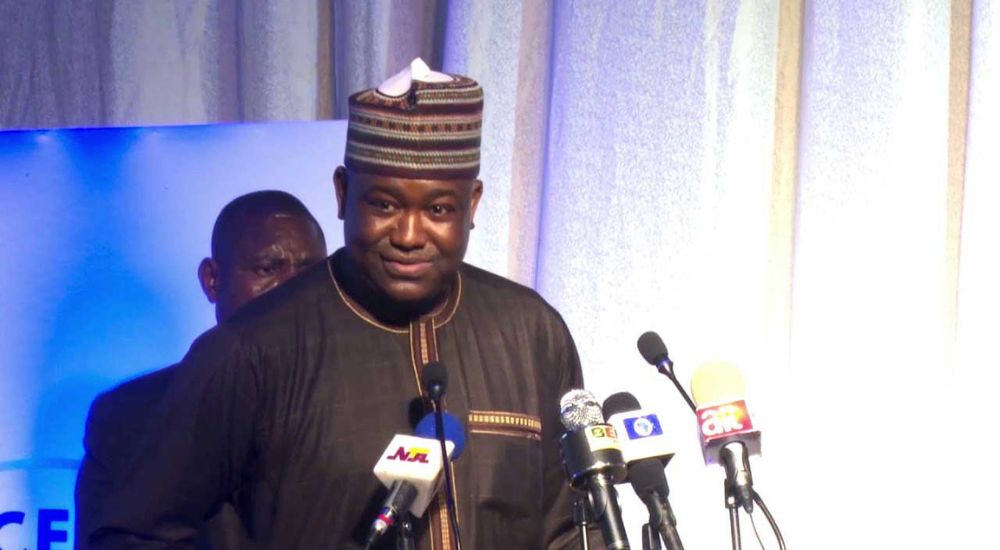
The Chairman of the Senate Committee on Banking, Insurance and Other Financial Institutions, Senator Mukhail Adetokunbo Abiru, representing Lagos East, presented the committee’s report during plenary presided over by Senate President Godswill Akpabio.
Abiru sponsored the legislation alongside other members of the Senate Committee on Banking, Insurance and Other Financial Institutions.
Under the proposed amendment, the CBN would be authorised to identify and designate qualifying non-bank financial institutions as systemically important based on their size, transaction volumes, customer base and level of interconnectedness with the wider financial system.
The designation would bring such institutions under stricter regulatory requirements intended to address risks associated with their operations and protect the stability of the financial services industry.
The bill provides for the establishment of an official register of designated Systemically Important Institutions and enhanced supervision covering corporate governance, cybersecurity, technology risk management and operational resilience.
It also introduces provisions for stress testing, data integrity assessments, additional regulatory reporting requirements and supervisory access to relevant information and operational systems of designated institutions.
Other provisions seek to strengthen beneficial ownership disclosures, improve transparency in corporate ownership and control structures, and establish enforcement mechanisms and sanctions against institutions that fail to comply with applicable regulatory requirements.
The proposed framework is intended to address emerging vulnerabilities in Nigeria’s financial sector, particularly the increasing influence of large technology-driven financial service providers whose activities have become closely connected with conventional banking operations.
According to the Senate committee, the rapid expansion of digital payments, electronic transfers and other technology-enabled financial services has created a need for regulatory supervision that reflects the potential impact of major non-bank operators on the wider financial system.
The committee explained that the legislation was developed following consultations with regulatory agencies, financial institutions, professional bodies and other stakeholders.
It disclosed that the bill received broad support during a public hearing held on March 4, 2026.
The CBN supported strengthening the statutory framework for supervising systemically important non-bank financial institutions, particularly large fintech operators whose transaction volumes, customer bases and operational connections could have implications for financial stability.
The Federal Competition and Consumer Protection Commission (FCCPC) also supported stronger oversight but emphasised the need to clearly distinguish between prudential regulation, competition enforcement and consumer protection.
The FCCPC urged effective coordination between itself and the CBN to prevent overlapping regulatory responsibilities and ensure that the proposed framework promotes fair competition while protecting users of financial services.
Other institutions that supported the bill included the Nigeria Deposit Insurance Corporation (NDIC), Nigerian Communications Commission (NCC), Ministry of Finance Incorporated, Federal Ministry of Industry, Trade and Investment, Bank of Industry and Economic and Financial Crimes Commission (EFCC).
Several commercial banks and other financial institutions also endorsed the proposed amendment.
The committee stated that stakeholders generally supported measures aimed at strengthening financial stability, promoting responsible digital innovation, improving regulatory coordination, ensuring operational compliance and protecting consumers.
It explained that an inclusive legislative approach was adopted to accommodate the concerns and recommendations of relevant institutions and members of the public.
Before the public hearing, advertisements were placed in print and electronic media inviting memoranda and submissions from stakeholders and other interested persons.
The hearing was formally declared open on behalf of the Senate President by the Senate Chief Whip, Senator Mohammed Tahir Monguno, representing Borno North.
The bill had earlier passed second reading on Thursday, December 4, 2025, before being referred to the Senate Committee on Banking, Insurance and Other Financial Institutions for further legislative consideration.
Its passage at third reading marks another stage in efforts to strengthen the legal framework governing the country’s growing digital financial services industry.
The proposed amendment seeks to ensure that financial institutions whose operations could affect the broader economy are subjected to appropriate supervision, irrespective of whether they operate as conventional banks or technology-driven financial service providers.
It also aims to strengthen regulatory accountability, improve consumer confidence and ensure that technological innovation does not undermine the integrity and stability of Nigeria’s financial system.
.. Senate Passes Bill Empowering CBN To Regulate Major Fintech Companies, Systemically Important Non-Bank Financial Institutions … NewsNGR.


Abeokuta North: Senator Adeola Yayi Orders Immediate Construction Of Two Roads

2027: Abdulsalami Panel Uncovers 109 Breaches, Names States at Risk

2027: Sule Lamido has not endorsed Tinubu, Jigawa PDP replies Shettima

Senate Passes Bill Empowering CBN To Regulate Major Fintech Companies, Systemically Important Non-Bank Financial Institutions

EXCLUSIVE: Stanbic IBTC Holdings Chief Executive Adimohanma Chukwuma Nwokocha Took Two Home Loans of N1.36 Billion From the Group’s Own Bank Seven Weeks After Taking Office and Holds Not One Share in the Company He Runs

2027: Tinubu’s manifesto outlines plan to recruit over 100,000 security personnel

“I Kidnapped Myself” — Police Arrest 54-Year-Old Delta Woman For Allegedly Staging Abduction To Extort ₦15m From Younger Brother

NUJ has no mandate to police journalism in Nigeria – Secrets Reporters – The Witness Nigeria

How Lagos Families Are Allegedly Buying Contaminated Meat In Dirty Conditions At Mushin, Oshodi, Mile 12, Surulere Markets

Delta records highest oil spill as nine incidents release nearly 130,000 litres of crude

ADC, NDC, PDP decry attacks on opposition parties in Enugu

EFCC arraigns ALSCON, Russian director on N582.4 million money laundering charges
Tinubu Encouraging Political Indiscipline With Opposition Inclusion In Campaign Council — Olawepo-Hashim

Court rejects Euracare’s bid to halt inquest into Adichie’s son’s death

Nigerian University to honour Ghanaian President John Mahama today

Nigeria records 268 Lassa fever deaths as fatality rate rises to 23.6% – NCDC

 Special Reports6 days ago
United Nigeria Airlines Boss Receives Trailblazer In Aviation Award At Daily Times Centenary Celebration
- Top Stories5 days ago
“Courts Must Guard Their Independence, Impartiality And Integrity” — NDC Warns After Atiku’s Candidacy Is Nullified
- Politics6 days ago
“Hospitals Must Assess Emergency Patients Within 15 Minutes” — Senate Advances Bill Proposing Six-Month Jail, ₦300,000 Fine
- Special Reports6 days ago
“The Appeal Fails” — Court Of Appeal Rejects Turaki-Led PDP Recognition Bid, Upholds ₦70m Costs, Awards Additional ₦15m
-
 News6 days ago
“Destroying Campaign Posters Is A Criminal Offence” — IGP Disu Orders Nationwide Crackdown, Cites Criminal Code, Penal Code Ahead Of 2027 Elections
- Politics6 days ago
“State Police Bill Has Received The Backing Of 29 State Assemblies” — Kalu Announces Transmission As Senate Confirms 30 Approvals
- Politics6 days ago
“This Legislation Is Not Intended To Undermine Property Rights” — Reps Pass Bill To Limit FCT Advance Rent To 12 Months
- Politics7 days ago
Osun APC Takes Fresh Decision on Tinubu’s Campaign Council