Special Reports
SPECIAL REPORT: Inside Lagos communities where public drains have become sewage channels

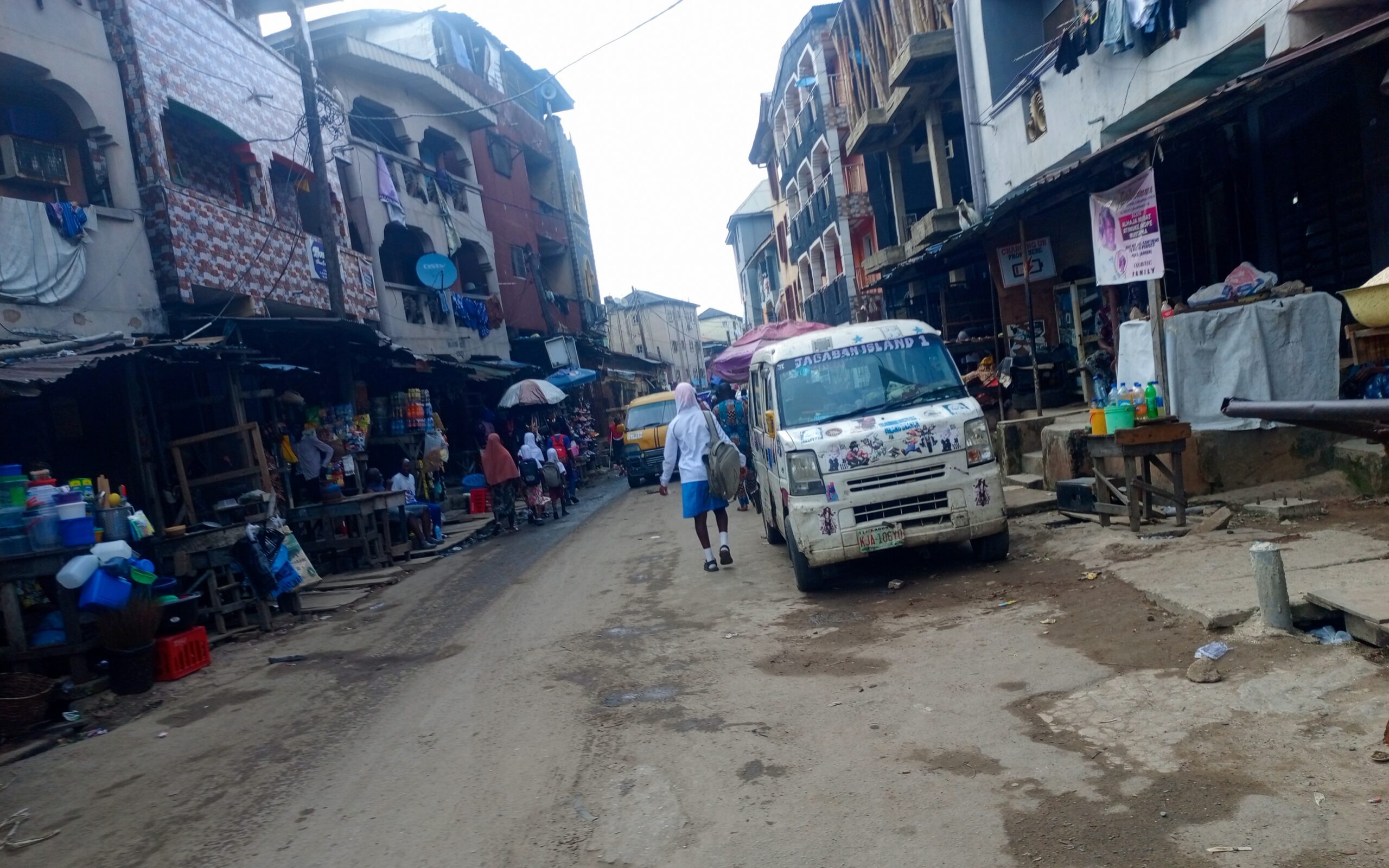
PREMIUM TIMES visited several communities on Lagos Island and found residential buildings discharging wastewater and sewage into public drains, exposing residents to health risks despite environmental laws prohibiting the practice.
Just after dawn on a humid morning in May, Enomfon Okure stepped out of her apartment on Braimoh-Igbo Street in Itafaji, Lagos Island, preparing for another workday in nearby Ikoyi.
The stench had become part of her mornings since January 2025, when she moved into the neighbourhood with her family.
Beside the road, black wastewater flowed slowly through an open drainage channel. At intervals, more toilet waste gushed from pipes protruding from nearby buildings and emptied directly into the drain.
Flies hovered over the murky water as pedestrians squeezed along the narrow walkway, trying to avoid contact with it.
For Mrs Okure, a nurse and mother of four, the scene has become an inescapable part of daily life.
“I am struggling to survive here,” she told PREMIUM TIMES.
“My husband rented this place because it is close to my office in Ikoyi. But when I arrived, I discovered that almost all the gutters in the area receive wastewater from houses. Some of them even carry human waste.”
Her greatest concern, she said, was the safety of her children.
“I don’t allow them to play outside because if they fall into the gutter, it will be dangerous,” she said.
Eventually, Mrs Okure said the situation became unbearable.
“I discussed it with my husband and decided to send the children back to Akwa Ibom to stay with relatives,” she said. “This environment is a gateway to diseases.”
Over several weeks, PREMIUM TIMES visited Braimoh-Igbo Street, Obe Street, Alli Street, Massey Street, Kakawa Street, Okepopo Street, Isale Gangan Street, Adeniji Adele, Tinubu Square and other parts of Lagos Island.
Across residential and commercial areas, this newspaper observed pipes from buildings discharging wastewater and toilet water directly into public drainage channels.
The problem extends beyond residential areas.
At Tinubu Square, one of Lagos Island’s busiest commercial centres, traders told PREMIUM TIMES that wastewater and sewage from public toilets and commercial buildings flow into the drainage network serving the area.
David Nonso, who sells clothing materials there, said traders had endured the foul smell for years.
“All the toilets in this market are connected to the drainage,” he said.
“When people flush, everything goes into the gutters. The smell can be terrible, especially when it rains or when the weather is very hot.”
PREMIUM TIMES observed wastewater and sewage flowing through open drains beside rows of shops as traders and shoppers moved through the commercial district.
Mr Nonso attributed the problem partly to the dense development on Lagos Island, where buildings are packed closely together.
“Their houses are too close to each other,” he said. “Nobody is even giving space for somebody to do soakaway.”
Ibrahim Abubakar, a tailor in the area, also said wastewater regularly flows through the drains in front of the market.
Another trader, Emeka Uzor, who sells electrical goods, expressed concern about the health implications for traders, customers and residents who come into contact with the polluted environment.
“The drainage was meant to carry rainwater, but now it carries everything,” Mr Nonso said. “People have become used to it because it has been happening for years.”
He said a disease outbreak in such a crowded commercial area could affect far more than the traders who work there.
“When disease breaks out, it affects everybody,” he said. “Even our children don’t come there because it is very bad. If somebody falls into that gutter, that one is terrible.”
PREMIUM TIMES also found another practice that could complicate efforts to inspect and maintain public drains.
In several locations, sections of drainage channels disappeared beneath buildings before re-emerging further down the street.
On parts of Braimoh-Igbo Street, Obe Street and adjoining roads, the newspaper observed buildings sitting over sections of drainage channels, leaving parts of the drains inaccessible from the street.


Iheanacho scores 17th league goal as Bursaspor share points with Antalyaspor

SPECIAL REPORT: Inside Lagos communities where public drains have become sewage channels

Dear Alhaji Atiku Abubakar, Remember, It’s Always God First, Nigeria Second!

2027 Politics Watch: From ADC’s court appeal to APGA’s Tinubu endorsement

Fraudulent Project – Lawyer Slams Tinubu Over Ibom Deep-Seaport Approval

“I Did Not Authorise Acceptance Of Blue Silk Rank” — Fani-Kayode Rejects NLS Faction’s Conferment, Cites Legal Concerns And Court Judgment

The South-East Question: Who Will Bell The Cat?
Hope versus Rochas: The court giveth and the court taketh away, By Osmund Agbo

INVESTIGATION: How Anthony Kila falsified all his academic qualifications – from Bachelor’s to Doctorate

Customer Service Week: Inside How Jumia Is Using Technology To Go The Extra Mile For Shoppers

Kayefi headlines Tales & Tunes as ID Cabasa leads music direction in Sheffield

Google opens AI-content detector to enable verification

How Lagos Families Are Allegedly Buying Contaminated Meat In Dirty Conditions At Mushin, Oshodi, Mile 12, Surulere Markets

UK migrant workers wear chains, sing Asa’s ‘Jailer’ to protest proposed visa reforms

Ogaga Ifowodo wins $100,000 Nigeria Prize for Literature

How Houthi military aggression in Red Sea threatens Africa
-

 Special Reports3 days ago
ADC warns Sokoto govt, vows to hold governor responsible for intimidation, violence against opposition
-

 News7 days ago
“21 Exotic Vehicles Affected, No Life Lost” — LASEMA Confirms Lagos Mechanic Workshop Fire, Averts Disaster At Nearby Filling Station
-
Business6 days ago
Polymarket Suspends Trading After Cyberattack On Third-Party Vendor, Confirms $2.7 Million Theft, Promises Full Refunds To Affected Users
-
News7 days ago
2027: Onaiyekan urges opposition parties to unite, present credible alternative
-
Special Reports7 days ago
NPFL Matchday 11 Preview: Rivers United, Rangers set for top-of-the-table showdown as title race heats up
-
Politics7 days ago
An Election Gimmick– ADC Knocks FG Over N50,000 Cash Transfer To Nigerians
-

 Special Reports6 days ago
Ebola: No new cases in Nigeria as two suspected cases in North-east test negative
-
News7 days ago
How Hunger Argument With Tinubu Supporters Triggered Sowore’s Ekiti Clash — Source