Special Reports
The N238.4 Billion Question: Tracing Osun’s missing LG funds

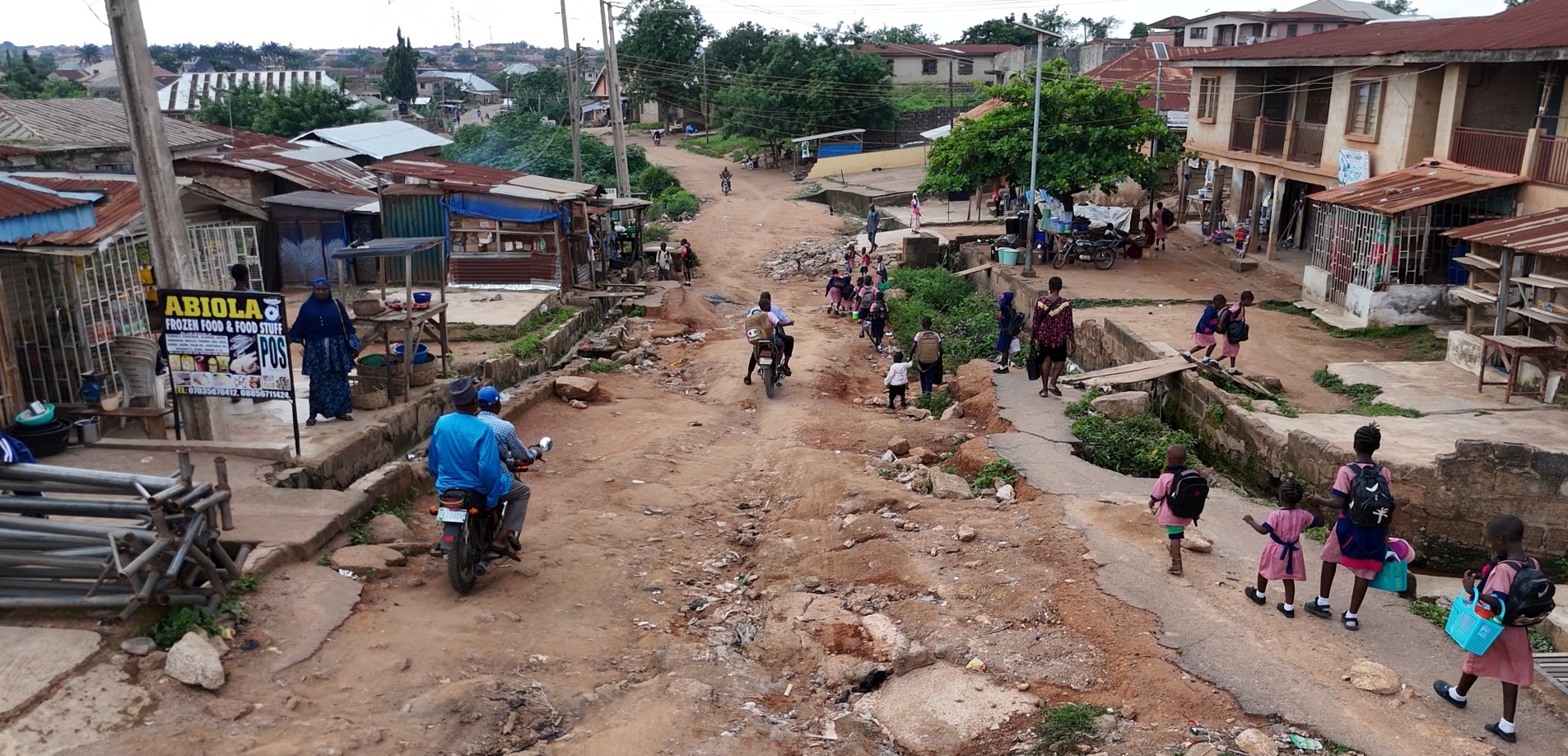
Despite receiving N238.4 billion in allocations between January 2025 and June 2026, Osun’s 30 LGAs still grapple with poor roads, struggling health centres, under-resourced schools and broken water systems. Christianah Alabi-Akande, Sodiq Mojibola and Olanshile Akanho write.
When Suliat Oyetunji went into labour, the health facility closest to her home in Oore, a village near Iragbiji in Osun State’s Boripe Local Government Area, could not provide the care she needed.
When the time came to be delivered of her set of twins, there was no dependable care at the facility. She eventually gave birth at home.
“Whenever I went to the PHC, nurses were not always available,” she told DevReporting.
Her experience points to a troubling reality for residents of Oore where having a health centre does not necessarily mean having access to healthcare. When DevReporting visited the facility, it was locked up.
Across Osun, similar concerns emerged in communities DevReporting visited. Yet, between January 2025 and June 2026, the state’s 30 local government areas received more than N238 billion in allocations.
During the period under review, Boripe LGA received N8.41 billion, averaging about N467 million monthly. Ife East received the highest allocation, totalling N9.56 billion, while Ifelodun received N6.53 billion.
Despite the billions of naira allocated during the period under review, residents in several communities continue to decry deteriorating basic amenities. Some have resorted to providing or repairing basic infrastructure themselves, while others struggle to access essential services.
At Okebode in Atakunmosa West LGA, the challenges facing the Abebi Afilaka Health Centre include drug shortages, inadequate personnel, and unreliable electricity. Ayoola Odunayo, a healthcare worker at the facility, lamented the difficulties staff members encounter when attending to pregnant women, particularly during childbirth.
“In fact, we use the flashlight of our phones to deliver pregnant women because there is no power supply,” she said. “We also do not have the necessary equipment or drugs. In addition, we need more beds for our patients.”
The secretary of the Okebode palace, Adebowale Adeorike, said a community indigene paid for the repair of the maternity centre after a storm damaged it in 2019.
“When it happened, we wrote to the government requesting assistance, but all we received were promises. Nothing was done,” she said.
The indigene, he said, later renamed the facility Abebi Afilaka Maternity Centre after his mother.
In Olugunna, Osogbo LGA, Folasade Adeleke said residents had lost confidence in their local health centre because of drug shortages and the absence of qualified personnel.
“This health centre is not a health centre. They cannot administer medications to our children if we take them there for treatment,” she said.
Ms Adeleke, who said she had lived in the community for more than 35 years, added that none of her children was delivered at the facility because residents no longer considered it a reliable option for maternal care.
For residents of Odofin, a community in Ifelodun LGA, rainfall can bring everyday movement to a halt.
Sulaiman Adeyemi, who has lived in the community since 2002, said the absence of proper drainage makes the road vulnerable to flooding.
“There is no drainage in this community. That’s why floods take over the road. Whenever it rains, vehicular movement stops for the flash floods to wash away,” he said, adding, “Only community efforts of sand-filling the road have kept it in this shape”.
He recalled that the road connecting Odofun to Inisa, a community in Odo-Otin LGA, was last repaired over 15 years ago, when former council chairman Bola Ajao intervened.
“There are big houses down the road, but bad roads have forced many residents and property owners out,” he said.
Isa Afolabi, a commercial motorcyclist, said the community’s difficulties extend beyond roads to water supply, electricity and access to healthcare.
With limited public intervention, residents have also had to contribute money to replace stolen electricity cables. The community, he added, has no public health centre and depends on private facilities for medical care.
In Ikire, Irewole LGA, Oni Oluwaseyi said floodwater swept away a bridge on a road linking the high court area to Apomu in the town, leaving it in poor condition and forcing farmers to take longer routes to transport their produce to market.
“If the government can fix this road that links Apomu to Ikire, this area will rapidly develop,” he said.
In Ilobu, the headquarters of Irepodun LGA, Taiwo Ishola, who has lived in the Konda area of the town for more than 40 years, said the community has remained in poor condition for over a decade, with rainfall worsening the situation and exposing properties to flooding.
“Whenever it rains, we are not able to use the road, and the bridge is also bad. When it rains, it destroys people’s properties,” he said.
The difficulties extend to public education, where some communities say inadequate staffing and deteriorating facilities are undermining children’s access to learning. Our reporters also found public schools littered with faeces and dirt.
At Oore village, DevReporting observed that the only public school had recently been renovated but continued to face a shortage of teachers.
The Baale of Oore, Adekunle Mudashiru, said the community’s renovated school lacked enough teachers to cater for its pupils.

Hope versus Rochas: The court giveth and the court taketh away, By Osmund Agbo

President And The Art Of Political Combat

The N238.4 Billion Question: Tracing Osun’s missing LG funds

INEC Clarifies Position on Court Judgement Nullifying Atiku’s Candidacy

Soludo Leads APGA Election Campaign Flag-off, Adopts Tinubu As Presidential Candidate

Dapo Olorunyomi to receive AMDF Lifetime Achievement Award

Prebendal Politics And Nigeria’s Vanishing Vanguard (2)

Resourceful Marketing Wasn’t Outsourced To Successive Innovations… Shouldn’t Be With AI

INVESTIGATION: How Anthony Kila falsified all his academic qualifications – from Bachelor’s to Doctorate

Customer Service Week: Inside How Jumia Is Using Technology To Go The Extra Mile For Shoppers

Google opens AI-content detector to enable verification

Kayefi headlines Tales & Tunes as ID Cabasa leads music direction in Sheffield

How Lagos Families Are Allegedly Buying Contaminated Meat In Dirty Conditions At Mushin, Oshodi, Mile 12, Surulere Markets

UK migrant workers wear chains, sing Asa’s ‘Jailer’ to protest proposed visa reforms

Ogaga Ifowodo wins $100,000 Nigeria Prize for Literature

How Houthi military aggression in Red Sea threatens Africa
-

 Special Reports3 days ago
ADC warns Sokoto govt, vows to hold governor responsible for intimidation, violence against opposition
-

 News7 days ago
“21 Exotic Vehicles Affected, No Life Lost” — LASEMA Confirms Lagos Mechanic Workshop Fire, Averts Disaster At Nearby Filling Station
-
Special Reports7 days ago
2027 Politics Watch: From Atiku’s register demands to Tinubu’s borrowing defence, Friday’s roundup
-
Business6 days ago
Polymarket Suspends Trading After Cyberattack On Third-Party Vendor, Confirms $2.7 Million Theft, Promises Full Refunds To Affected Users
-
News7 days ago
2027: Onaiyekan urges opposition parties to unite, present credible alternative
-
Special Reports7 days ago
NPFL Matchday 11 Preview: Rivers United, Rangers set for top-of-the-table showdown as title race heats up
-
Special Reports7 days ago
EXCLUSIVE: Report details NSCDC officers’ contributions to detention tragedy in Niger, recommends dismissal, prosecution
-
Politics7 days ago
An Election Gimmick– ADC Knocks FG Over N50,000 Cash Transfer To Nigerians