Special Reports
Tinubu writes NASS, seeks fresh approval to borrow $20.5bn, €1.05bn

The loans would be used to finance critical projects across various sectors, including infrastructure, agriculture, healthcare, education, water supply, security and employment generation, as well as financial management reforms.
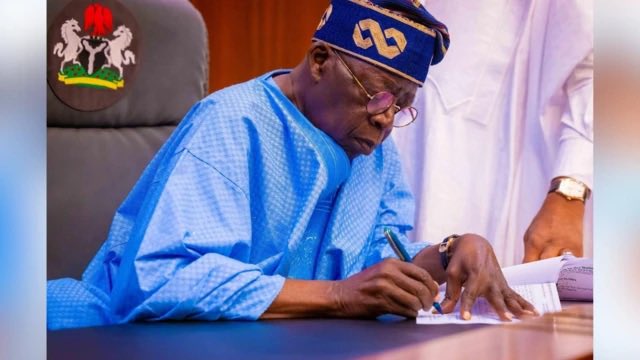
President Bola Tinubu has asked the National Assembly to approve the processing of external loans worth $20.5 billion ($20,517,755,901), and one billion Euros (€1,045,083,643) under the 2026–2027 Supplementary External Borrowing Plan.
Mr Tinubu’s request was contained in a letter read by the Senate President, Godswill Akpabio, during plenary on Tuesday.
In the letter, the president said the proposed borrowing was necessary to support his administration’s reform agenda, adding that the projects had been selected based on technical and economic evaluations and their expected contributions to the country’s socio-economic development.
“I want to emphasise that the projects and programmes included in the Borrowing Plan were selected based on thorough technical and economic evaluation, as well as their anticipated contribution to the socio-economic development of the country,” he said.
Mr Tinubu said the projects would also promote employment, skills acquisition and entrepreneurship, reduce poverty and improve food security, thereby improving the livelihoods of Nigerian children.
He added that most of the projects and programmes would be implemented across the 36 states and the Federal Capital Territory.
“These initiatives aim to generate employment, promote skills acquisition, foster entrepreneurship, reduce poverty and enhance food security, all of which improve the livelihood of the Nigerian child.
“In light of the need for significant infrastructure investment in the country and the vast financial resources needed to address this gap, it has become essential to pursue broader external borrowings to close the financing shortfall,” he added.
Mr Tinubu said the funds would be channelled into critical infrastructure projects, particularly in the power, transportation and healthcare sectors.
“Given the urgent nature of these needs and the importance of stabilising the country, it is crucial to seek the consideration and approval of the National Assembly leadership and the entire National Assembly for the 2026–2027 Supplementary External Borrowing Plan.
“This will enable the government to fulfil its obligations to the Nigerian people through timely disbursements and effective project implementation,” he said.
After reading the letter, Mr Akpabio referred the request to the Senate Committees on Local and Foreign Debts and Appropriations for further scrutiny. He directed the committees to report back within one week.
The latest request comes about five months after the National Assembly approved a $516.3 million loan from Deutsche Bank AG to finance the construction of the Sokoto–Badagry Superhighway, a flagship infrastructure project under the Tinubu administration’s Renewed Hope Agenda.
The loan has a tenure of nine years, including a grace period of up to three years, with an interest rate capped at the Chicago Mercantile Exchange’s Secured Overnight Financing Rate (SOFR) plus 5.3 per cent annually.
The facility is backed by insurance from the Islamic Corporation for the Insurance of Investment and Export Credit, the insurance arm of the Islamic Development Bank.
In March, the National Assembly also approved a $6 billion external borrowing plan for the federal government.
Of that amount, $5 billion was to be sourced from First Abu Dhabi Bank to support the national budget, while a $1 billion export finance facility from the United Kingdom, arranged by Citibank, was earmarked for the rehabilitation of Tin Can Island Port and the Lagos Port Complex.
The latest borrowing request comes amid concerns about Nigeria’s rising public debt and the growing cost of servicing government obligations.
Nigeria’s debt burden has increased in recent years as the federal government has relied on domestic and external borrowing to finance budget deficits and infrastructure projects.
Although the country’s debt-to-GDP ratio has generally been considered moderate compared with that of some peer economies, analysts have raised concerns about the government’s limited revenue base and its capacity to meet debt obligations.
A substantial share of government revenue goes towards debt servicing, limiting the funds available for infrastructure, public services and other development priorities.
The International Monetary Fund and the World Bank have repeatedly urged Nigeria to strengthen revenue mobilisation, improve tax collection and ensure that borrowed funds support productive investments capable of generating economic returns.
The federal government has maintained that external borrowing is necessary to address the country’s infrastructure deficit, finance development projects and meet its budgetary obligations. Officials have also argued that borrowing on favourable terms can help manage financing costs and support economic growth.


Ansaru claims responsibility for killing of Katsina cleric, Sheikh Masusuka

2027: Niger to deliver massive votes for Tinubu, APC candidates — Bago
BREAKING: FG Panel Recommends Dismissal Of NSCDC Officers Over 37 Miners’ Deaths

Green Energy Financing Helps Nigerian SMEs Cut Power Costs And Boost Productivity

Bayelsa govt, CSOs, unite against air pollution

INEC to publish preliminary voters register online

Police Arrest 24-Year-Old Suspected Arms Courier In Lagos

Reps move to halt school fee hikes in tertiary institutions, probe impact on NELFUND

INVESTIGATION: How Anthony Kila falsified all his academic qualifications – from Bachelor’s to Doctorate

Customer Service Week: Inside How Jumia Is Using Technology To Go The Extra Mile For Shoppers

Google opens AI-content detector to enable verification

Kayefi headlines Tales & Tunes as ID Cabasa leads music direction in Sheffield

How Houthi military aggression in Red Sea threatens Africa

How Lagos Families Are Allegedly Buying Contaminated Meat In Dirty Conditions At Mushin, Oshodi, Mile 12, Surulere Markets

Ogaga Ifowodo wins $100,000 Nigeria Prize for Literature

UK migrant workers wear chains, sing Asa’s ‘Jailer’ to protest proposed visa reforms

 Investigations7 days ago
Emirates explores a range of new innovations for customers with accessible travel requirements at AccessAbilities Expo, Dubai 2026
- News7 days ago
Lagos Alone Cannot Afford Fourth Mainland Bridge — Hamzat
- Top Stories5 days ago
“The Task Force Is On Top Of It, NCDC Is On Top Of It” — FG Assures Nigerians Of Capacity To Contain Ebola
- Investigations7 days ago
MILO and Ahmed Musa Support 2500+ Young Footballers Through Kano Sports Clinic

 Politics7 days ago
Tinubu Campaign Speaks on Reported Plot To Assassinate Atiku
- Special Reports7 days ago
Kenya confirms ninth Ebola case, says all patients improving
- News7 days ago
Police Nab Suspected Cultists Terrorising Ajah
- Special Reports6 days ago
Dangote To Nigerian Creatives: Africa Must Build Its Own Prosperity