Special Reports
CBD COP17: Experts explore new conservation models to advance Africa’s 30×30 goals

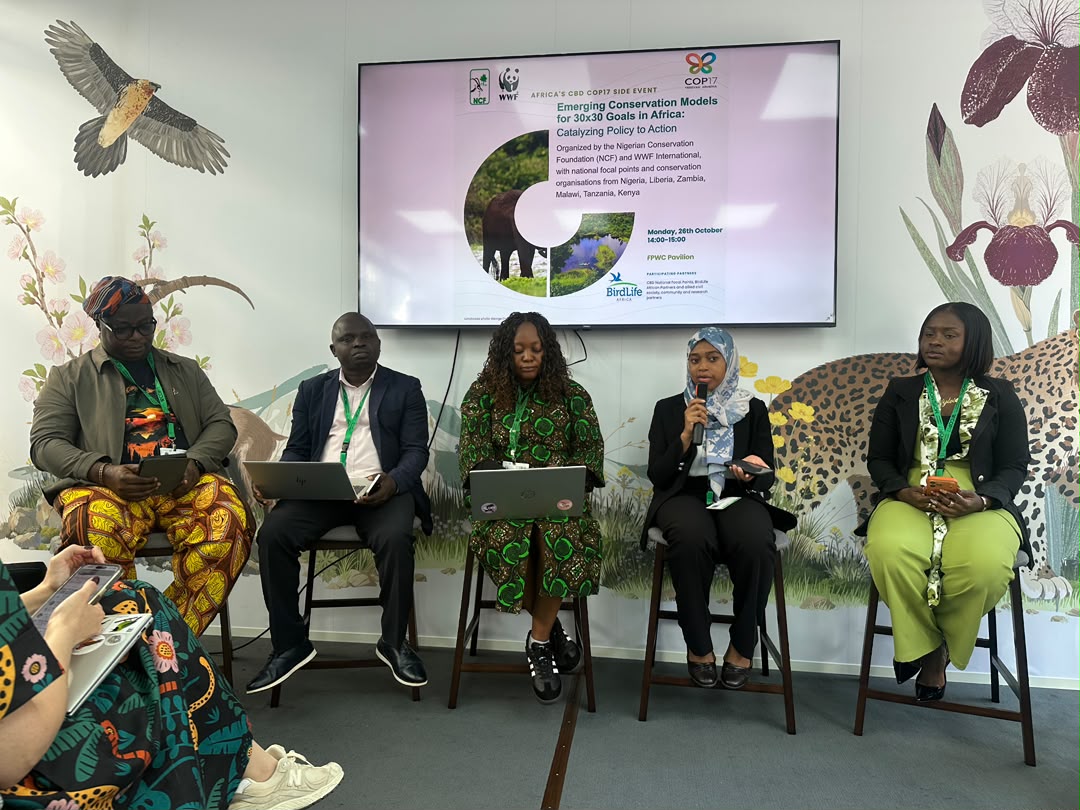
Experts from African governments and civil society organisations have discussed emerging community-based conservation models that could help countries meet the global target of conserving 30 per cent of land and marine areas by 2030.
Representatives of African governments and civil society organisations on Monday discussed emerging conservation models that could help countries across the continent achieve the global 30×30 biodiversity target.
The event was organised by the Nigerian Conservation Foundation (NCF) in partnership with the World Wide Fund for Nature (WWF).
The session, themed “Emerging Conservation Models for 30×30 Goals in Africa: Catalysing Policy to Action,” was moderated by Adedamola Ogunsesan, NCF’s Director of Technical Programmes.
The panellists included Daniel Jidda of Nigeria’s Federal Ministry of Environment; Allan Dauchi, Chief Natural Resources Officer at Zambia’s Ministry of Lands and Natural Resources and the country’s CBD focal point; Amina Mbarouk, Assistant National Biodiversity Strategy and Action Plan (NBSAP) Coordinator for Tanzania; Sylvia Dorbor, Sustainable Finance Coordinator at the Society for the Conservation of Nature of Liberia; and Tiwonge Gawa of the Wildlife and Environmental Society of Malawi (WESM), a BirdLife partner.
According to the organisers, the session aimed to showcase emerging and community-led conservation models in five African countries that contribute to Target 3 of the Kunming-Montreal Global Biodiversity Framework (GBF), while strengthening climate resilience and local livelihoods.
The discussions also focused on how the models could be formally recognised in National Biodiversity Strategies and Action Plans (NBSAPs), Other Effective Area-Based Conservation Measures (OECM) registers and national biodiversity reports submitted to the Convention on Biological Diversity (CBD).
The organisers said the session would further identify the policy, land-tenure and financing reforms needed to translate conservation commitments into action at national and sub-national levels.
Another objective was to establish a regional peer-learning platform connecting CBD national focal points with conservation organisations across West and Central Africa.
Speaking at the event, Durrel Halleson, Head of Policy and Partnerships for Africa at WWF International, said discussions at COP17 had centred on mobilising additional financing to help African countries meet their biodiversity commitments.
He identified Other Effective Area-Based Conservation Measures (OECMs) as one approach that could expand conservation efforts across the continent.
“We have an opportunity here to really bring this up, talk about OECMs, scale it up, to become one of those ways to reach target 30×30,” he said.
OECMs are geographically defined areas outside formally designated protected areas that deliver sustained, effective and positive outcomes for the long-term conservation of biodiversity.
Target 3 of the Kunming-Montreal Global Biodiversity Framework commits countries to ensuring that at least 30 per cent of terrestrial, inland water, coastal and marine areas are effectively conserved and managed by 2030.
However, in many parts of West and Central Africa, translating these commitments into tangible conservation outcomes remains a challenge.
Limited funding for protected areas, contested land tenure and the dependence of rural communities on natural resources have complicated conservation efforts across the region.
Emerging approaches include community and Indigenous-conserved areas, women-led natural resource management groups, faith-based conservation initiatives, land trusts, forest and mangrove co-management arrangements, and cross-border ecological corridors.
These models can support biodiversity conservation while strengthening local livelihoods and resilience to climate change.
Despite their potential, many remain poorly financed or insufficiently recognised in national conservation policies and reporting frameworks, limiting their contribution to countries’ progress towards the 30×30 target.
The session therefore brought conservation practitioners and CBD national focal points together to explore how successful community-led initiatives could gain formal recognition, secure sustainable financing and contribute more effectively to national biodiversity targets.


“Some Threatened To Leave Quarantine” — NCDC Explains Financial Support, Rejects 2027 Election Claims, Says Nigeria Not Yet Out Of Woods

Bandits Kill ISLAMIC Cleric In Katsina

EXCLUSIVE: Igho Sanomi Rushes to British Virgin Islands Court to Resurrect Lengard Projects Limited, the Company America Named in $14.95 Million Taleveras Payments to Diezani Alison-Madueke’s Ally, Kola Aluko

ONC President-General Celebrates Dame Patience Jonathan On Her Birthday

Kano Fire Service recovers body of drowned man

Jigawa students depart for China for advanced courses in agriculture

Super Lig: Osimhen lifts Galatasaray to top spot with two goals against Fenerbahce

“WHO Has Not Declared Nigeria Ebola-Free” — Agency Says 42-Day Countdown Must End Without Fresh Case

INVESTIGATION: How Anthony Kila falsified all his academic qualifications – from Bachelor’s to Doctorate

Customer Service Week: Inside How Jumia Is Using Technology To Go The Extra Mile For Shoppers

Google opens AI-content detector to enable verification

Kayefi headlines Tales & Tunes as ID Cabasa leads music direction in Sheffield

How Houthi military aggression in Red Sea threatens Africa

How Lagos Families Are Allegedly Buying Contaminated Meat In Dirty Conditions At Mushin, Oshodi, Mile 12, Surulere Markets

Ogaga Ifowodo wins $100,000 Nigeria Prize for Literature

UK migrant workers wear chains, sing Asa’s ‘Jailer’ to protest proposed visa reforms

 Investigations7 days ago
Emirates explores a range of new innovations for customers with accessible travel requirements at AccessAbilities Expo, Dubai 2026
- News7 days ago
Lagos Alone Cannot Afford Fourth Mainland Bridge — Hamzat
- Special Reports7 days ago
NIMASA DG Dayo Mobereola Squanders N6.77 Billion On Cleaning, Hospital Bills And Imprest Including N1 Billion To Maintain Its London Office In Just One Year

 Special Reports7 days ago
Abandoned newborn rescued at Plateau mining site
- Top Stories5 days ago
“The Task Force Is On Top Of It, NCDC Is On Top Of It” — FG Assures Nigerians Of Capacity To Contain Ebola
- Investigations7 days ago
MILO and Ahmed Musa Support 2500+ Young Footballers Through Kano Sports Clinic

 Politics7 days ago
Tinubu Campaign Speaks on Reported Plot To Assassinate Atiku
- Special Reports7 days ago
From Humble Beginnings To The Helm Of Nigeria’s Economy: The Remarkable Trajectory Of Prof. Taiwo Oyedele