Special Reports
COP31: Guterres faults fossil fuel lobby, demands $1.3tn for developing countries

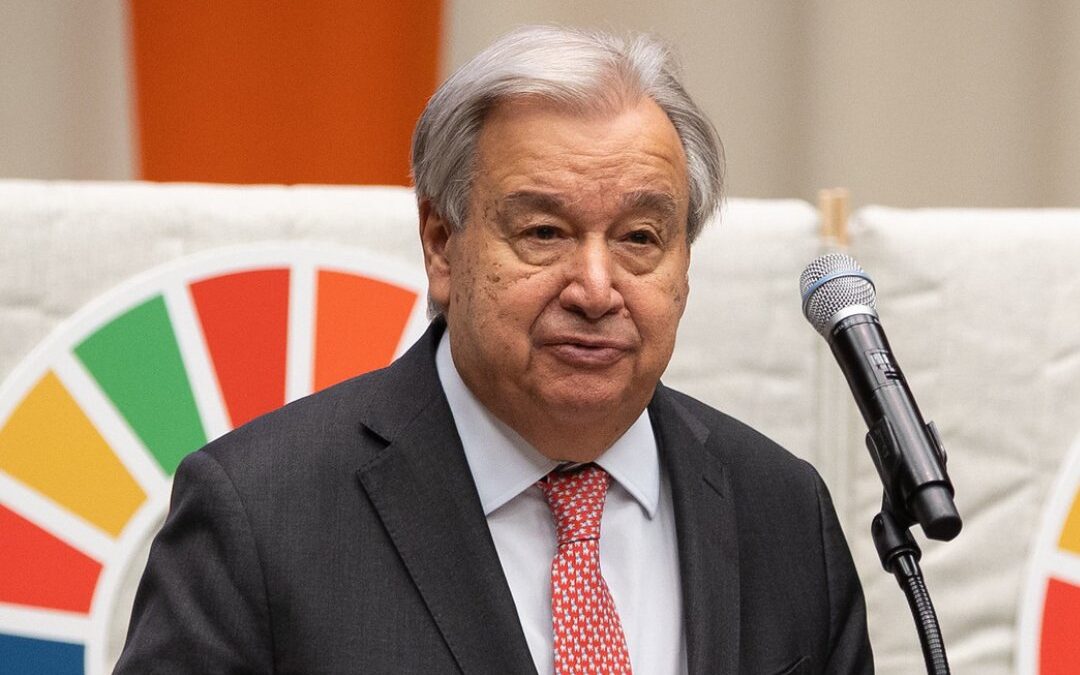
The $1.3 trillion annual financing ambition is not an entirely new commitment. It builds on the climate finance agreement reached at COP29 in Baku, Azerbaijan, in 2024
United Nations Secretary-General António Guterres has called on developed countries and international financial institutions to mobilise at least $1.3 trillion annually for developing countries by 2035, warning that the global response to climate change is falling far behind the scale of the crisis.
He also demanded an accelerated transition away from fossil fuels, accusing powerful industry interests of obstructing climate action while continuing to profit from activities contributing to global warming.
Mr Guterres made the demands on Wednesday at the World Leaders Summit of the 31st United Nations Climate Change Conference (COP31) in Antalya, Türkiye, where heads of state and government gathered to discuss the implementation of international climate commitments.
He said global emissions needed to decline by about six per cent annually, arguing that existing national climate plans, even if fully implemented, would deliver only about a third of the required reductions.
“Our first climate duty is to tell the truth. The brutal truth is that the climate crisis is outrunning us. Emissions in 2025 reached all-time highs. Heat records keep shattering. The last four years were the hottest ever,” he said.
Mr Guterres’ demand comes amid continuing concerns over the availability and accessibility of climate finance for developing countries, many of which face high costs in responding to extreme weather, protecting vulnerable communities and reducing emissions.
The $1.3 trillion annual financing ambition is not an entirely new commitment. It builds on the climate finance agreement reached at COP29 in Baku, Azerbaijan, in 2024, which established a goal of mobilising at least $300 billion annually for developing countries by 2035, led by developed countries, alongside a broader call to scale up funding from all sources to at least $1.3 trillion annually by the same year.
However, Mr Guterres said the wider financing ambition must move beyond political declarations to become actual funding available to countries that need it.
“Developed countries must lead in delivering at least $300 billion a year by 2035, and set out concrete plans with clear milestones to at least triple adaptation finance by then”.
“The $1.3 trillion goal must become real finance flowing to developing countries, and this demands that every source of finance pull its weight,” he said.
He noted that emerging and developing economies outside China account for nearly two-thirds of the world’s population but receive less than one-fifth of global clean energy investments.
He added that many of these countries pay two to three times more to borrow, making it difficult to finance renewable energy projects and climate adaptation programmes.
According to him, the disparity risks deepening dependence on fossil fuels, as countries unable to secure affordable clean-energy financing may continue investing in conventional energy infrastructure.
He called for greater contributions from multilateral development banks, private investors and donor countries, including more favourable lending arrangements and innovative financing instruments.
He also urged governments to strengthen funding for the Green Climate Fund and the Fund for Responding to Loss and Damage, which supports vulnerable countries dealing with the consequences of climate-related disasters.
Beyond financing, Mr Guterres criticised the influence of fossil fuel companies on climate policy, arguing that the industry’s lobbying activities were slowing the transition to renewable energy.
He said the world could no longer justify continued dependence on coal, oil and gas when the economic and environmental costs of their use were becoming increasingly apparent.
“Fossil fuels must go the way of the dinosaurs, but that won’t happen on its own. The dinosaurs did not have a lobby, but fossil fuels do,” he said.
He accused fossil fuel interests of distorting scientific evidence, delaying policy decisions and avoiding accountability for environmental damage.
He argued that renewable energy had become increasingly competitive, noting that solar power, which accounted for only one per cent of global electricity generation a decade ago, met nearly three-quarters of the growth in electricity demand in the previous year.
He also cited the growing adoption of electric vehicles, saying nearly one in three new cars sold globally was expected to be electric in 2026.
Mr Guterres said three-quarters of the world’s population live in countries that import fossil fuels, leaving them vulnerable to international price fluctuations and energy insecurity.
He called for a just and orderly transition that would include ending new unabated coal development, reducing methane emissions and expanding electricity grids, energy storage and clean electrification.
He also urged governments to tax windfall profits made by fossil fuel companies and direct the proceeds towards countries affected by climate disasters.
Citing the financial disparity between oil companies and climate-vulnerable countries, he said the nine largest oil companies made $95 billion in profits in the last quarter, while the Loss and Damage Fund had received approximately $600 million.
“That is what these companies made in about 14 hours,” he said.
The COP31 World Leaders Summit, taking place on 11 and 12 November, is part of the conference’s high-level discussions, which run from 9 to 20 November in Antalya.
The conference is being hosted by Türkiye, while Australia is leading the formal negotiations under an agreed partnership arrangement.
Other leaders at the summit also called for increased climate financing and practical interventions to protect vulnerable countries.


Afrilition: A range of dance, By Adéwálé Àjàdí

Otti Unveils Solar-Powered Digital Billboard, Eyes Statewide Expansion

Ogun 2027: I Will Be The People’s Governor – Senator Adeola Yayi Assures

‘Shameless Repackaging’ – ADC Faults Tinubu’s 2027 Manifesto

COP31: Guterres faults fossil fuel lobby, demands $1.3tn for developing countries

Flamingos’ victory shows Tinubu will be re-elected – Akpabio

Diezani’s Asset Recovery Suit Stalls As Lawyer Seeks More Time

Police linked to 118 civic space violations in 2025 -WSCIJ Report

ADC, NDC, PDP decry attacks on opposition parties in Enugu
Tinubu Encouraging Political Indiscipline With Opposition Inclusion In Campaign Council — Olawepo-Hashim

Nigeria records 268 Lassa fever deaths as fatality rate rises to 23.6% – NCDC

No Light, Expensive Fuel: How Alimosho Residents Are Spending N5,000 – N15,000 Daily To Survive – Traders Lament

Nigerian govt to invest more in technology, intelligence to tackle insecurity

IMF warns global debt to hit 100% of GDP by 2029

2027: Men have failed Nigeria… – Female presidential candidate Esther Okereke

UN General Assembly adopts pandemic declaration, urges stronger global cooperation

 Special Reports7 days ago
United Nigeria Airlines Boss Receives Trailblazer In Aviation Award At Daily Times Centenary Celebration
- Top Stories6 days ago
“Courts Must Guard Their Independence, Impartiality And Integrity” — NDC Warns After Atiku’s Candidacy Is Nullified
- Politics7 days ago
“Hospitals Must Assess Emergency Patients Within 15 Minutes” — Senate Advances Bill Proposing Six-Month Jail, ₦300,000 Fine
-
 News7 days ago
“Destroying Campaign Posters Is A Criminal Offence” — IGP Disu Orders Nationwide Crackdown, Cites Criminal Code, Penal Code Ahead Of 2027 Elections
- Special Reports7 days ago
“The Appeal Fails” — Court Of Appeal Rejects Turaki-Led PDP Recognition Bid, Upholds ₦70m Costs, Awards Additional ₦15m
- Top Stories6 days ago
“Leadership Must Emerge Through Lawful Process, Not Imposition” — Bala Gombe Commends Justice Lifu Over ADC Judgment
- Top Stories7 days ago
“We Legally Acquired The Property In 2008” — Skyview Properties Cites C Of O, Lagos High Court Judgment In Lekki Land Dispute
- Special Reports5 days ago
2027: Yayi Rallies Imeko-Afon LG stakeholders For APC As Renew Work Begins On Lafenwa-Rounda-Olorunda Road