Special Reports
Energy Transition: Report raises concerns over lack of guarantee for workers, communities


CAPPA argued that progress should not be measured only by emissions targets and investment in renewable energy.
A report by the Corporate Accountability and Public Participation Africa (CAPPA) has raised concerns about the future of workers and communities whose livelihoods depend on Nigeria’s oil and gas industry as the country pursues its energy transition.
It identified poor coordination among government institutions and uncertainty over funding as major obstacles to implementing the plan. It also highlighted the absence of enforceable guarantees on retraining, income security and environmental restoration for affected workers and communities.
CAPPA argued that progress should not be measured only by emissions targets and investment in renewable energy.
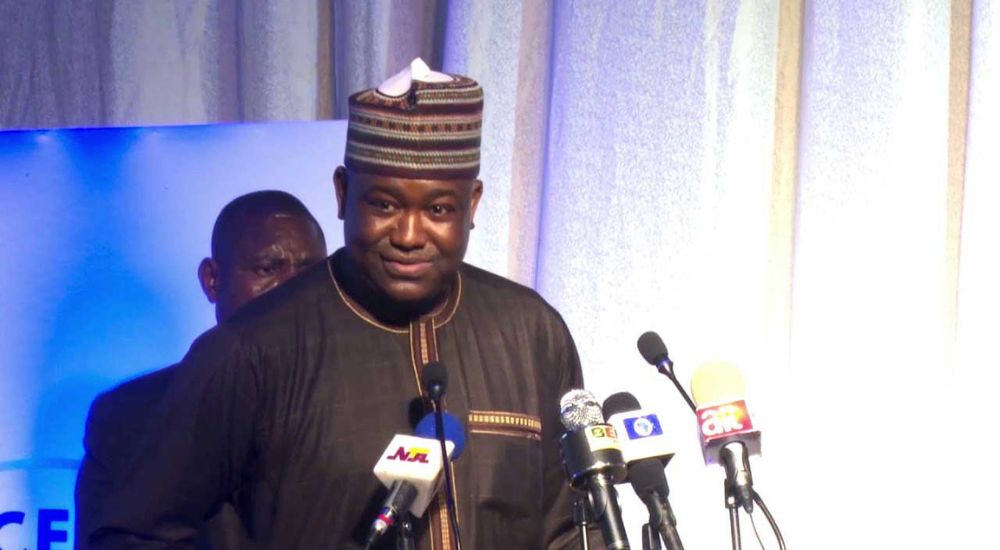
“Responsibilities are dispersed across institutions, financing relies heavily on anticipated investment, and workers and affected communities lack sufficiently enforceable guarantees of income security, retraining and environmental repair,” CAPPA Executive Director Akinbode Oluwafermi said in his opening remarks at the report’s launch in Lagos on Tuesday.
The report noted that the transition must bring affordable and reliable electricity and provide sustainable livelihoods for those affected by changes in the energy sector.
The concerns echo calls by the Nigeria Labour Congress (NLC) and energy transition experts for workers and host communities to have a greater say in the country’s energy policies.
At a discussion on a just and equitable transition in October, Chukwumerije Okereke, head of the British Research Academy, said climate change was also a workplace issue because workers were directly exposed to pollution and other environmental hazards.
Mr Okereke, a professor, called for training and skills development to prepare affected workers for employment in the emerging low-carbon economy.
He urged the government to provide social protection, including adequate compensation, early retirement benefits and timely payment of pensions to those who lose their jobs.
The NLC’s Head of Climate Change, Eche Asuzu, said a just transition required fair governance arrangements and an equitable distribution of the benefits and costs of energy projects.
He called for more research into the concerns of communities affected by mining and other energy-related projects, saying some had complained of displacement, inadequate compensation and poor responses from companies and government authorities.
Although Nigeria has policies and regulations intended to protect affected communities, Mr Asuzu said poor implementation and monitoring remained major problems. He urged federal, state and local governments to work with companies and host communities to address them.
Nigeria launched its Energy Transition Plan in 2022, setting a target of net-zero emissions by 2060. The plan covers five sectors: power, cooking, transport, industry, and oil and gas.
The government says it is designed to tackle energy poverty, reduce emissions and support economic development. It includes managing expected job losses in the oil sector as global demand for fossil fuels declines, while creating employment in power, cooking and transport.
In September 2025, Nigeria submitted its third Nationally Determined Contribution (NDC 3.0) to the United Nations Framework Convention on Climate Change, updating its climate commitments.
Under the pledge, the country committed to reducing emissions by 32.2 per cent by 2030, achieving universal electricity access and increasing renewable energy’s share of the power mix to 50 per cent. It also set a target of increasing new electricity connections by nine per cent annually.
The updated contribution includes economy-wide emissions reduction targets of 168.2 million tonnes of carbon dioxide equivalent by 2030 and 184.9 million tonnes by 2035, relative to 2018 levels.
The government estimates that implementing the commitments will cost about $337 billion between 2026 and 2035. Of this amount, $195 billion is earmarked for emissions reduction and about $141.5 billion for climate adaptation. Another $500 million is allocated to climate empowerment activities.
Nigeria expects to raise $67 billion domestically, with the remaining $270 billion — about 80 per cent of the total — expected from international sources through grants, concessional finance and technology support.
PREMIUM TIMES had examined the funding requirements and the difficulties Nigeria faces in securing the money needed to implement its climate commitments.
Nigeria is not alone in facing a climate financing shortfall. Developing countries generally lack the funding needed to prepare for and respond to climate change.
In its 2026 Adaptation Gap Report, the United Nations Environment Programme (UNEP) estimated that developing countries would need about $305 billion annually by 2035 to adapt to climate change.
International public finance for adaptation stood at between $28.2 billion and $31.7 billion in 2024, an increase of only about $1 billion from the previous year.
UNEP said even tripling international public adaptation finance, as envisaged under an agreement reached at the previous climate conference, would cover only 20 to 29 per cent of developing countries’ estimated needs by 2035.
The report identified institutional barriers to implementing adaptation measures and warned that losses and damage linked to climate change were continuing to rise.
UNEP Executive Director Inger Andersen said the world was not adequately prepared for current climate conditions, let alone the consequences of global warming exceeding 1.5 degrees Celsius.
A separate assessment by the Climate Policy Initiative (CPI) provides a picture of Nigeria’s climate finance before its latest commitments were submitted.
In its May 2025 report, Landscape of Climate Finance in Nigeria 2025, CPI estimated that $2.5 billion in public and private finance went towards climate action in 2021 and 2022. That was 32 per cent more than the $1.9 billion recorded in 2019 and 2020.
Despite the increase, CPI put Nigeria’s annual climate finance gap at $27.2 billion.


“Call 112 Now, Thanks To APC Government” — Emergency Line Fails Live TV Test As Hassan Says Tinubu Needs More Time

Energy Transition: Report raises concerns over lack of guarantee for workers, communities

Man, 41, Remanded Over Alleged Defilement Of 6-Year-Old Girl In Lagos

Tinubu won 2023 election without Buhari’s full support – APC campaign spokesperson

‘Even if it’s my father, I’ll sign his death warrant’ – Okpebholo on Kidnapping

“We Must Have The Data For Our Wards And Polling Units” — City Boy Movement Faces Scrutiny Over Alleged PVC Data Collection Ahead Of 2027 Elections

TAG Celebrates Hon. Abdulrazaq Danjuma On His Birthday

APC Unveils 2027 Manifesto, Reveals Major Policy Plans

ADC, NDC, PDP decry attacks on opposition parties in Enugu

EFCC arraigns ALSCON, Russian director on N582.4 million money laundering charges
Tinubu Encouraging Political Indiscipline With Opposition Inclusion In Campaign Council — Olawepo-Hashim

Nigerian University to honour Ghanaian President John Mahama today

Court rejects Euracare’s bid to halt inquest into Adichie’s son’s death

CJN, AGF, NBA president charges SANs on upholding ethics, earning public trust

Nigeria records 268 Lassa fever deaths as fatality rate rises to 23.6% – NCDC

I’ll Visit All 36 States Every Year If Elected President – Peter Obi

 Special Reports6 days ago
United Nigeria Airlines Boss Receives Trailblazer In Aviation Award At Daily Times Centenary Celebration
- Top Stories5 days ago
“Courts Must Guard Their Independence, Impartiality And Integrity” — NDC Warns After Atiku’s Candidacy Is Nullified
- Politics7 days ago
“Hospitals Must Assess Emergency Patients Within 15 Minutes” — Senate Advances Bill Proposing Six-Month Jail, ₦300,000 Fine
-
 News6 days ago
“Destroying Campaign Posters Is A Criminal Offence” — IGP Disu Orders Nationwide Crackdown, Cites Criminal Code, Penal Code Ahead Of 2027 Elections
- Politics7 days ago
“State Police Bill Has Received The Backing Of 29 State Assemblies” — Kalu Announces Transmission As Senate Confirms 30 Approvals
- Special Reports6 days ago
“The Appeal Fails” — Court Of Appeal Rejects Turaki-Led PDP Recognition Bid, Upholds ₦70m Costs, Awards Additional ₦15m
- Politics7 days ago
“This Legislation Is Not Intended To Undermine Property Rights” — Reps Pass Bill To Limit FCT Advance Rent To 12 Months
- Top Stories7 days ago
“We Legally Acquired The Property In 2008” — Skyview Properties Cites C Of O, Lagos High Court Judgment In Lekki Land Dispute