Politics
“I Was Selling Guns To Make Money” — Orji Uzor Kalu Reveals Past Arms Trade, Fallout With Obasanjo, Predicts Tinubu’s 2027 Victory


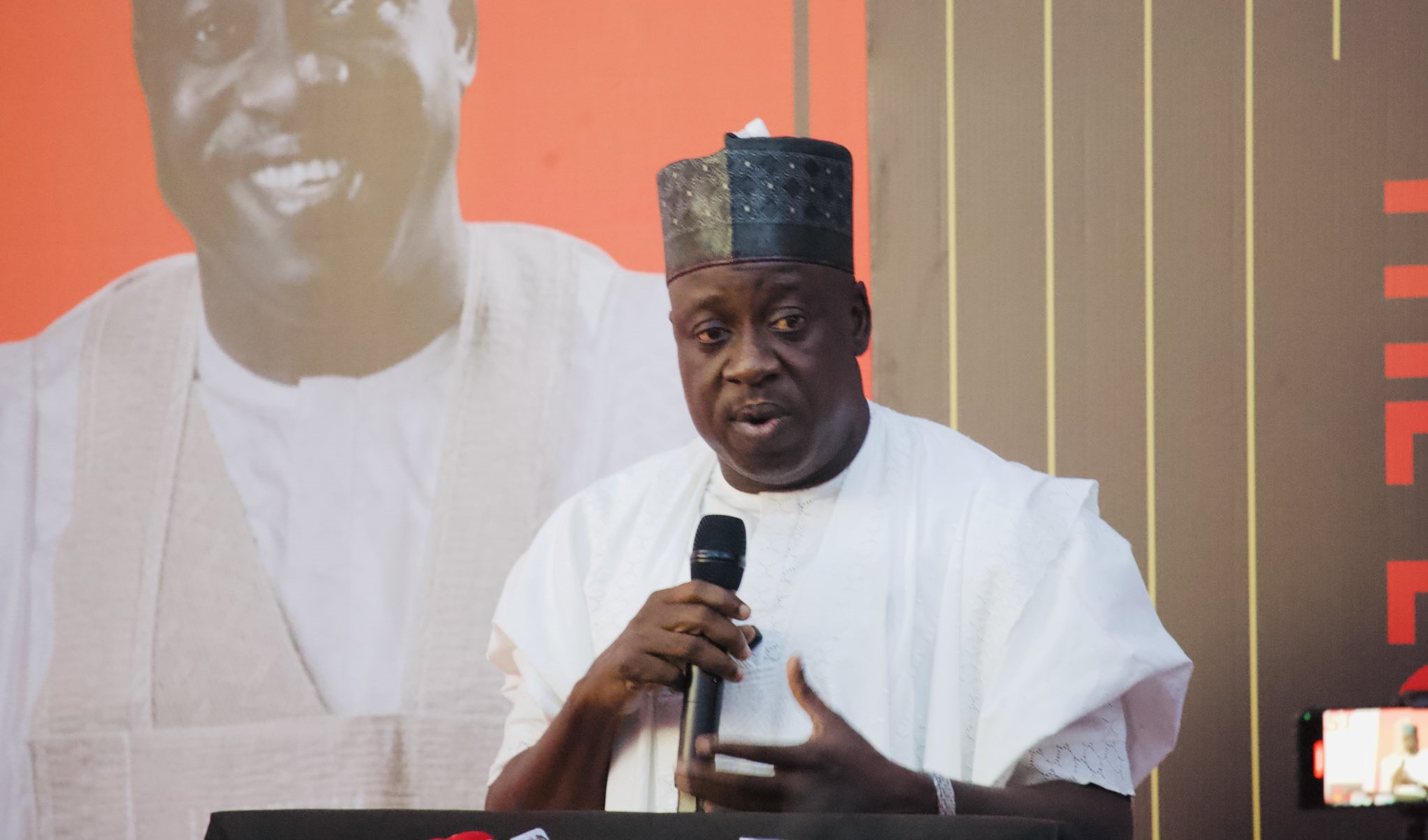
Former Abia State Governor and Senator representing Abia North, Orji Uzor Kalu, has revealed that he was once involved in international arms dealing, selling weapons to willing buyers before abandoning the business at the insistence of his parents.
Kalu, a senior member of the All Progressives Congress (APC) Presidential Campaign Council, also disclosed that his political disagreement with former President Olusegun Obasanjo stemmed partly from an alleged agreement that Obasanjo would serve only one four-year term as President, an understanding he said the former President failed to honour.
Speaking during a two-part interview on Arise Prime Time, the former governor addressed his business history, relationships with international political figures, allegations concerning foreign intelligence agencies, his role in the formation of the Peoples Democratic Party (PDP), his prosecution by the Economic and Financial Crimes Commission (EFCC), the Nigerian judiciary, President Bola Tinubu’s economic reforms and the forthcoming 2027 general elections.
Kalu, who predicted that Tinubu would secure another presidential term in 2027, maintained that the opposition lacked the political structure and unity required to challenge the ruling party.
However, one of the most striking revelations during the interview concerned his previous involvement in the international arms business.
Discussing his longstanding relationships with African leaders and other influential figures, Kalu disclosed that arms trading had once been a major component of his commercial activities outside Nigeria.
“My major business used to be outside this country to deal on arms,” he stated.
When the interviewer asked directly whether he had been an arms dealer, Kalu answered in the affirmative, explaining that he eventually stopped the business following intervention from his parents.
“Yes. So I stopped because my…” he began, before explaining that his mother and father “came and said I must stop and I stopped”.
Pressed on whether he had been selling weapons to people who might use them to kill others, Kalu rejected the suggestion that this was his intention, insisting that his objective was commercial.
“No, no, no, no, no. I was selling guns to make money. Whether they blow other people was not my business,” he said.
The interviewer subsequently asked whether he supplied weapons to the African National Congress (ANC), but the senator denied selling specifically to the organisation, maintaining that his business involved customers who were willing and financially able to purchase weapons.
“No, I was selling to anybody who wants to buy. If you have the money to buy… you want to buy in Namibia, you want to buy…” he stated.
When asked where he obtained the weapons he sold, Kalu declined to disclose his sources.
“It’s only by business. It’s only me knows where,” he replied.
The conversation also touched on whether he had supplied weapons to Libya’s former leader, Muammar Gaddafi.
Kalu did not give a direct confirmation of any particular transaction with Gaddafi, but reiterated that his commercial dealings were not restricted to particular individuals.
“To anybody that have money to buy. May he rest in peace. He was a good man. I don’t know about… but if you have money to buy, when I was selling…” he said.
The interviewer drew attention to the proliferation of small arms as one of Nigeria’s major security challenges.
The senator’s disclosure about his past business activities also prompted questions concerning allegations of his relationships with foreign intelligence agencies, particularly the United States Central Intelligence Agency (CIA) and Israel’s Mossad.
Responding to the allegations, Kalu maintained that cultivating international friendships did not make him an intelligence operative.
“Anybody can say. On many occasions even President [Obasanjo] himself has called me an international agent. Those don’t remove anything from my skin because I know myself. I work hard to keep friendship and I will continue keeping friendship till tomorrow,” he said.
Asked whether he had links with the CIA, Kalu denied working for the agency, while acknowledging that he knew people associated with international intelligence circles.
“No. Even if I know people there… I’m not working for them at all. I’m not an agent,” he stated.
He explained that his former involvement in arms trading meant he was familiar with international intelligence organisations, including the CIA and Mossad.
“Because I was trading on arms, I must know the two organisations very well,” he said.
When the interviewer suggested that the organisations might have been monitoring his activities, Kalu responded affirmatively before explaining that he remained open to relationships with people from different backgrounds.
“Yes. Yes. Yes. Not really that, but I’m open to friendship,” he said, adding that he was open to friendship with people around the world, including those in the CIA “who are watching” him.
The senator subsequently explained that his international relationships developed through years of business and political engagements.
Asked about reports of his involvement in fundraising for former United States Vice President Kamala Harris, his support for former President Joe Biden, his relationship with the family of former President George H.W. Bush and transactions involving seagoing vessels, Kalu described himself as someone who deliberately cultivated friendships wherever he travelled.
He said his relationship with former military President Ibrahim Babangida helped him establish international contacts and expand his business interests.
According to him, Babangida’s presidency “helped a lot for me to know outside people”, and he “utilised the opportunity to expand myself”.
When asked whether his approach made him an opportunist, Kalu rejected the description.
“No, I’m not an opportunist,” he stated.
“In the village where I come from, we don’t cheat people. We only take people for what they are. I see diamond and gold where people don’t see it.”
Kalu also recalled his relationship with the late South African President Nelson Mandela, whom he said he met many years ago.
He claimed that Mandela introduced him to successive South African leaders and shared with him details about the country’s political leadership, including the circumstances involving Cyril Ramaphosa and Thabo Mbeki.
According to the senator, Mandela told him that Ramaphosa could have emerged as his running mate, but that Mbeki’s father had contributed more to the political struggle than Ramaphosa’s father.
He further disclosed that Mbeki later introduced him to former South African President Jacob Zuma.
Reflecting on how he maintained relationships across political and social divisions, Kalu identified Babangida, the late Professor Jibril Aminu and businessman Gilbert Chagoury as individuals who influenced his approach to friendship.
“I welcome people of no status. I welcome people with status. I try to answer everybody’s phone… even if I miss your call, I return the call or I text you,” he explained.
Turning to his business background, the former governor was asked about reports that he began his commercial journey at the age of 19 with $35.
Kalu attributed his business success to determination and divine grace, recalling his school days when he served as a labour captain responsible for maintaining the school compound.
He said he performed the responsibility diligently, earning the satisfaction of his principal, teachers and fellow students.
Following his university education, which the interview account identified as being at the University of Maiduguri, Kalu said he relocated to Lagos and expanded into different commercial activities, including industrial ventures and the importation of rice and sugar.
He explained that his involvement in politics was not initially part of his business ambitions, but that political figures began encouraging him to seek public office in the late 1990s.
According to him, he was approached between 1996 and 1998 and eventually became Governor of Abia State in 1999.
Kalu recalled that some influential personalities initially doubted his political ambition, with one reportedly regarding his decision to contest the governorship as unrealistic.
Discussing the formation of the PDP, Kalu acknowledged playing a major financial role in the party’s early development but rejected the suggestion that he was its only major financier.
He identified former Vice President Alex Ekwueme and General T.Y. Danjuma among those who contributed to the party’s establishment, stating that Danjuma also provided substantial financial support.
However, Kalu maintained that he personally financed several meetings and logistical arrangements during the party’s formative years.
“I was the one funding the meetings, aircraft, paying honorariums to people that came, cooking food and all the rest of them. That is the truth,” he said.
He described the efforts as “a joyful thing to make sure we had a strong party to drive away the military”.
Despite his contributions, Kalu expressed disappointment over the manner in which his relationship with the PDP subsequently deteriorated.
He said he eventually “became a fool” in the party because “after bringing all the money, they turn against me”.
Asked whether the PDP was responsible for his emergence as governor, Kalu insisted that his political prospects were not dependent on the party.
“I could have been a governor whether I’m on their platform or on another platform,” he maintained.
He also recalled providing financial and logistical support to Obasanjo following the former President’s release from prison, including financing aircraft and arranging transportation for his political engagements.
Kalu said his relationship with Obasanjo was initially cordial but became strained when the former President allegedly failed to honour agreements reached before his emergence as President in 1999.
He insisted that their disagreement was not motivated by a desire for personal benefits but by what he believed was in Nigeria’s political interest.
“Most of the things we discussed he didn’t do,” Kalu said.
“We discussed he will be a president for four years. We discussed he will only do four years and leave, and another person will take over. We helped him a lot when he came out of prison. We maintained to make sure that he succeeded.”
When the interviewer sought clarification on whether the alleged agreement covered the period from 1999 to 2003, Kalu replied, “That’s correct.”
He explained that the understanding was connected to political arrangements following the annulment of the June 12 presidential election won by Moshood Kashimawo Olawale Abiola.
According to Kalu, the arrangement envisaged Obasanjo serving one term before power returned to the North as part of the country’s political rotation.
He said discussions involving Babangida and other political figures contemplated Obasanjo leaving office after four years.
Kalu, however, declined to confirm reports that Babangida was expected to succeed Obasanjo in 2003 with him as vice president.
“I cannot be certain about vice presidency,” he stated.
He nevertheless maintained that there was an understanding that Obasanjo would leave office after one term and allow the political rotation to continue.
Asked whether Babangida had agreed to appoint him as vice president, Kalu replied, “I don’t know and I never thought about that”.
The former governor said several people were present during the discussions and expressed frustration that political leaders sometimes failed to honour their commitments.
“Those are the things that make people very mad, that people cannot keep to their words,” he said.
Beyond the alleged one-term agreement, Kalu accused Obasanjo of violating constitutional procedures during his administration, particularly in the handling of certain state governors.
“He disobeyed our constitution. Disobeying our constitution is unacceptable by me,” Kalu declared.
He alleged that Obasanjo deployed the EFCC against political officeholders, including a former Governor of Bayelsa State and other governors, and questioned what he described as unconstitutional attempts to remove elected officials.
Kalu maintained that he repeatedly challenged Obasanjo over those actions.
He also accused the former President of frustrating his commercial interests following their political disagreement.
According to him, despite the financial support he provided to the PDP and Obasanjo’s political activities, his reward was the destruction of his business enterprises.
“What I got in return is killing off my businesses,” he said.
Kalu further alleged that Obasanjo “damaged all my businesses, took all the banks, took all the airline, took everything I had and revoked the licences”.
The senator’s criticism of Obasanjo’s handling of elected governors prompted the interviewer to draw a comparison with the current National Assembly and its response to President Tinubu’s suspension of a sitting governor.
The interviewer suggested that the present Senate had acted as a “rubber stamp” by supporting what was described in the question as an unconstitutional suspension.
Kalu rejected that characterisation and defended both his independence as a legislator and the President’s action.
“I’m not a rubber stamp,” he declared.
He maintained that what Tinubu did “was very constitutional”, accusing some legal commentators of failing to properly interpret the law.
According to him, “the legal minds are not telling themselves the truth, because they make up a story”.
He also defended the legislative procedure adopted by the National Assembly, explaining that parliamentary voting could be conducted through different recognised methods.
“The law says we can vote in two ways: it’s either by voice vote or by single voting method,” he said.
Kalu explained that the presiding officer could rely on the response heard during a voice vote and announce the decision accordingly.
He maintained that he was not the presiding officer responsible for determining the outcome of the vote.
The discussion subsequently turned to Kalu’s own experience with the EFCC and the Nigerian judiciary.
Asked about his prosecution, imprisonment and the Supreme Court’s setting aside of his conviction, the former governor expressed strong confidence in the Nigerian judicial system.
“I still believe that Nigeria has the freest judiciary system in sub-Saharan Africa. In fact, even in northern and southern America,” he stated.
He maintained that the judiciary had continued to demonstrate independence and that competent judicial officers could still be found at different levels of the system.
Reflecting on his imprisonment, Kalu said he did not regret the experience because it taught him lessons about humility and personal discipline.
“I have no regrets being put in jail,” he said.
“I give kudos to the people that sent me there, because it’s like going to school and I graduated there.”
However, when asked whether he believed his conviction was justified, Kalu answered in the negative.
“No, I wasn’t. It wasn’t the right thing to do. But I don’t like to discuss this, because the judge had his reason. When the judge did it, I praise him. I support all his decisions,” he explained.
He argued that parties dissatisfied with judicial decisions should pursue the available appellate remedies rather than attack judges personally.
According to him, litigants should continue appealing until they reach the highest court capable of determining their grievances.
“Move up always, up, up, till you get to the last,” he advised.
He explained that appellate courts offered opportunities for several judicial minds to consider issues previously determined by a single judge.
“One mind and three minds or five minds in the middle are better than one mind. And when you move up, five minds or seven minds are better than one mind,” he said.
Kalu also rejected suggestions that Nigeria’s judiciary was generally controlled by influential political figures.
“I don’t think so. I’m a participant. I have seen it,” he stated.
He criticised what he described as the tendency of some lawyers and social media commentators to condemn judicial officers without properly studying their judgments.
According to him, many people relied on opinions circulated through Facebook and Instagram rather than examining the reasoning underlying court decisions.
He said his lawyers, including a relative identified in the interview as Chris, carefully examined judgments and advised clients about the prospects of their cases.
Kalu maintained that judges should not automatically be blamed for decisions merely because litigants disagreed with their interpretations of the law.
The former governor also addressed questions about his wealth, media interests and relationship with international business rankings.
Asked why he no longer appeared prominently in Forbes wealth rankings, Kalu suggested that his continued involvement in politics affected his inclusion.
“Any day I drop out of politics, I’m sure Forbes will rank me,” he said.
He claimed that Forbes had previously ranked him during a period when he was outside active politics, referring to the years between 2007 and 2019.
When the interviewer referred to an estimated fortune of about $300 million, Kalu declined to confirm the figure.
“I don’t know,” he replied.
He said he had largely withdrawn from direct business management for more than two decades and had last been substantially involved in business discussions around 1998.
On his investments in the media industry, Kalu confirmed having interests in The Sun, The Telegraph and other media organisations.
He disclosed that some of his investments were covered by non-disclosure agreements, which prevented him from publicly identifying all the businesses concerned.
“I’m involved almost everywhere,” he said.
Nevertheless, he insisted that his financial interests in media organisations did not translate into interference with their editorial operations.
“I have no contribution in the Sun or Telegraph,” he maintained.
He said journalists who had worked in the organisations for many years could confirm that he did not direct their coverage.
According to him, he had “never asked any journalist to write for or against anybody”.
Kalu recalled an occasion when a publication carried a critical report about Babangida, prompting the former military leader to contact him.
He said he did not interfere with the publication but asked those concerned to explain the matter directly to Babangida.
The senator also responded to criticisms from some members of the Igbo political community who considered his political alignment inconsistent with regional interests.
Asked about accusations of betrayal and sabotage, Kalu dismissed the criticisms, insisting that he had a responsibility to remain loyal to the political party to which he belonged.
“That is their business. It is absolutely their business. I’m not in the political party where they are contesting. Why should they call my name?” he asked.
He maintained that his membership of the APC made it unreasonable for anyone to expect him to support candidates contesting under rival political platforms.
“I’m in the APC. If I’m in this party and you want me to go and support somebody in [another party], you must be sick in your mind, you must be dreaming,” he stated.
“I’m a member of APC, pure and dyed. If Igbos have interest, they don’t want to pursue it in the APC, that is their business.”
Despite his insistence on party loyalty, Kalu maintained that he remained committed to the welfare and political interests of the Igbo people.
“I’m an Igbo man by birth. I have saved the Igbos. I fought for the Igbos,” he said.
He again linked his disagreement with Obasanjo to what he described as his defence of Igbo interests, alleging that his businesses suffered as a consequence.
Kalu explained that while he identified strongly with his ethnic background, he also believed national considerations should take precedence when interacting with Nigerians from other regions.
He said that in his village, he remained an Igbo man, but when he travelled to Lagos, he set aside ethnic considerations to relate with others as a Nigerian.
The former governor was also questioned about his political ambitions, particularly whether he intended to pursue the Senate presidency or another presidential contest.
Kalu maintained that his immediate priority was to continue representing his constituents in the National Assembly and participating in lawmaking.
“My ambition now is to just sit in the Senate, make laws for them and move ahead,” he said.
He explained that his political future depended first on God and then on the leadership of his party, including President Tinubu.
He denied actively pursuing another political office but stated that he would accept a position offered to him.
“If anything is given to me, I will take,” he said.
Kalu also expressed an interest in preparing younger politicians to assume leadership responsibilities.
“If you allow me, in the near future I will groom younger people to take over from us,” he stated.
Asked specifically whether he would accept the position of Senate President, Kalu said he would not reject it if it was offered.
However, he insisted that he would not personally request the position from Tinubu.
“I won’t ask him for it. I have never asked him and I won’t ask for it. If he’s the one giving me, I will take the gift,” he declared.
The interview also examined the performance of the APC-led Federal Government and the economic difficulties confronting Nigerians under Tinubu’s administration.
Asked what the ruling party had achieved to justify another mandate, Kalu defended the administration’s economic reforms, arguing that the President had stabilised key macroeconomic indicators.
“The people have been able to stabilise this economy on the macro level. What we are battling now is the micro level,” he explained.
He identified agricultural production, employment, freedom of movement and the fight against banditry as areas requiring further attention.
Kalu maintained that economic recovery would remain incomplete without improvements in manufacturing, agricultural activities and security.
“The President has been able to stabilise the economy that we were not able to stabilise in the last many years,” he said.
“If you have eyes you see something… the man has turned our economy around in the last three years. People are shouting poverty. Yes, people are hungry. President himself knows that things are difficult. You can’t go into reform without things going difficult.”
The senator argued that Tinubu’s reforms had created a foundation for future economic growth, even though the benefits had not yet reached all sections of society.
He also claimed that the President had strengthened Nigeria’s international relationships and attracted renewed investor interest.
According to Kalu, Nigeria was being considered within the group of emerging economies sometimes described as the “Next 11”, but the country still needed improvements in manufacturing and industrial capacity utilisation.
Questioned about the burden of economic reforms on ordinary Nigerians, Kalu maintained that painful consequences were often unavoidable during major restructuring exercises.
He referred to the economic reforms undertaken in Brazil under President Luiz Inácio Lula da Silva as an example of a government confronting difficult conditions before achieving results.
“You cannot do reform without people suffering,” he said.
He further acknowledged that economic reforms could benefit some groups while imposing hardship on others.
“A subset of people will suffer, some will enjoy,” he said, adding that “the people that will suffer are the majority”.
When asked whether he belonged to the category benefiting from the reforms, Kalu rejected the suggestion.
“No, I’m not enjoying because factories are not producing enough money to pay salaries,” he replied.
He nevertheless maintained that the industrial sector was performing better than it had in 2020 and expressed optimism that economic conditions would improve.
“The light is at the end of the tunnel now,” he stated.
He also claimed that the administration had achieved greater stability in fuel prices and the foreign exchange market, making it easier for manufacturers to plan business activities.
“We have stabilised the fuel prices. We have stabilised the foreign exchange. You can now sit down as a manufacturer and plan,” he said.
He contrasted the situation with earlier periods of sharp exchange-rate fluctuations, during which businesses faced uncertainty over the cost of obtaining foreign currency.
Kalu also provided an update on the Senate’s investigation into the Safe Schools Initiative, a programme established to improve the security of educational institutions following the abduction of schoolgirls from Chibok.
The senator, who chairs the Senate investigation, was asked about the progress of the inquiry into the programme’s funding, implementation and impact.
He disclosed that the investigation was ongoing but declined to release its findings before formally submitting the report to the Senate.
“We are making progress and I cannot come here and give you the report until we present to the Senate of Nigeria and the Senate President who gave us the mandate to do this job,” he explained.
Kalu said the National Assembly’s recess and preparations for the approaching elections had affected the timetable for concluding the exercise.
He nevertheless assured that the report would be submitted “as soon as possible”.
Turning to the 2027 presidential election, Kalu expressed confidence that Tinubu would defeat his opponents and secure another four-year term.
The senator argued that the opposition parties lacked the coordination and grassroots presence necessary to challenge the APC.
“President will win. President has no competition. I’m telling you because the opposition are in disarray. What we are seeing are social media. We are not seeing something on ground. Our party is very huge. Supporters of the party are large and we have rich people supporting this party,” he declared.
Kalu explained that the APC’s electoral strength extended beyond the President to the party’s governors, legislators, political officeholders and supporters across the country.
He maintained that the success of the party in individual constituencies would contribute to Tinubu’s overall performance in the presidential election.
“The party is not about President Tinubu, it is about a collective interest of many people. So President Tinubu, through me, through other people, through other legislators, we win our constituency and bring back to him. We are all campaigning together,” he stated.
When the interviewer questioned what would happen if his prediction proved wrong, Kalu insisted that his assessment was based on his political experience and understanding of the country’s electoral landscape.
“I don’t think this prediction will go wrong. I’m a student of politics… I’m very straightforward from college. You know me in college. I’m still the same person. I don’t change,” he said.
He concluded by emphasising the importance of national unity and arguing that Tinubu should be allowed to complete two presidential terms, just as former President Muhammadu Buhari served for eight years.
“The unity of this country is very important. Let’s not question the unity. We allowed President Buhari to do his eight years and go, and we must allow [Tinubu] to do his eight years and go,” Kalu declared.
.. “I Was Selling Guns To Make Money” — Orji Uzor Kalu Reveals Past Arms Trade, Fallout With Obasanjo, Predicts Tinubu’s 2027 Victory … NewsNGR.


2027: Wike promises N10m reward for FCT councillors who deliver wards for Tinubu

“I Was Selling Guns To Make Money” — Orji Uzor Kalu Reveals Past Arms Trade, Fallout With Obasanjo, Predicts Tinubu’s 2027 Victory

Enugu governor appoints another Nollywood star as aide

Nigeria Trafficking Map (III): Zamfara Records 3,850% Increase, Borno 2,670% As Edo Drops 57%

“Any Increase In Licence Fees Is Hereby Put On Hold” — FG Suspends Broadcast Licence Fee Review, Orders NBC To Comply

APC Chairman Speaks on Who Will Emerge Senate President in 2027

Telcos Blame Government As Nigerians File 2.5 Million Complaints In 18 Months

“Son Allegedly Kills Father Over Prophecy” — Edo Police Confirm Death Of APC Chieftain Julius Bello

How Lagos Families Are Allegedly Buying Contaminated Meat In Dirty Conditions At Mushin, Oshodi, Mile 12, Surulere Markets

Suspect arrested over farmer’s killing, kidnapping in Niger

Delta records highest oil spill as nine incidents release nearly 130,000 litres of crude

Alleged N60m Oshodi Recruitment And Visa Scam: 2 Company Staff Arraigned In Lagos

Nine die in Benue attacks, days after Otukpo killings

Two Arraigned For Alleged Theft Of N7.9 Million At Investment Firm In Lagos

Troops rescue 50 abductees, kill 36 terrorists in 1 week

Edo police kill three suspected kidnappers, rescue kidnapped victim

 Special Reports6 days ago
ADC warns Sokoto govt, vows to hold governor responsible for intimidation, violence against opposition

 Investigations7 days ago
WEMA BANK SETS NOVEMBER 6 FOR HACKAHOLICS 7.0 GRAND FINALE, UNVEILS “FESTIVAL OF THE FUTURE” AS THEME
- Special Reports5 days ago
United Nigeria Airlines Boss Receives Trailblazer In Aviation Award At Daily Times Centenary Celebration
- Top Stories4 days ago
“Courts Must Guard Their Independence, Impartiality And Integrity” — NDC Warns After Atiku’s Candidacy Is Nullified
- Politics6 days ago
“28 State Assemblies Have Approved The Bill” — NASS Moves To Transmit State Police Amendment To Tinubu For Assent
- Special Reports6 days ago
Fidelity Bank Deepens Creative Sector Support with CANEX WKND 2026 Partnership
- Politics5 days ago
“Hospitals Must Assess Emergency Patients Within 15 Minutes” — Senate Advances Bill Proposing Six-Month Jail, ₦300,000 Fine
-
 News5 days ago
“Destroying Campaign Posters Is A Criminal Offence” — IGP Disu Orders Nationwide Crackdown, Cites Criminal Code, Penal Code Ahead Of 2027 Elections