Top Stories
“NJC Cannot Dictate Chief Judge Shortlist” — Imo Govt Rejects Directive To Include Justice Agugua, Cites JSC’s Constitutional Independence

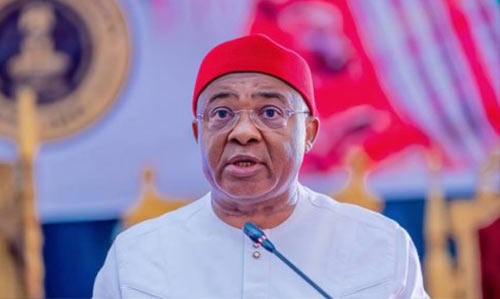
The Imo State Government has rejected the directive of the National Judicial Council (NJC) ordering the inclusion of the state’s most senior High Court judge and Acting Chief Judge, Justice Ijeoma Agugua, in the list of candidates for appointment as substantive Chief Judge, insisting that the Council lacks constitutional authority to dictate who should be shortlisted for the position.
The government maintained that although the NJC has the constitutional responsibility to recommend a candidate for appointment as Chief Judge, it cannot assume the powers of the Imo State Judicial Service Commission (IMSJSC) or compel it to include a particular person among those submitted for consideration.
Attorney-General and Commissioner for Justice of Imo State, Paul Obinatu, stated the government’s position in a statement issued on Friday, November 6, 2026, in response to the NJC’s directive following its 112th meeting held on November 3, 2026.
Obinatu described the Council’s decision as an intrusion into the constitutionally protected independence of the State Judicial Service Commission, arguing that the Constitution assigns separate responsibilities to the institutions involved in the appointment of a substantive Chief Judge.
The Attorney-General maintained that the NJC’s power to recommend candidates to the governor does not include the authority to determine which persons the State Judicial Service Commission must nominate.
“The NJC’s constitutional responsibility to recommend a candidate to the governor does not confer on it the additional power to determine or dictate the candidate the State Judicial Service Commission must submit to it,” Obinatu stated.
He argued that the appointment process established under the 1999 Constitution requires each participating institution to exercise its powers within clearly defined limits.
According to him, the State Judicial Service Commission has an independent constitutional responsibility to identify suitable candidates and advise the NJC on their qualifications.
The NJC, he explained, is empowered to consider the names submitted by the State Judicial Service Commission and recommend a suitable candidate to the governor.
The governor subsequently makes the appointment, subject to confirmation by the State House of Assembly.
Obinatu maintained that the NJC cannot rely on its national status or its role in recommending judicial officers to interfere with the constitutionally assigned functions of a state commission.
He anchored the government’s position on Section 202 of the 1999 Constitution, which provides protection against external direction or control in the exercise of specified powers by certain state bodies, including the State Judicial Service Commission.
According to the Attorney-General, the provision protects the Commission’s institutional independence and prevents other authorities from taking over functions constitutionally assigned to it.
“The State Judicial Service Commission shall not be subject to the direction or control of any other authority or person in exercising its constitutionally assigned powers,” he argued.
He maintained that this protection could not be displaced through administrative instructions or judicial appointment guidelines.
“This provision establishes a clear constitutional safeguard against external interference in the Commission’s responsibilities and cannot be overridden by the NJC through administrative directives or procedural guidelines,” Obinatu stated.
The Attorney-General further relied on Paragraph 6(a), Part II of the Third Schedule to the Constitution, which assigns the State Judicial Service Commission responsibility for advising the NJC on suitable persons for appointment as Chief Judge.
He argued that the provision clearly establishes the State Judicial Service Commission as the institution responsible for initiating the selection process and presenting candidates for consideration.
Obinatu also cited Paragraph 21(c), Part I of the Third Schedule, which empowers the NJC to recommend a candidate to the governor from among the persons submitted by the State Judicial Service Commission.
He maintained that the NJC’s constitutional role begins with consideration of the names submitted to it and does not extend to compelling the state commission to nominate a particular individual.
According to him, the Council cannot substitute its preferred candidate for the judgment of the state institution constitutionally responsible for assessing and shortlisting suitable persons.
He also referred to Section 271(1) of the Constitution, which provides for the appointment of the Chief Judge of a state by the governor on the recommendation of the NJC, subject to confirmation by the State House of Assembly.
The Attorney-General argued that these provisions establish a constitutional arrangement in which the State Judicial Service Commission, NJC, governor and legislature perform different but complementary functions.
He maintained that allowing the NJC to dictate the composition of the shortlist would undermine the independence of the State Judicial Service Commission and disturb the balance established by the Constitution.
Obinatu acknowledged that the NJC possesses authority to prescribe procedures and guidelines for judicial appointments.
However, he insisted that administrative guidelines cannot confer powers beyond those expressly or impliedly granted by the Constitution.
According to him, while the Council can assess the suitability of candidates and make recommendations, it cannot use those responsibilities to control the independent decision-making functions of the State Judicial Service Commission.
“The NJC cannot invoke its national institutional status or its recommendation powers to exercise control over the Imo State JSC in a manner inconsistent with the Constitution,” the Attorney-General maintained.
He therefore urged the Council to respect the constitutional boundaries separating its responsibilities from those of the state commission.
Obinatu stressed that the disagreement should not be interpreted as a contest for superiority between the NJC and the Imo State Judicial Service Commission.
Rather, he maintained that the central issue was whether each institution was prepared to exercise its constitutional powers without interfering with the functions of the others.
“The issue is not a contest for institutional superiority between the NJC and the State JSC, but the need for each institution to respect the constitutional boundaries of its authority,” he stated.
The Attorney-General also cited judicial decisions which, according to the government, supported the constitutional limitations on the powers of institutions involved in judicial administration.
The authorities he referenced included Elelu-Habeeb v. Attorney-General of the Federation (2012), Bamisile v. National Judicial Council (2012), Federal Republic of Nigeria v. Nganjiwa (2022), and Attorney-General of the Federation v. Attorney-General of Abia State (2024).
Obinatu relied on the cases in support of his argument that judicial institutions must operate within their constitutionally prescribed powers.
The government’s position is that the independence of the State Judicial Service Commission cannot be overridden by the NJC merely because the Council exercises national supervisory and recommendation responsibilities in judicial appointments.
The latest disagreement followed the NJC’s consideration of a petition dated June 11, 2026, submitted by Bob Kay Njemanze.
Njemanze challenged the exclusion of Justice Agugua from the list of candidates presented by the Imo State Judicial Service Commission for appointment as substantive Chief Judge.
Justice Agugua is the most senior judge of the Imo State High Court and currently serves as the state’s Acting Chief Judge.
At its 112th meeting, the NJC considered the petition and directed its Secretariat to formally request that the State Judicial Service Commission include her name in the shortlist.
The Council acknowledged that the state commission has the constitutional responsibility to advise it on suitable candidates but maintained that it retains authority to determine the suitability of persons presented for appointment.
Consequently, the NJC directed that Justice Agugua be included among the candidates to be considered for the substantive position.
The Council’s position reflects its concern that the most senior judge of the High Court should not be excluded from consideration without justification.
However, the Imo State Government has challenged the legal basis for directing the State Judicial Service Commission to include her name.
The disagreement has revived a longstanding dispute over the leadership of the Imo State judiciary following the compulsory retirement of former Chief Judge, Justice T. E. Chukwuemeka Chikeka, in November 2024 over age falsification.
Following Chikeka’s departure, the state was confronted with the challenge of appointing an Acting Chief Judge pending the emergence of a substantive judicial head.
In April 2025, Governor Hope Uzodimma appointed Justice Theophilus Nzeukwu as Acting Chief Judge.
The appointment generated controversy because Nzeukwu was fourth in the seniority hierarchy of the Imo State High Court, while Justice Agugua was the most senior judge.
The NJC rejected the appointment, maintaining that it violated Section 271(4) of the Constitution.
The provision requires the governor to appoint the most senior judge of the High Court to perform the functions of Chief Judge whenever the office becomes vacant under the circumstances specified by the Constitution.
The Council maintained that the governor had no constitutional discretion to bypass the most senior judge when making an acting appointment.
The controversy subsequently resulted in disciplinary proceedings concerning Justice Nzeukwu’s acceptance of the position.
The NJC eventually recommended his compulsory retirement for accepting an appointment that it considered contrary to the constitutional requirements governing the office of Acting Chief Judge.
The Council also directed Governor Uzodimma to comply with Section 271(4) by appointing the state’s most senior judge to perform the functions of Chief Judge.
However, the governor defended his earlier decision, maintaining that the information available to him at the time justified the appointment of Justice Nzeukwu.
According to Uzodimma, credible reports presented to him indicated that Nzeukwu was the most senior judicial officer who was not affected by unresolved issues.
The NJC rejected that explanation, insisting that the Constitution did not permit the governor to substitute another consideration for the express requirement concerning the most senior judge.
The disagreement attracted criticism from the Nigerian Bar Association and contributed to a prolonged leadership crisis that disrupted the administration of justice in the state.
Following further intervention by the Council, the governor eventually complied with the directive, and Justice Agugua was sworn in as Acting Chief Judge.
However, her appointment in an acting capacity did not resolve the controversy concerning the substantive leadership of the Imo State judiciary.
The disagreement resurfaced when the Imo State Judicial Service Commission submitted its shortlist for appointment of a substantive Chief Judge without including Justice Agugua.
Her exclusion prompted Njemanze’s petition to the NJC and the Council’s latest directive.
The Imo State Government’s response has consequently renewed the constitutional debate over the distinction between the appointment of an Acting Chief Judge and the selection of a substantive Chief Judge.
Section 271(4) expressly provides for the most senior judge to perform the functions of Chief Judge in specified circumstances where the office is vacant.
However, the process for appointment to the substantive office is governed by Section 271(1), together with the relevant provisions of the Third Schedule to the Constitution.
The government is relying on that distinction to argue that the NJC cannot treat its role in the substantive appointment process as authority to dictate the names submitted by the state commission.
Under the government’s interpretation, the power to assess and present candidates belongs initially to the State Judicial Service Commission, while the NJC is responsible for considering those candidates and making a recommendation.
The NJC, on the other hand, maintains that its constitutional responsibility to determine suitability permits it to require the inclusion of Justice Agugua in the shortlist.
The disagreement therefore centres on whether the Council’s directive represents a lawful step in ensuring a credible judicial appointment process or an intrusion into responsibilities reserved for the State Judicial Service Commission.
Although the Attorney-General cited several judicial decisions in defence of the state’s position, the precise application of those authorities to the present dispute remains a matter of constitutional interpretation.
The government’s objection does not, by itself, establish that the NJC acted unlawfully, just as the Council’s directive does not automatically resolve the question of how its powers interact with the independence of the State Judicial Service Commission.
The central issue remains the division of constitutional responsibilities between the institutions involved in selecting and appointing the head of a state judiciary.
The disagreement also raises questions about the consequences of excluding the most senior judge from the selection process and the extent to which seniority should influence the appointment of a substantive Chief Judge.
While seniority is relevant to judicial appointments, the substantive selection process also involves assessment of professional competence, suitability and other applicable criteria.
For Imo State, however, the immediate concern is the continuing absence of a settled arrangement for the appointment of a substantive Chief Judge following the prolonged leadership dispute.
The NJC has directed that Justice Agugua’s name be included in the list of candidates, while the state government insists that the Council cannot constitutionally compel the State Judicial Service Commission to take that step.
Unless the institutions resolve their disagreement, the substantive appointment process risks remaining unsettled.
The dispute could also prolong uncertainty over the leadership of the state judiciary, which has already experienced considerable disruption since the retirement of its former Chief Judge in November 2024.
Obinatu’s statement therefore places the government’s position firmly on the independence of the State Judicial Service Commission and the need to respect the allocation of powers under the Constitution.
The government maintains that the NJC must exercise its recommendation powers without taking over the commission’s responsibility to identify and submit suitable candidates.
For its part, the NJC insists that Justice Agugua, as the most senior judge and current Acting Chief Judge, must be included among those to be considered for the substantive position.
.. “NJC Cannot Dictate Chief Judge Shortlist” — Imo Govt Rejects Directive To Include Justice Agugua, Cites JSC’s Constitutional Independence … NewsNGR.


N32 Million Vanishes! How Corrupt Officials and Contractors Murdered the FGGC Imiringi Project, Leaving Students Stranded in Abandoned Ruins

EXCLUSIVE: 81 Road Contracts, Zero Contests: President Mahama’s Government Sole-Sourced Ghana’s Roads Book, Piled US$1.86 Billion on Three Firms and Handed One Bridge US$497.66 Million

“Flamingos Are World Champions” — Nigeria Defeat Japan 2-1 To Win Historic First FIFA U-17 Women’s World Cup

EXCLUSIVE: Femi Otedola Bought The £53 Million Avenue Road Mansion In His Own Name And Barclays Bank’s Charge Bars Any Sale Without The Bank’s Written Consent

EXCLUSIVE: Banque Havilland SA Put Receivers Over Kolawole Aluko’s Earnshaw Associates Limited In The British Virgin Islands, Then Asked The Same Court To Discharge Its Own Order And Hand The Company Back

“NJC Cannot Dictate Chief Judge Shortlist” — Imo Govt Rejects Directive To Include Justice Agugua, Cites JSC’s Constitutional Independence

“Court Remands Two Mexicans, Four Nigerians” — NDLEA Arraigns Six Over Alleged Methamphetamine Laboratory In Oyo Forest

Yobe: Federal Government College Buni Yadi Fingered in ₦2 Million Unsupported Payments Scandal

INVESTIGATION: How Anthony Kila falsified all his academic qualifications – from Bachelor’s to Doctorate

Customer Service Week: Inside How Jumia Is Using Technology To Go The Extra Mile For Shoppers

Google opens AI-content detector to enable verification

Kayefi headlines Tales & Tunes as ID Cabasa leads music direction in Sheffield

Ogaga Ifowodo wins $100,000 Nigeria Prize for Literature

How Lagos Families Are Allegedly Buying Contaminated Meat In Dirty Conditions At Mushin, Oshodi, Mile 12, Surulere Markets

UK migrant workers wear chains, sing Asa’s ‘Jailer’ to protest proposed visa reforms

How Houthi military aggression in Red Sea threatens Africa

 Special Reports4 days ago
ADC warns Sokoto govt, vows to hold governor responsible for intimidation, violence against opposition

 Special Reports5 days ago
Health Review: Ebola case, child malnutrition, medicine security, other developments that shaped October
- Special Reports7 days ago
EXCLUSIVE: Ebola: 34-year-old pilot, wife identified as suspected cases who tested negative in North-east Nigeria
- News6 days ago
FCT Group Urges Wike To Deepen Youth, Community Engagement
- Special Reports5 days ago
2027: PDP expels aspirants challenging Pantami’s candidacy as Gombe governorship candidate
- Special Reports7 days ago
Sanwo-Olu makes runaway appearance at Lagos Fashion Week (PHOTOS)
- Special Reports6 days ago
EXCLUSIVE: SSA To President Tinubu On SDGs Adejoke Orelope-Adefulire Paid The Same Sum Thirty Three Times To Different Companies As Eight Firms Took N428 Million For Each Roads
- Investigations5 days ago
WEMA BANK SETS NOVEMBER 6 FOR HACKAHOLICS 7.0 GRAND FINALE, UNVEILS “FESTIVAL OF THE FUTURE” AS THEME