News
Telecom Operators Challenge Reps’ Power To Probe Service Quality

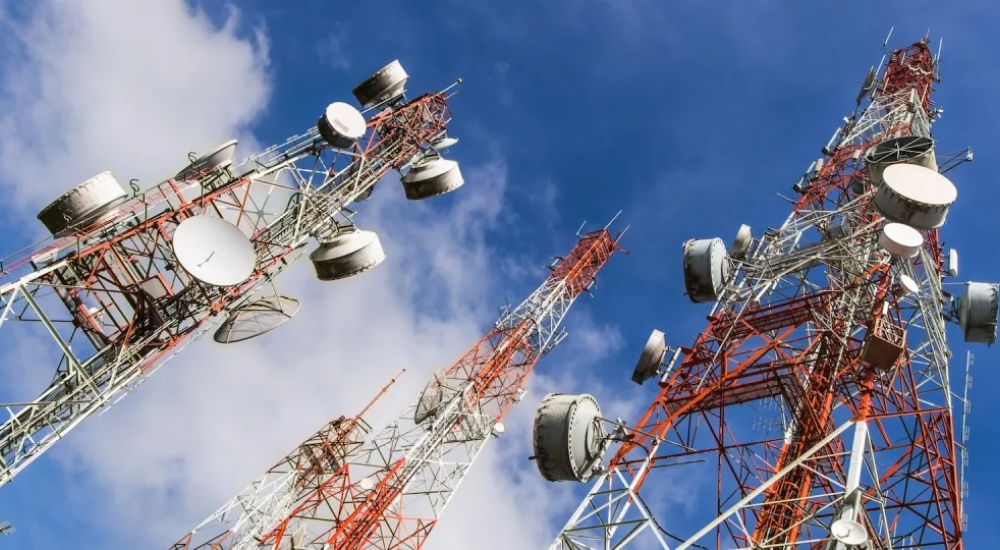
Telecommunications companies in Nigeria have approached the Federal High Court in Abuja to contest the constitutional authority of the House of Representatives to investigate their service quality, arguing that the responsibility falls primarily within the mandate of the Nigerian Communications Commission (NCC).
The operators are seeking judicial clarification on the scope of the National Assembly’s investigative powers, particularly its authority to summon private telecom firms over service delivery in an industry governed by a specialised regulatory agency.
The case was instituted through an originating summons dated November 4, 2026, by the Registered Trustees of the Association of Licensed Telecommunications Operators of Nigeria (ALTON), MTN Nigeria Communications Plc, Airtel Networks Limited, Globacom Limited and Emerging Markets Telecommunication Services Limited, which operates 9mobile.
The suit, marked FHC/ABJ/CS/2713/2026, names the House of Representatives, its Speaker, the Clerk of the House and the Inspector-General of Police as defendants.
At the centre of the dispute is the interpretation of Sections 88 and 89 of the 1999 Constitution, which outline the circumstances under which the National Assembly can conduct investigations.
The plaintiffs want the court to determine whether the legislature’s investigative authority is restricted to the constitutional purposes provided under Section 88(2), including assisting in lawmaking and exposing corruption, inefficiency or waste in the administration of laws and management of public funds appropriated by the legislature.
They are also questioning whether lawmakers can exercise such powers over privately owned telecommunications companies that are neither responsible for administering laws nor managing public funds appropriated by the National Assembly.
The legal challenge follows summonses issued on October 29, 2026, directing the chief executives of the affected companies to appear before the House Ad Hoc Committee on Telecommunications Quality of Service and provide relevant documents.
The operators are further asking the court to determine whether the House has the constitutional backing to issue arrest warrants to compel their executives to attend the committee’s proceedings.
In their argument, the companies maintain that the NCC is the statutory agency responsible for setting, monitoring and enforcing service quality standards in the telecommunications industry under the Nigerian Communications Act 2003 and the 2024 Quality of Service Regulations.
The case has also generated legal debate over where legislative oversight ends, and the regulatory responsibilities of specialised agencies begin.
A legal practitioner, Sesan Bankole, maintained that although lawmakers could invite telecommunications operators to address issues affecting the public, such investigations must comply with the constitutional limits placed on the National Assembly.
“Any investigation that goes beyond making laws or exposing corruption in the management of budgeted public funds is invalid,” Bankole said.
He argued that the legislature could not assume the regulatory functions assigned to the NCC, particularly in matters involving industry standards and sanctions.
“And they can’t regulate or impose fines; that is the work of the regulator, which is the NCC,” he added.
Bankole also argued that telecommunications companies could nominate representatives to appear before the committee, rather than making the personal attendance of their chief executives compulsory.
“By the Companies and Allied Matters Act, a telecom is a legal entity that can be represented by any such person appointed by the legal entity,” he said.
Similarly, another lawyer, Ilemona Onoja, questioned whether privately owned telecommunications companies automatically fall within the categories of organisations the legislature is constitutionally empowered to investigate under Section 88.
He referenced previous judicial decisions, including Senate of the National Assembly v. Tony Momoh and SPDC v. Speaker, in examining the limits of legislative investigative authority.
Onoja also raised concerns about the House continuing with aspects of the probe while related litigation involving ALTON remains pending, citing the implications of the sub judice principle.
Rather than focusing solely on summoning company executives, he urged lawmakers to use their legislative powers to address broader challenges confronting the telecommunications industry, including the destruction of fibre-optic cables, multiple taxation and inconsistent right of way charges.






Nigeria to partner with AES countries to reposition MNJTF

Ekiti Funding Government House Projects Outside Budget

DeSantis breaks with Trump over Republican election defeat

Nigerian military denies ceasefire deal with Boko Haram

VP Shettima felicitates Jim Ovia at 75

“We Want Them Both Returned Home” — British Woman, 40, Dies With Unborn Baby In Nigeria As Family Seeks £10,000 For Repatriation

Kaduna Generates N90bn, Targets N120bn IGR In 2026

Being responsible when being irresponsible seems convenient, By Yemi Adetayo

INVESTIGATION: How Anthony Kila falsified all his academic qualifications – from Bachelor’s to Doctorate

Customer Service Week: Inside How Jumia Is Using Technology To Go The Extra Mile For Shoppers

Google opens AI-content detector to enable verification

Kayefi headlines Tales & Tunes as ID Cabasa leads music direction in Sheffield

UK migrant workers wear chains, sing Asa’s ‘Jailer’ to protest proposed visa reforms

Ogaga Ifowodo wins $100,000 Nigeria Prize for Literature

How Houthi military aggression in Red Sea threatens Africa

How Lagos Families Are Allegedly Buying Contaminated Meat In Dirty Conditions At Mushin, Oshodi, Mile 12, Surulere Markets
-

 Business6 days ago
“User Funds Are Completely Safe” — Binance Investigates Suspected $6.3 Billion Hack, Suspends Deposits And Withdrawals
-
News6 days ago
“We Will Continue To Pursue Hall” — US Offers $5,000 Reward For Nigerian Woman Who Failed To Report To Prison
-

 Special Reports2 days ago
ADC warns Sokoto govt, vows to hold governor responsible for intimidation, violence against opposition
-
Top Stories6 days ago
“Ebola Outbreak Is Not Yet Under Control” — Africa CDC Warns As Confirmed Cases Exceed 10,200, Death Toll Surpasses 5,000
-
Special Reports7 days ago
How A 22-year Old’s Phone Video Led To Arrest Of 4 Police Officers In Ikorodu
-
News7 days ago
PSC Promotes FCT Police Spokesperson Adeh, 3,800 Officers
-
Special Reports6 days ago
EXCLUSIVE: NSCDC ‘s Niger commandant fabricated ‘disease outbreak’ to cover up 33 deaths in cell – Report
-
Business5 days ago
“We’re Covering Every Loss” — Binance Sets Aside $6.34bn After Record Crypto Hack Linked To North Korea As FBI Investigates