Special Reports
Tinubu’s fresh Ibom Deep Seaport approval raises questions over Buhari’s 2020 clearance, financing


Governor Umo Eno says Tinubu’s latest approval will enable a sovereign guarantee for Ibom Deep Seaport investors, but questions remain over who the investor is, the terms, potential taxpayer liabilities, and whether the FEC has approved the guarantee as required by law.
President Bola Tinubu’s latest declaration that he has approved the Ibom Deep Seaport project in Akwa Ibom State has raised questions about what exactly has changed since the Federal Executive Council (FEC), under the late President Muhammadu Buhari, approved the project’s first phase in December 2020.
This is because the 2020 approval reportedly authorised Akwa Ibom State to seek private investors and implement the project under a 60:40 financing arrangement, with investors expected to provide 60 per cent of the funding and the state government the remaining 40 per cent.
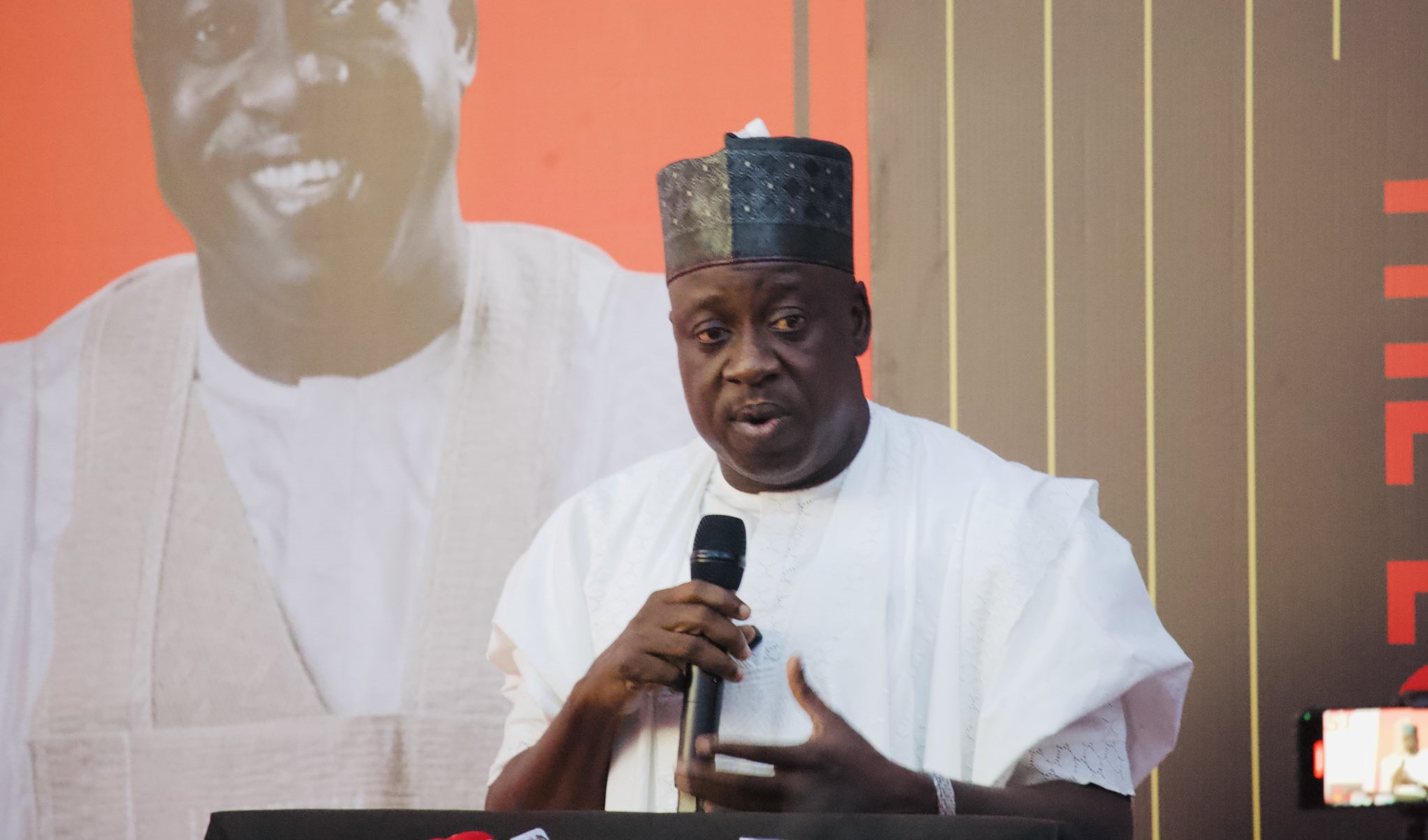
But Mr Eno has offered a different explanation for the latest presidential intervention, saying it would enable the Federal Government to provide a sovereign guarantee to attract investors.
The governor’s explanation has, however, raised further questions about whether a new financing arrangement has been negotiated, whether an investor has formally requested a sovereign guarantee and whether the Federal Executive Council has approved the proposed guarantee.
The questions are particularly important because Mr Tinubu promised Akwa Ibom residents during his 30 January 2023 presidential campaign rally in Uyo that his administration would build the seaport.
The Ibom Deep Seaport project is not a new proposal awaiting its first federal clearance.
On 16 December 2020, the Buhari administration’s FEC approved the implementation of its first phase, estimated to cost $2.016 billion.
The approval was subsequently listed by the Infrastructure Concession Regulatory Commission (ICRC) among federal government-approved public-private partnership projects. The commission’s record identified the Federal Ministry of Transportation and Akwa Ibom State Government as the relevant public institutions.
The then Commissioner for Economic Development and Ibom Deep Seaport, Akan Okon, said in December 2020 that the project would be funded under a 60:40 arrangement, with private investors providing 60 per cent and the public sector contributing 40 per cent.
Mr Okon put the cost of the first phase at $2.016 billion, out of an estimated $4.6 billion for the entire project. He said the seaport would be developed in phases. The ICRC list also confirms the amount.
Sources familiar with the project’s technical engagements under the administrations of former Governor Udom Emmanuel and Mr Eno told PREMIUM TIMES that the 2020 approval had already provided the necessary federal authorisation for the state to seek investors and proceed with the project.
The sources, who requested anonymity due to the politically sensitive nature of the matter, questioned why the state government continued to pursue investors if the original clearance was insufficient.
“If the project needed more approval from the Federal Government, as was given by President Tinubu, why did Governor Umo Eno go to Paris to meet an investor?” one of the sources asked.
According to another source, the original federal approval was based on the understanding that the Nigerian Ports Authority, as the authorised port manager, would manage the facility, while Akwa Ibom State would source investors and work with them to develop it.
“We made a presentation to the Federal Executive Council, and it was approved. No other approval is required again,” the source said.
The source said the Federal Government had made it clear from the beginning that it would not contribute to the project’s financing.
“The Federal Government has said it was not investing, and there is a letter to that effect that it is 60/40 per cent in investment. Sixty for the investor and 40 for the state government. The port is to have four terminals. But we said lets develop one terminal first.
“It was the place of Akwa Ibom State to look for an investor. The understanding was for the state government to approach some of the neighbouring states to buy into it and fund the project for the 40 per cent of the state.”
The source said the state government and its prospective investor had spent money on geophysical and geotechnical studies in preparation for the project.
The source also said the state could still bring in other state governments and private companies to help finance its share of the project.
Despite the 2020 approval, the project has yet to reach construction.
The previous administration of Mr Emmanuel sought investors but later complained that it had lost its preferred investor after petitions against the project over a revised location.
Under Mr Eno, the government has continued efforts to advance the project.
In April, the governor received the feasibility report from a technical committee led by Mfon Usoro, a former director-general of the Nigerian Maritime Administration and Safety Agency.
Mr Eno said his administration had funded feasibility studies, prepared investor documents, conducted geophysical and geotechnical assessments and established a project office.
The committee also reported progress on financial modelling, due diligence and international bidding, with preferred bidders emerging.
In June, the governor held discussions with prospective project partners in Paris to seek clearer implementation timelines and investment commitments.
The state government also announced a high-level technical engagement with Africa Global Logistics Group in Paris on 5 June 2026.
These engagements followed earlier technical work involving the consultant port master planner, Dar Al-Handasah, with the Technical Committee on the Actualisation of Ibom Deep Sea Port, which met the firm to finalise technical requirements for the proposed City Gate and Sales Centre groundbreaking in May 2025.


Beyond Cement: Dangote Deploys Football to Unite Ibese, Okpella Host Communities

Tinubu’s fresh Ibom Deep Seaport approval raises questions over Buhari’s 2020 clearance, financing

Troops arrest suspected gunrunner, kill 2 terrorists in Plateau

2027 ELECTIONS: NACAT DEMANDS IMMEDIATE END TO PERSONAL ATTACKS; URGES TINUBU, ATIKU, AND OBI TO FOCUS ON ISSUES-BASED CAMPAIGNS TO RESCUE NIGERIA

United Aladura Churches Ends 22nd Global Convention In Lagos, Plan N500m National Hqtrs

The Risky Road To NYSC Orientation Camps

“Regular Court Sittings Shall Resume January 6” — FHC Chief Judge Tsoho Announces Christmas Vacation, Names Eight Judges

Power minister apologises to Nigerians over outages, promises improved electricity supply

UK migrant workers wear chains, sing Asa’s ‘Jailer’ to protest proposed visa reforms

How Lagos Families Are Allegedly Buying Contaminated Meat In Dirty Conditions At Mushin, Oshodi, Mile 12, Surulere Markets

At TEDxEnugu, Gov Soludo Harps On Ndigbo Transiting From Individual Success To Building Collective Institutions

Pantami reacts after INEC omits his name from Gombe governorship candidates list
INEC excludes Ogun PDP’s Adebutu, running mate from final governorship candidates list

Suspect arrested over farmer’s killing, kidnapping in Niger

Delta records highest oil spill as nine incidents release nearly 130,000 litres of crude

Alleged N60m Oshodi Recruitment And Visa Scam: 2 Company Staff Arraigned In Lagos

 Special Reports6 days ago
ADC warns Sokoto govt, vows to hold governor responsible for intimidation, violence against opposition

 Special Reports7 days ago
Health Review: Ebola case, child malnutrition, medicine security, other developments that shaped October
- Special Reports7 days ago
2027: PDP expels aspirants challenging Pantami’s candidacy as Gombe governorship candidate
- Investigations6 days ago
WEMA BANK SETS NOVEMBER 6 FOR HACKAHOLICS 7.0 GRAND FINALE, UNVEILS “FESTIVAL OF THE FUTURE” AS THEME
- Special Reports5 days ago
United Nigeria Airlines Boss Receives Trailblazer In Aviation Award At Daily Times Centenary Celebration
- Top Stories4 days ago
“Courts Must Guard Their Independence, Impartiality And Integrity” — NDC Warns After Atiku’s Candidacy Is Nullified
- News7 days ago
NAFDAC’s regulatory reforms offer model for Africa – Adeyeye
- Special Reports7 days ago
Failure to prosecute electoral offenders, threat to free, fair elections, says NHRC