News
No Justification For High Fuel Prices, FCCPC Cautions Marketers


The Federal Competition and Consumer Protection Commission (FCCPC) has warned petroleum refiners and marketers against retaining high petrol and diesel prices despite the recent decline in crude oil prices in the international market.
The Commission said it was monitoring developments in the global oil market to ensure that the reduction in crude prices translates into lower fuel costs for Nigerian consumers.
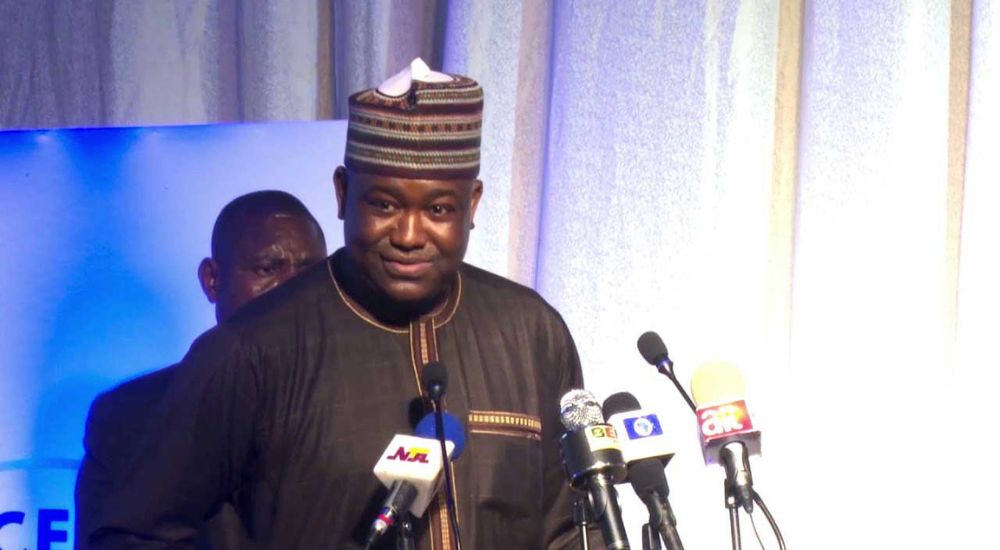
The Executive Vice Chairman of the FCCPC, Tunji Bello, gave the assurance on Tuesday in response to public concerns over the continued high cost of petroleum products despite falling international crude prices.
According to the Commission, Brent crude futures, which reached $115 per barrel in September, have dropped to below $90 this week.
However, petrol prices currently range between N1,405 and N1,420 per litre in Abuja, while consumers in Lagos pay between N1,325 and N1,370 per litre.
The FCCPC noted that on February 27, a day before the outbreak of the conflict involving the United States, Israel and Iran, Brent crude futures closed at $72.48 per barrel, while petrol sold between N839 and N925 per litre in Lagos and Abuja.
Petroleum marketers have attributed the sharp increase in fuel prices over the past eight months to fluctuations in international crude oil prices following the outbreak of the conflict in the Middle East and the subsequent blockade of the Strait of Hormuz, a major global oil transit route responsible for at least 25 per cent of worldwide oil traffic.
Bello, however, insisted that a sustained reduction in crude oil prices should result in lower costs for consumers, warning against refiners and marketers failing to reflect the savings in their pump prices.
“If the decline in crude prices is sustained, there is no justification for refiners and marketers to continue to keep petrol and diesel prices relatively high,” he said.
He added that the Commission expected reductions in the cost of petrol at the wholesale level to be passed on to consumers without unnecessary delays.
Bello acknowledged the financial difficulties Nigerians had faced as a result of elevated fuel prices, assuring consumers that the FCCPC would continue to monitor developments across the downstream petroleum sector.
He said the Commission would collaborate with the Nigerian Midstream and Downstream Petroleum Regulatory Authority (NMDPRA) and other relevant government agencies to monitor wholesale and retail fuel prices.
The FCCPC chief executive further warned that the Commission would intervene where evidence of anti-competitive behaviour or unfair market practices was found to be preventing consumers from benefiting from declining costs.
“Where there is evidence of anti-competitive conduct or unfair practices that prevent consumers from benefiting from lower costs, we will take appropriate action within our mandate,” he said.



Police Turn Checkpoints To ‘Toll Gates’ In Anambra

Makinde presents N1.1trn final budget, allocates N670bn to capital projects

No Justification For High Fuel Prices, FCCPC Cautions Marketers

Nwanze Defends Ohanaeze Fact-Finding Committee

2027: Security tightened in Ondo ahead of APC presidential campaign rally

Nigeria, India sign MOU on human rights promotion
Two inmates escape from Kogi prison, police launch manhunt

“They Are Bookkeeping Issues, Not Financial Losses” — Mele Kyari Explains ₦210trn Audit Queries Before Senate Panel

How Lagos Families Are Allegedly Buying Contaminated Meat In Dirty Conditions At Mushin, Oshodi, Mile 12, Surulere Markets

Delta records highest oil spill as nine incidents release nearly 130,000 litres of crude

Edo police kill three suspected kidnappers, rescue kidnapped victim

ADC, NDC, PDP decry attacks on opposition parties in Enugu

EFCC arraigns ALSCON, Russian director on N582.4 million money laundering charges
Tinubu Encouraging Political Indiscipline With Opposition Inclusion In Campaign Council — Olawepo-Hashim

Court rejects Euracare’s bid to halt inquest into Adichie’s son’s death

Nigerian University to honour Ghanaian President John Mahama today

 Special Reports7 days ago
ADC warns Sokoto govt, vows to hold governor responsible for intimidation, violence against opposition

 Special Reports6 days ago
United Nigeria Airlines Boss Receives Trailblazer In Aviation Award At Daily Times Centenary Celebration
- Top Stories5 days ago
“Courts Must Guard Their Independence, Impartiality And Integrity” — NDC Warns After Atiku’s Candidacy Is Nullified
- Politics7 days ago
“28 State Assemblies Have Approved The Bill” — NASS Moves To Transmit State Police Amendment To Tinubu For Assent
- Politics6 days ago
“Hospitals Must Assess Emergency Patients Within 15 Minutes” — Senate Advances Bill Proposing Six-Month Jail, ₦300,000 Fine
- Special Reports7 days ago
Fidelity Bank Deepens Creative Sector Support with CANEX WKND 2026 Partnership
-
 News6 days ago
“Destroying Campaign Posters Is A Criminal Offence” — IGP Disu Orders Nationwide Crackdown, Cites Criminal Code, Penal Code Ahead Of 2027 Elections
- Politics6 days ago
“State Police Bill Has Received The Backing Of 29 State Assemblies” — Kalu Announces Transmission As Senate Confirms 30 Approvals