Special Reports
Nigerians are hungry, but Tinubu’s reforms will bring relief – Orji Kalu


Mr Kalu said such difficulties are inevitable when a country’s government undertakes major economic reforms.
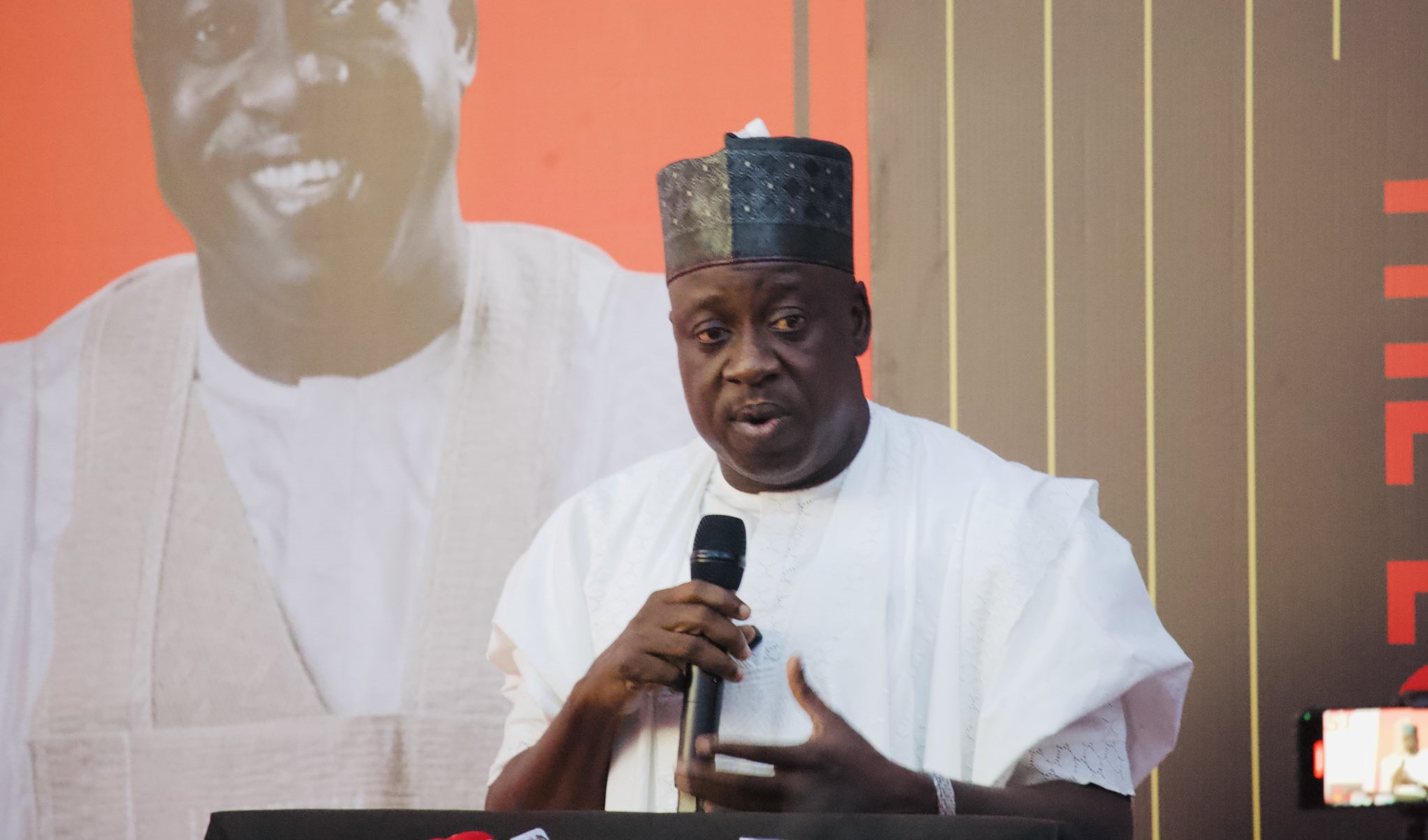
Abia North Senator, Orji Kalu, has acknowledged that Nigerians are hungry and experiencing economic hardship under President Bola Tinubu’s administration but argued that such difficulties are inevitable when a government undertakes major economic reforms.
The former Abia State governor made the remarks on Monday during an appearance on ARISE Television’s Prime Time, where he defended the administration’s economic policies and argued that the government deserved another mandate.
“People are shouting poverty. Yes, people are hungry. Even President Tinubu himself knows that things are difficult. You can’t go into reform without things going difficult,” he said.
The senator said Nigeria could not undertake fundamental economic changes without some sections of the population bearing the immediate consequences.
He argued that the reforms were necessary to move the country away from an economic structure that had persisted since independence and align it with changing global economic realities.
“Nowhere in the world, you say I want to reform the way it’s been done since 1960 to go with the anthem of the world, which is what the president is singing about,” he said.
Asked what the All Progressives Congress (APC) government had achieved to justify another mandate, Mr Kalu said the administration had stabilised the economy at the macroeconomic level.
He distinguished between macroeconomic stability and the difficulties Nigerians continued to experience in their daily lives, saying the government must now focus on translating economic reforms into growth and improved welfare.
“The APC has been able to stabilise this economy on the macro level. What we are battling now is the micro level,” he said.
The senator said the next phase should involve tackling insecurity, restoring agricultural production and expanding manufacturing to create economic opportunities.
He said farmers must be able to return to their farms without fear of attacks, urging the president and his team to intensify efforts against insurgents and bandits.
“The second thing is to present Tinubu and his team to fight for these insurgents and fight them out, so farmers can go back to farm,” he said.
Mr Kalu also identified manufacturing as an area requiring greater attention, arguing that increased access to raw materials and improved production capacity would help drive economic growth.
He said the government needed to ensure that manufacturers could operate their factories efficiently and increase production, adding that economic growth remained necessary to sustain the gains of the reforms.
Mr Kalu also acknowledged that businesses were still struggling under the prevailing economic conditions, disclosing that factories were not generating enough revenue to pay workers’ salaries.
However, he maintained that their operating conditions had improved compared with 2020.
“I’m not enjoying because factories are not producing enough money to pay salary, but the factories are better today than 2020,” he said.
He argued that the foreign exchange reforms had given businesses greater predictability, allowing manufacturers to plan their operations and estimate production costs.
According to him, businesses previously struggled to plan because of sudden fluctuations in the exchange rate, which made it difficult to determine the cost of importing raw materials and other inputs.
He also cited the stabilisation of fuel prices and foreign exchange as evidence that the administration’s policies were beginning to address longstanding economic problems.
“The light is at the end of the tunnel now because we have stabilised the fuel prices, we have stabilised the foreign exchange. You can now sit down as a manufacturer and plan,” he said.
To support his argument that economic reforms often come with hardship, Mr Kalu cited Brazil’s experience under former President Luiz Inácio Lula da Silva.
He recalled attending Mr Lula’s inauguration in 2003, saying the South American country had faced economic difficulties before the former president embarked on reforms.
He argued that reforms could produce different outcomes for different sections of society, with some experiencing hardship while others benefited.
Mr Kalu also said Nigeria had improved its international relationships under Mr Tinubu and attracted the attention of foreign investors.
He urged the administration to focus on economic growth, particularly manufacturing, to ensure that macroeconomic improvements translate into tangible benefits for citizens.


Holy Cover: Cartels Using Religious Tourism For Trafficking

Nigerian Government urges Africa to turn resource wealth into economic prosperity

Nigerians are hungry, but Tinubu’s reforms will bring relief – Orji Kalu

France blames Iran for cyberattacks on supermarket fridges

President Tinubu Versus Pearse’s Chicago State University Conundrum: When Political Animus Subverts The Elementary Canons Of Logic

Kano Firm Alleges N2bn Land Takeover From Govt

Trump says Iran war ‘effectively over’

FCT Lottery Regulatory Office: Public notice to gaming operators and the general public

How Lagos Families Are Allegedly Buying Contaminated Meat In Dirty Conditions At Mushin, Oshodi, Mile 12, Surulere Markets

Suspect arrested over farmer’s killing, kidnapping in Niger

Delta records highest oil spill as nine incidents release nearly 130,000 litres of crude

Alleged N60m Oshodi Recruitment And Visa Scam: 2 Company Staff Arraigned In Lagos

Nine die in Benue attacks, days after Otukpo killings

Two Arraigned For Alleged Theft Of N7.9 Million At Investment Firm In Lagos

Troops rescue 50 abductees, kill 36 terrorists in 1 week

Edo police kill three suspected kidnappers, rescue kidnapped victim

 Special Reports6 days ago
ADC warns Sokoto govt, vows to hold governor responsible for intimidation, violence against opposition

 Special Reports5 days ago
United Nigeria Airlines Boss Receives Trailblazer In Aviation Award At Daily Times Centenary Celebration
- Top Stories4 days ago
“Courts Must Guard Their Independence, Impartiality And Integrity” — NDC Warns After Atiku’s Candidacy Is Nullified
- Politics6 days ago
“28 State Assemblies Have Approved The Bill” — NASS Moves To Transmit State Police Amendment To Tinubu For Assent
- Politics5 days ago
“Hospitals Must Assess Emergency Patients Within 15 Minutes” — Senate Advances Bill Proposing Six-Month Jail, ₦300,000 Fine
- Special Reports6 days ago
Fidelity Bank Deepens Creative Sector Support with CANEX WKND 2026 Partnership
-
 News5 days ago
“Destroying Campaign Posters Is A Criminal Offence” — IGP Disu Orders Nationwide Crackdown, Cites Criminal Code, Penal Code Ahead Of 2027 Elections
- Politics6 days ago
“State Police Bill Has Received The Backing Of 29 State Assemblies” — Kalu Announces Transmission As Senate Confirms 30 Approvals